

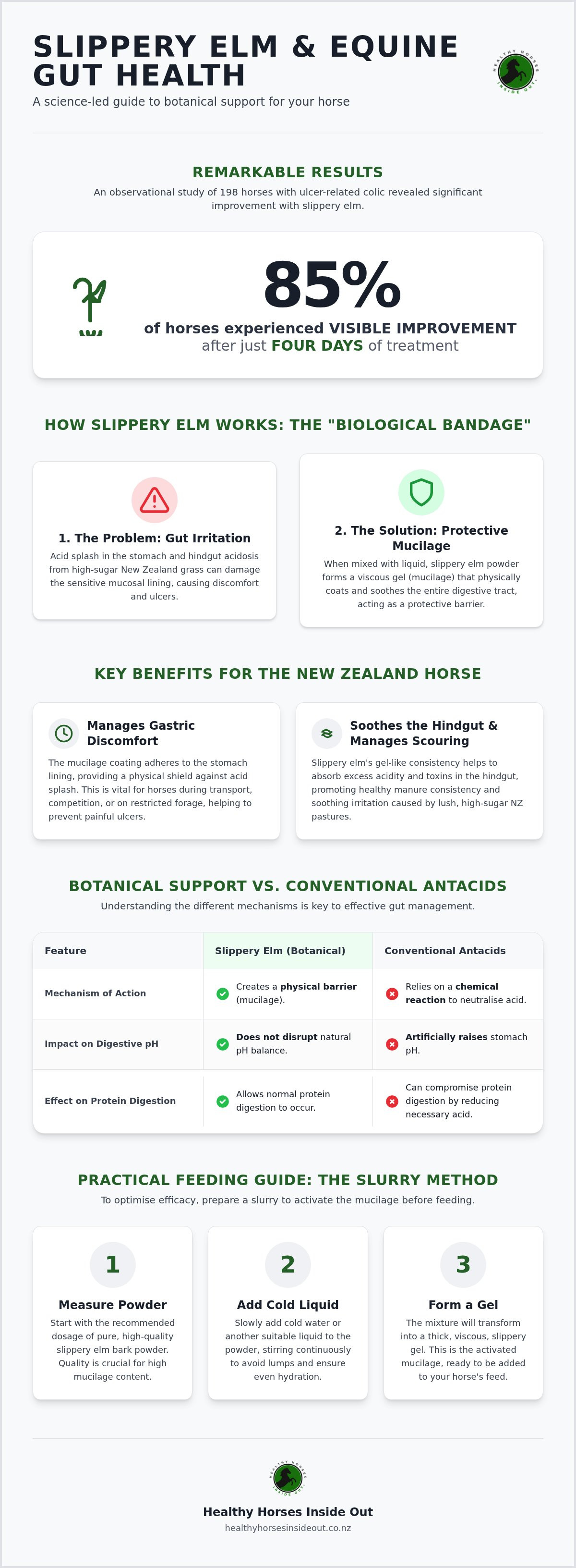
Did you know that in an observational study of 198 horses with ulcer-related colic, 85% experienced visible improvement after just four days of slippery elm treatment? It's a remarkable statistic that highlights the profound potential of targeted botanical support in equine wellness. We understand the persistent frustration of managing a horse that struggles with chronic scouring or the recurring discomfort of gastric ulcers, especially when the lush, high-sugar New Zealand spring grass triggers digestive sensitivity. You deserve the peace of mind that comes from seeing your horse settled, comfortable, and sporting a healthy bloom.
This science-led guide explores how slippery elm nz acts as a strategic, mucilaginous barrier to protect the delicate lining of the stomach and hindgut from acidic volatility. You'll discover the biological mechanisms behind this natural "bandage" and how it helps support healthy manure consistency while soothing internal inflammation. We will examine the clinical evidence supporting its use, address the specific challenges of our local pastures, and provide a clear, methodical framework for feeding this supplement safely to ensure your horse thrives from the inside out.
Key Takeaways
- Understand how the mucilage in slippery elm bark powder creates a protective physical barrier to support the stomach lining without disrupting natural digestive pH.
- Discover why slippery elm nz is a strategic tool for managing digestive sensitivities and scouring triggered by high-sugar seasonal pastures.
- Learn the methodical differences between botanical support and conventional antacids to ensure you aren't unintentionally compromising protein digestion.
- Master the practical "slurry" preparation method to optimise the efficacy of the supplement and ensure your horse receives the full mucilaginous benefit.
- Gain a clear framework for integrating targeted supplements into a wider, mineral-balanced nutritional strategy for long-term gut health.
What is Slippery Elm and How Does it Support Equine Health?
Understanding the biological foundations of equine gut health requires a close look at the botanical properties of Slippery Elm (Ulmus rubra). This deciduous tree, native to North America, provides a unique inner bark that has been utilised for centuries to support digestive integrity. Unlike many herbal remedies that rely on complex systemic absorption, the efficacy of this bark is rooted in its immediate physical properties. It acts as a mechanical aid rather than a pharmacological intervention, making it a gentle yet effective option for sensitive horses.
The primary active component is mucilage, a complex polysaccharide with high hydrophilic properties. When this powder is mixed with liquid, it undergoes a rapid transformation into a viscous, slippery gel. For a horse experiencing gastric irritation, this gel functions as a biological "bandage," coating the sensitive mucosal linings of the digestive tract to provide a protective barrier against acid. This coating action is vital for maintaining comfort and allowing the underlying tissues a chance to recover from inflammation.
The Role of Mucilage in the Horse’s Gut
Mucilage is uniquely suited to the equine digestive environment because it resists rapid breakdown by gastric enzymes. As it travels through the stomach, it adheres to both the squamous and glandular regions, providing a protective layer that persists longer than standard forage buffers. This mechanism is essential for horses living in high-acid environments or those under performance stress. In the hindgut, the benefits continue. The gel helps to absorb excess acidity and metabolic toxins, which is particularly useful for horses prone to loose manure or scouring when grazing lush, high-sugar pastures. This dual action supports a more stable internal environment and promotes better nutrient absorption.
Why Sourcing Pure Bark Powder Matters in NZ
When you are evaluating slippery elm nz suppliers, the focus should always be on the concentration of the active inner bark. The equine supplement market occasionally features low-grade powders blended with fillers or outer bark, which lack the therapeutic mucilage content required for effective gut support. High-quality bark powder is typically finely ground and possesses a distinct pale, creamy-tan colour. We emphasise the importance of sustainable harvesting and pure sourcing because the integrity of the raw material directly dictates the level of comfort your horse achieves. Using inferior products often leads to inconsistent results and fails to provide the necessary foundational support for a sensitive digestive system.
Key Benefits for the New Zealand Grazing Horse
New Zealand’s pastoral environment is often considered the gold standard for equine care, yet the high volatility of our rye-grass and clover can pose significant risks to digestive stability. For many paddock-bound horses, the seasonal "flush" of sugar-rich grass triggers a cascade of internal shifts that lead to discomfort and poor performance. Integrating slippery elm nz into a daily wellness routine offers a targeted way to mitigate these risks by providing a consistent physical buffer against the digestive challenges inherent in our unique grazing conditions.
Managing Ulcers and Gastric Sensitivity
Equine Gastric Ulcer Syndrome (EGUS) frequently affects horses that experience periods of forage restriction or high-intensity stress. The squamous lining of the upper stomach is particularly vulnerable because it lacks the natural protective mucus found in the lower glandular region. When a horse moves or works, acid can splash onto this unprotected tissue, causing painful lesions. The mucilage in slippery elm creates a viscous coating that adheres to these sensitive areas, acting as a secondary barrier against acid splash. This support is especially valuable during high-stress events like transport or competition, where natural grazing patterns are disrupted. By maintaining this protective layer, you can help your horse remain comfortable and focused, ensuring their digestive health doesn't compromise their performance.
Addressing Scouring and Hindgut Acidosis
The lush, rapidly growing spring grass common in New Zealand often contains high levels of non-structural carbohydrates (NSC). When these sugars reach the hindgut, they can undergo rapid fermentation, leading to hindgut acidosis and the common symptom of scouring. This condition isn't just a management inconvenience; it's a sign of a compromised microbiome and poor nutrient absorption. The primary mechanism of action for slippery elm involves its ability to slow down transit time. This allows for more efficient water reabsorption and provides the gut more time to process nutrients. As the gel moves through the intestinal tract, it soothes inflamed tissues and supports a more stable pH environment. This stabilisation is the first step toward achieving that elusive "bloom" and healthy weight gain. If you're looking to build a more resilient gut, consider how HHIO's targeted equine nutrition can provide the balanced mineral base necessary to support these botanical interventions.
Slippery Elm vs. Conventional Antacids: A Methodical Comparison
Choosing between botanical support and pharmaceutical intervention requires a clear understanding of equine digestive physiology. While conventional antacids and proton pump inhibitors (PPIs) are common for treating acute Equine Gastric Ulcer Syndrome, they operate by fundamentally altering the stomach's chemical environment. In contrast, slippery elm nz provides a mechanical solution that respects the natural digestive process. It offers a protective layer without suppressing the very acids the horse needs for optimal health.
The Science of pH Neutralisation vs. Coating
Hydrochloric acid serves a critical biological purpose. It activates pepsin, the enzyme responsible for the initial breakdown of proteins. When we use pharmaceutical buffers to neutralise this acid, we risk compromising the horse’s ability to digest protein effectively, which often manifests as poor muscle tone or a lack of condition. Additionally, the sudden cessation of PPIs can lead to "acid rebound," where the stomach produces an over-compensatory surge of acid that can cause immediate discomfort. The mucilaginous inner bark of slippery elm avoids this trap. It creates a physical barrier that coats irritated tissues while allowing the stomach pH to remain within its functional range. This enables the horse to continue digesting its feed efficiently while the mucosal lining is protected from further irritation.
When to Use Which: A Decision Framework
A methodical approach to gut health involves recognising when a horse requires clinical intervention versus long-term maintenance. Acute, grade 3 or 4 ulcers usually necessitate veterinary-prescribed medication to allow for rapid healing of deep lesions. However, for the many horses that suffer from low-grade sensitivity or are prone to stress-induced discomfort, herbal mucilage is often the more sustainable choice. It is a cost-effective, accessible option for New Zealand owners who want to prevent issues before they escalate into clinical crises. For total systemic support, many owners find success by combining natural mucilage with high-quality prebiotics for horses NZ. This dual strategy addresses both the stomach lining and the hindgut microbiome, creating a resilient digestive system that can handle the challenges of seasonal pasture changes.
Practical Feeding Guide: Dosage and Preparation for Horses
Transitioning from the nutritional theory of gut support to practical daily management requires a methodical approach to preparation. For slippery elm nz to be effective, it must be administered in a way that allows the mucilage to fully hydrate before it enters the digestive tract. Providing the powder in its dry form is not only less effective but can also pose a minor choke risk if the horse bolts their feed. By following a structured preparation routine, you ensure the gel is ready to adhere to the stomach wall the moment it's ingested.
Step-by-Step Preparation
The standard dosage for a 500kg horse typically ranges between 20g and 40g per day, depending on the severity of the digestive sensitivity. For ponies, this should be scaled down to 10g to 20g. To prepare the supplement, follow these steps:
- Measure the appropriate dose of pure bark powder into a clean container.
- Slowly add water, stirring constantly until you achieve a thick, viscous paste or "glop" consistency.
- Allow the mixture to sit for 2 to 3 minutes to ensure maximum hydration of the polysaccharides.
- Mix the resulting slurry into a small amount of low-sugar chaff or a dampened hard feed to ensure palatability.
Integration with NZ Grazing Routines
In New Zealand, many horses remain paddock-bound throughout the year, exposing them to the high potassium and nitrate levels found in our rapidly growing rye-grass. These compounds can act as internal irritants, making the protective barrier of slippery elm even more critical during seasonal transitions. If your horse is on 24/7 pasture, aim to feed the slurry at least 30 minutes before any planned exercise. This timing is strategic; it ensures the protective coating is in place to mitigate "acid splash" while the horse is moving. During the shift to lush spring or winter grass, doubling the dose for a short period can provide extra foundational support while the microbiome adjusts to the higher sugar load.
Safety is a priority when introducing any botanical aid. Because the mucilage is so effective at coating the gut, it can potentially slow the absorption of concurrent oral medications. We recommend leaving a window of at least two hours between feeding slippery elm and administering veterinary-prescribed drugs. While generally considered safe, always consult with your professional care team before using it for pregnant or lactating mares. To ensure your horse is receiving the highest quality, pure ingredients without unnecessary fillers, explore our range of Specific Horse Supplements.
An Inside Out Approach: Integrating Slippery Elm into Your Routine
While the mucilaginous properties of slippery elm nz offer immediate relief for an irritated gut, this botanical aid should be viewed as a strategic component of a broader management plan. It is a targeted tool for support, not a substitute for addressing the environmental or nutritional stressors that cause gastric volatility in the first place. True, long-term wellness requires a transition from reactive treatments to a proactive, science-led feeding protocol that prioritises systemic health. When you address the internal environment, the external results, such as coat bloom and steady temperament, follow naturally.
Foundational Nutrition for Gut Integrity
The strength of the mucosal barrier is fundamentally linked to the horse's overall mineral status. Zinc and copper, for instance, play critical roles in epithelial tissue repair and the maintenance of a healthy gut lining. Without these essential trace minerals, the body struggles to regenerate the very tissues that slippery elm is designed to protect. We often find that horses with chronic digestive sensitivities are also dealing with the repercussions of New Zealand's specific soil deficiencies. Before adding targeted aids, it is wise to determine what supplements does my horse need NZ wide, ensuring your base ration isn't leaving gaps in foundational wellness. A balanced mineral base provides the scaffolding upon which botanical supports can work most effectively.
Building Your Horse’s Personalised Bundle
Every horse presents a unique set of physiological challenges, especially when dealing with metabolic issues or extreme sensitivity to pasture changes. Our "Inside Out" philosophy focuses on providing the precise nutrients required to optimise internal function, which then manifests as external performance. By selecting specific slippery elm nz protocols alongside our mineral-rich Horse Supplement Bundles, you can create a streamlined routine that addresses both immediate symptoms and long-term vitality. This methodical approach removes the guesswork from the feed shed and ensures that every ingredient in the bowl serves a specific biological purpose. If you're ready to move beyond quick fixes and invest in your horse's foundational health, we invite you to Enquire about a custom nutritional plan for your horse today.
Building a Resilient Foundation for Equine Vitality
Achieving digestive stability in our unique pastoral conditions requires more than just a quick fix. It demands a methodical understanding of how botanical aids like slippery elm nz provide a protective, mucilaginous barrier to support horses through seasonal grass flushes and gastric sensitivities. By opting for a physical coating rather than a chemical buffer, you preserve the natural digestive enzymes essential for protein breakdown and long-term condition. We've seen that the most sustainable results occur when you combine pure, high-quality ingredients with a balanced mineral base tailored specifically for NZ conditions.
True bloom is an internal achievement. It's the visible result of an optimised system where every nutrient serves a clear biological purpose. You don't have to navigate these complex nutritional choices alone. Our team acts as a methodical mentor, providing expert guidance and science-led equine nutrition designed to address the root causes of gut discomfort without the use of cheap fillers. This intentional approach ensures your horse receives foundational support rather than temporary relief.
Optimise your horse’s gut health with Healthy Horses Inside Out and gain the peace of mind that comes from evidence-based wellness. Your horse’s comfort is the ultimate reward for a methodical and dedicated approach to their nutritional care.
Frequently Asked Questions
Can I feed slippery elm to a horse with gastric ulcers?
Yes, you can feed slippery elm to a horse with gastric ulcers to provide a protective mucilaginous barrier over the stomach lining. This "bandage" effect is particularly beneficial for the squamous region which lacks natural mucus. While it doesn't cure ulcers, it supports the healing process by preventing acid splash from further irritating sensitive tissues. It's often used alongside veterinary treatments or as a maintenance tool for horses prone to recurrence.
Is slippery elm safe for long-term use in horses?
Slippery elm is generally safe for long-term use when integrated into a balanced nutritional plan. Unlike pharmaceutical acid suppressors, it doesn't alter the stomach's pH or interfere with protein digestion over time. However, we recommend it as a strategic tool rather than a permanent crutch. Addressing the underlying mineral deficiencies and management factors is essential for true long-term gut integrity, rather than relying solely on a single botanical aid.
How much slippery elm should I give my 500kg horse?
For a standard 500kg horse, the recommended daily dosage is typically between 20g and 40g. This amount ensures there is enough mucilage to create an effective coating throughout the digestive tract. If your horse is experiencing acute sensitivity or transitioning to lush pasture, you might start at the higher end of the scale. It's best to divide this into two daily feeds to maintain a consistent protective barrier in the stomach.
Does slippery elm interfere with other equine medications?
Yes, slippery elm can potentially interfere with the absorption of other oral medications due to its coating action on the gut wall. To ensure your horse receives the full benefit of veterinary-prescribed drugs, you should leave a window of at least two hours between administering the medication and feeding the slippery elm slurry. This gap allows the medication to be processed by the digestive system before the mucilaginous barrier is established.
What is the difference between slippery elm and marshmallow root for horses?
Both botanicals contain mucilage, but they serve slightly different roles in equine wellness. Slippery elm is often preferred for its highly viscous "glop" that adheres effectively to the stomach lining, making it ideal for gastric ulcer support. Marshmallow root is frequently used for its soothing properties in the urinary tract and lower respiratory system. In the context of slippery elm nz, many owners find it the superior choice for managing acute gastric sensitivity.
Can I feed slippery elm powder dry in my horse’s feed?
You shouldn't feed the powder dry as it is far less effective and can pose a minor choke risk. The active polysaccharides require hydration to transform into the protective gel that supports the gut lining. We recommend mixing the powder with water to create a thick slurry before adding it to a small amount of low-sugar chaff. This ensures the mucilage is fully activated and ready to coat the digestive tract immediately upon ingestion.
Is slippery elm effective for horses with hindgut acidosis?
Yes, it's a valuable tool for horses with hindgut acidosis or scouring. The mucilage helps to slow down transit time, which allows for better water reabsorption and more efficient nutrient processing. It also provides a soothing layer for the inflamed intestinal walls caused by rapid fermentation of high-sugar grasses. For the best results, it should be used as part of a wider strategy that includes a balanced mineral base and prebiotics.
Where can I buy high-quality slippery elm in New Zealand?
You can purchase pure, high-quality slippery elm nz through Healthy Horses Inside Out. We specialise in science-led equine nutrition tailored specifically for New Zealand conditions, ensuring our supplements are free from unnecessary fillers. Our range includes specific horse supplements and convenient bundles that integrate botanical support into a methodical feeding plan. Buying from a local specialist ensures you receive expert guidance and a product suited to our unique pastoral challenges.


