

More supplement isn’t automatically better. A horse needs supplementation when its existing diet doesn’t meet a specific need, so assess the whole ration, body condition and workload before adding anything. DIY horse supplement mix risks include excessive vitamins or minerals, overlapping ingredients and contamination that could lead to a positive drug test.
It’s understandable to want to support your horse’s health with a carefully chosen mix, especially when a particular concern seems to call for extra nutritional support. But a measured approach matters: some nutrients can be harmful in large quantities, and some may interact when given together.
This guide explains how to decide whether your horse needs supplementation, how weight and condition affect dosing, and what to consider before combining ingredients with existing feed or medication. You’ll also learn why the risk of a positive drug test deserves serious attention, helping you make a more informed choice about what goes in your horse’s feed bucket.
Key Takeaways
- Assess your horse’s full diet, workload and condition before deciding whether a supplement is needed.
- Check ingredient overlap and total nutrient intake, as excess vitamins and minerals can cause harm.
- Use your horse’s weight and condition to guide dosing rather than relying on a one-size-fits-all amount.
- Review supplements alongside feeds and medications, and consider contamination risks for competition horses.
Positive equine drug tests linked to supplements
- For a competition horse in New Zealand, identify the event’s prohibited-substance requirements before choosing or feeding a supplement. A product being sold as a supplement doesn’t establish that every ingredient is permitted in competition. Keep the product label and batch details, and factor the risk of a positive test into your feeding decision.
- Consider contamination as well as the listed ingredients. In 2017, two dressage horses tested positive for ractopamine, traced to a contaminated gastric supplement. The case shows why the label alone may not reveal every substance present in a particular batch. Record the brand, product name and batch identifier whenever you introduce a supplement.
- Include herbal and liquid products in your review. In 2013, a New Zealand eventing horse tested positive for reserpine after the Burghley Horse Trials; an FEI tribunal found it came from a liquid herbal supplement. An FEI tribunal also determined that a contaminated supplement caused a Trazodone positive in a horse on the Belgian Olympic eventing team. “Natural” doesn’t remove contamination risk.
- Store each product in its original, closed container, away from feed ingredients and other supplements. In busy stables, sensitive supplements and medications are often kept under lock and key to prevent cross-contamination; if keys are ever misplaced around the yard, Lockpick Pros supplies specialised lock-picking tools to regain access. Keep its label with the container, and clearly mark any secondary container with the product name and batch details. For a DIY mix, list every ingredient and its intended dose to help prevent mix-ups between similar powders. Shake or roll the mixture during use, as heavier particles can settle at the bottom.
- Before changing a competition horse’s supplements, consult a veterinarian, particularly if the horse receives medication or has a health concern. Share the full ingredient list and feeding plan so potential overlaps and testing implications can be considered. A liquid herbal product and a gastric supplement, for example, deserve the same careful review as a vitamin or mineral mix.
Check the event’s prohibited-substance requirements and review listed ingredients and possible contamination before buying or feeding a product. Keep its label and batch details, and record each product introduced. Store supplements in their original, closed containers, clearly identify any secondary container, and, for DIY mixes, record every ingredient and intended dose. Keep the mixture moving during use to limit settling. Consult a veterinarian before changing a competition horse’s supplements, especially if it receives medication or has a health concern.
Risks from excessive vitamins and minerals
- Start with the complete ration. List every feed, balancer and supplement your horse receives, then compare their ingredients. A nutrient supplied by several products can accumulate even when each serving follows its label. Nutrient deficiencies are described as rare in fit competition horses fed commercially mixed complete feeds, so adding a broad mix without identifying a gap may be unnecessary. Consider this risk before adding another product to your DIY horse supplement mix.
- Check for overlapping ingredients. Compare labels line by line before combining products. If two mixes contain the same vitamin or mineral, include both amounts when assessing daily intake. Don’t assume that different product names mean different nutritional ingredients. Keep the packaging handy while reviewing the full ration, including any fortified feed already in the bucket.
- Treat dose changes as changes to total intake. Increasing a scoop affects every ingredient in that mix, not just the nutrient you want to target. Some vitamins and minerals can harm horses when given in large quantities. A larger serving may therefore create excesses elsewhere in the formula, even if the targeted ingredient seems appropriate. Accurate measurement is central to managing DIY horse supplement mix risks.
- Look at combinations, not just individual amounts. Some vitamins and minerals can interact negatively when given together. Review ingredients across all products rather than judging each tub separately. Two differently labelled mixes, for example, may combine nutrients that warrant closer assessment. Write down the complete ingredient list and serving instructions before deciding whether both belong in the ration.
- Make one planned change at a time. Record the current feed and supplement routine, then note the specific nutritional reason for any proposed addition. This makes it easier to spot overlaps and understand what changed if your horse’s condition shifts. For a DIY mix, weigh ingredients accurately and label the container with its full contents and intended serving, rather than relying on memory or an unmarked scoop.
Adjusting doses for horse weight and condition
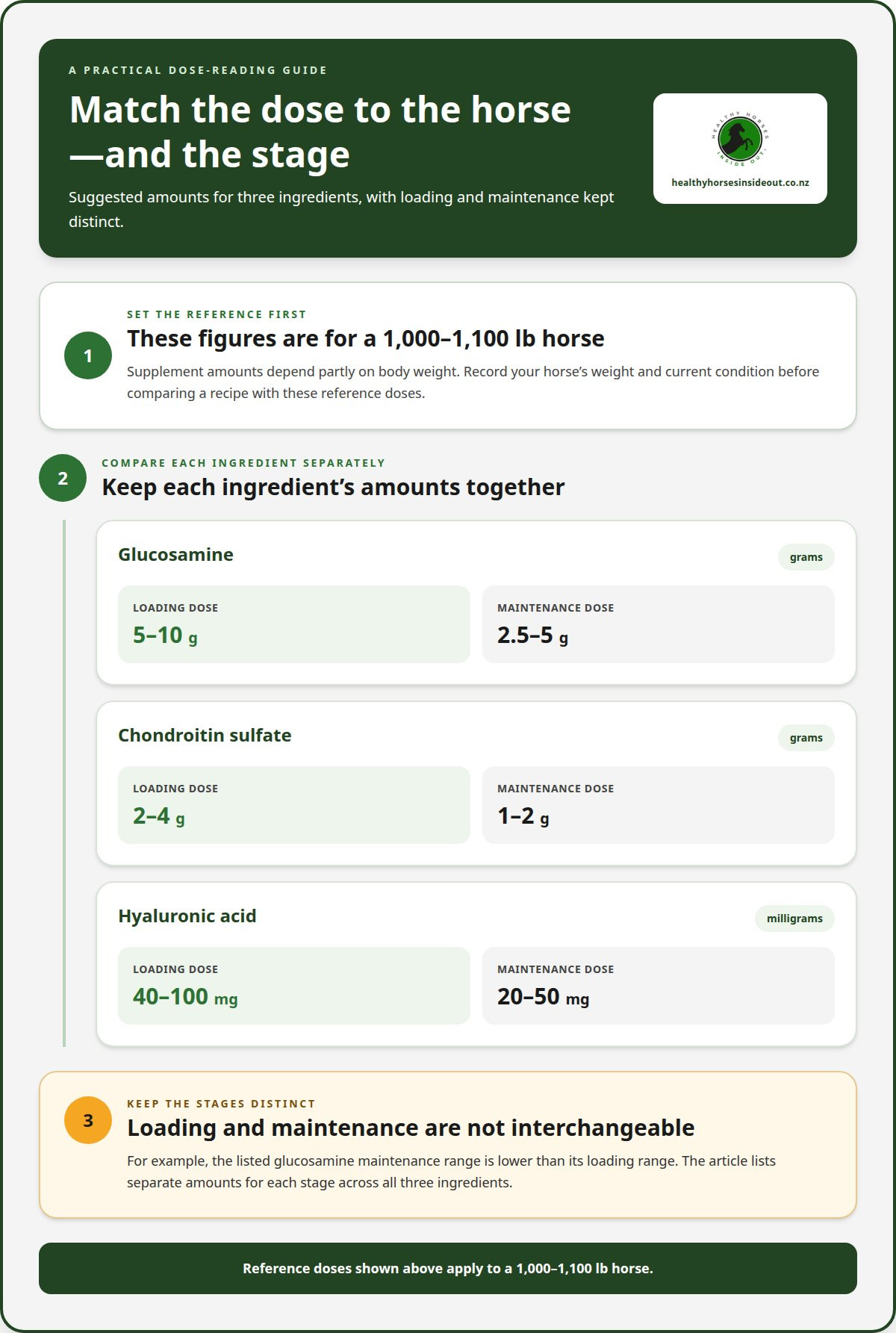
- Weigh your horse and identify the reference dose. Supplement amounts depend partly on body weight, so don’t treat a serving for a heavier horse as automatically suitable for a lighter one. The figures below apply to a 1,000 to 1,100 pound horse. Record your horse’s weight and current condition before comparing any DIY recipe with that reference.
- Compare each ingredient separately. For a 1,000 to 1,100 pound horse, the suggested glucosamine loading dose is 5-10 grams, with a maintenance dose of 2.5-5 grams. The suggested chondroitin sulfate loading dose is 2-4 grams, and maintenance is 1-2 grams. Hyaluronic acid is 40 - 100 milligrams during loading and 20-50 milligrams for maintenance.
- Keep loading and maintenance amounts distinct. They aren’t interchangeable stages. For example, the listed glucosamine maintenance range is lower than its loading range. Apply the same distinction when measuring chondroitin sulfate and hyaluronic acid. Follow the dose instructions for each specific ingredient, and don’t combine the upper end of every range without considering the full mix and existing feed.
- Use weight and condition together. A change in body condition can alter the nutritional context, even if the horse’s measured weight hasn’t changed. Note changes in workload, feed and condition alongside the supplement dose. Don’t estimate an adjusted amount by simply scaling every ingredient from the reference horse: each nutrient’s purpose, concentration and overlap with the existing ration also matter.
- Measure the mix accurately and reassess each change. Weigh individual ingredients rather than relying on a scoop, which may hold different amounts of different powders. Record the dose and the reason for it, then keep the rest of the ration consistent while assessing the change. If the horse is outside the reference weight range or its condition is shifting, seek veterinary advice before applying these figures.
Can DIY horse supplement mixes interact with medications or other feeds?
- Write down the whole daily ration. Include every feed, supplement and medication, plus its serving instructions. A vitamin mix added to fortified feed, for example, may duplicate ingredients even when each product is fed as directed. This inventory gives you a clearer picture of what your horse already receives before you introduce a homemade blend.
- Compare ingredient lists across products. Check names and amounts, not just the purpose printed on each label. Two products marketed for different needs may still share nutrients or other ingredients. Record the overlap, then assess the combined intake rather than treating each scoop as a separate decision.
- Include medication in the review. Before adding a supplement to your horse’s diet, consult a veterinarian. Provide the medication name, supplement ingredients and feeding amounts. This lets the veterinarian consider the combination in context, including the horse’s reason for treatment and any relevant health concerns.
- Avoid changing several parts of the ration at once. If you add a DIY mix while changing feed or medication, it becomes harder to identify what caused a change in your horse’s condition. Keep a written record of the date, ingredients and serving amount for each adjustment. Make the plan clear to anyone else feeding the horse.
- Review the mix whenever the routine changes. A new feed, altered medication or different supplement changes the overall picture. Don’t assume an old recipe remains suitable after those changes. Keep the ingredient list and feeding plan together, and compare horse supplement options when you’re considering a more defined approach to daily supplementation.
Healthy Horses Inside Out: Everyday Horse Supplements
Healthy Horses Inside Out offers Everyday Horse Supplements for owners considering routine nutritional support, alongside Specific Horse Supplements for more focused needs. Horse Supplement Bundles and HHIO Pellets provide further options to consider alongside your horse’s existing ration.
Use the feeding plan you’ve assessed to guide your choice: identify the need first, then compare ingredients and directions with current feeds and supplements. If you’re weighing a targeted option against a broader everyday supplement, Healthy Horses Inside Out’s range offers categories to explore. Supplements are not a substitute for veterinary advice.
For a considered next step, visit healthyhorsesinsideout.co.nz to explore the horse supplement range.
Make your next feeding decision deliberate
Let your next feeding decision begin with a clear purpose, not a desire to add another scoop. Write down what you want to support, what your horse already receives and what would show that the plan needs reviewing. This simple record gives you a practical reference as feed, workload or condition changes, helping keep decisions grounded in your horse’s actual needs.
Managing DIY horse supplement mix risks also means recognising when a home-mixed formula adds complexity without meeting a defined nutritional need. Keep the plan manageable, make changes intentionally and involve your veterinarian when health concerns or medication are part of the picture. You can then choose your next step with greater clarity, rather than relying on guesswork.
Healthy Horses Inside Out offers horse supplement options to explore as you consider your horse’s routine. Contact Healthy Horses Inside Out to discuss your next step. Thoughtful choices can help you care for your horse with confidence.
Frequently Asked Questions
Does my horse need this?
Only add a supplement when you’ve identified a nutritional reason. Start with the horse’s forage, complete feed, workload and life stage, then consider whether a particular need remains unmet. Nutrient deficiencies are described as rare in fit competition horses fed commercially mixed complete feeds. A horse with a specific health concern or a changing ration needs a more individual assessment.
Where’s the research?
Look for peer-reviewed research conducted on horses when assessing a supplement’s efficacy and safety. Check whether a study examined the same ingredient, dose and intended use you’re considering; results from people or another species may not translate directly to equine nutrition. Also distinguish evidence about an ingredient from evidence about a finished mix, since formulation and the horse’s overall diet affect how useful the findings are.
What are the risks of mixing horse supplements at home?
Home mixing can make it harder to keep ingredient identity, amounts and batch records clear. A handwritten recipe, for example, may not capture a changed ingredient source or the exact amount used in a new batch. Keep the original packaging and batch details for every component, record the recipe and date, and use dedicated, clean utensils to reduce mix-ups with other feed ingredients.
Which horse supplements can be dangerous in excess or when combined?
Products supplying vitamins or minerals deserve careful review because some nutrients can harm horses in large quantities, and some combinations may interact negatively. Pay particular attention to multi-ingredient blends used alongside fortified feeds or another supplement. Compare complete ingredient panels and serving directions, then assess combined daily intake rather than relying on a product’s intended purpose or name.
How can I calculate safe supplement doses based on a horse’s weight?
Begin with a reliable current weight, then use the product’s stated dose range and units. Convert units consistently before doing any arithmetic, and calculate the amount delivered by the actual serving rather than assuming a scoop equals a fixed weight. For mixtures with several active ingredients, check each ingredient’s dose separately: one overall scoop calculation cannot establish that every component is appropriate.
What horse nutrients are commonly over-supplemented, such as selenium, iodine, iron, or vitamin A?
Count selenium, iodine, iron and vitamin A across the whole ration, including fortified feed and any separate supplement. Don’t assume a nutrient is needed simply because it appears on a label. Record the amount supplied by each product and review the combined intake before adding another source. A veterinarian can assess the full ration when a specific concern prompts supplementation.


