
Could your horse be overweight even if they don’t look obviously so? A horse weight management plan starts with objective checks: a girth-to-height ratio of 1.26 or greater indicates an overweight horse, while the threshold for an overweight pony is 1.33. A cresty neck score of 3 or higher also suggests excess weight is likely.
A horse weight management plan starts with more than judging appearance: excess weight can affect a horse’s health. Overweight horses are at risk of equine metabolic syndrome (EMS), while EMS or insulin resistance increases the risk of laminitis. Recognising changes in body condition and making measured adjustments can help you support your horse without relying on guesswork.
Assess body condition, manage feed and calorie intake, and track changes consistently. Understanding the links between excess weight, metabolic health and laminitis can help you make informed decisions about your horse’s care.
Key Takeaways
- Use hands-on checks as well as appearance to assess whether your horse is carrying excess weight.
- Manage calories without compromising forage access, and make feed changes gradually.
- Track body condition and weight over time to see whether your approach is working.
- Understand how excess weight can affect metabolic health and increase laminitis risk.
1. Is my horse overweight?
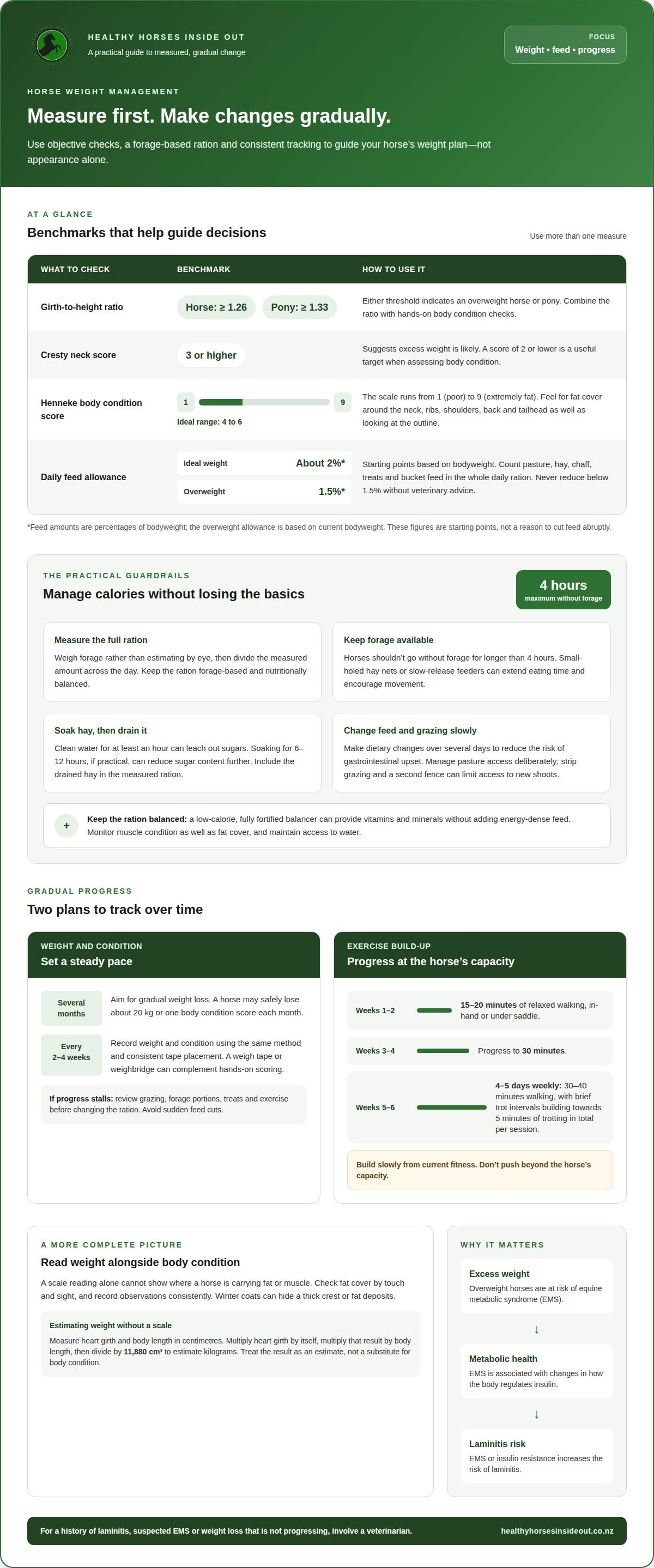
A horse is considered overweight at a girth-to-height ratio of 1.26 or greater; for a pony, the threshold is 1.33. A cresty neck score of 3 or higher also suggests excess weight. Use these measures alongside hands-on body condition scoring, as appearance alone can make gradual weight gain difficult to spot.
Weight loss should be gradual, over several months. A horse may safely lose about 20 kg or one body condition score each month. Record weight and condition at the same time each month, using a weigh tape and consistent body condition checks. If progress stalls, review grazing, forage portions, treats and exercise rather than making a sudden feed cut. Gradual changes are easier to sustain and can help prevent regain.
Forage still matters during weight loss: horses shouldn’t go without it for longer than 4 hours. Divide the measured daily ration among small-holed hay nets or slow-release feeders to extend eating time and encourage movement. This supports the natural need to chew while helping manage intake. Make feed and grazing changes gradually, and maintain access to water.
Exercise should build slowly from the horse’s current fitness. Begin with 15-20 minutes of relaxed walking in-hand or under saddle during Weeks 1-2, then progress to 30 minutes during Weeks 3-4. In Weeks 5-6, aim for 4-5 days weekly, with 30-40 minutes of walking and brief trot intervals, building towards 5 minutes of trotting in total per session. Don’t push beyond the horse’s capacity.
The cost of managing weight in New Zealand depends on factors such as the type and amount of feed or hay, grazing controls and veterinary advice. These are separate parts of the budget. Involve a veterinarian if your horse has a history of laminitis, may have EMS, or isn’t losing weight despite a consistent routine. An equine nutritionist can help assess ration balance and forage management.
2. Managing feed quantity and calories
A horse weight management plan should account for the whole daily ration: pasture, hay, chaff, treats and bucket feed. Horses at ideal weight usually consume about 2% of their bodyweight in feed daily; the recommended daily allowance for an overweight horse is 1.5% of its current bodyweight. These figures are starting points, not a reason to cut feed abruptly. Never reduce intake below 1.5% without veterinary advice.
Weigh forage instead of estimating by eye, and divide the measured amount across the day. Keep the ration forage-based and nutritionally balanced as you reduce calories. A low-calorie, fully fortified balancer can provide vitamins and minerals without adding energy-dense feed. Monitor muscle condition as well as fat cover, since an overly restrictive ration can affect overall condition.
Soaking hay can lower its energy content while retaining fibre. Use clean water for at least an hour to leach out sugars; soaking for 6-12 hours, if practical, can reduce sugar content further. Drain the hay before feeding and include it in the measured ration. Grazing contributes calories too, so manage pasture access deliberately. Strip grazing is commonly used in spring and summer; a second fence behind the horse can protect cleared grass and limit access to new shoots.
Review the horse weight management plan alongside the horse’s condition. If weight isn’t changing, reassess pasture intake, hay portions, treats and bucket feed before adjusting the ration. Make dietary changes slowly over several days to reduce the risk of gastrointestinal upset. Forage energy, grazing and the horse’s workload all influence calorie needs, so consider them together. Equine nutrition support may help you consider suitable feed options alongside a forage-based ration.
3. Assessing horse body condition and ideal weight
A scale reading alone can’t show where a horse is carrying fat or muscle. Use body condition scoring alongside a weigh tape or weighbridge, then compare results over time. The Henneke scale runs from 1, meaning poor, to 9, meaning extremely fat; its ideal range is 4 to 6. A cresty neck score of 2 or lower is also a useful target.
Assess body condition by touch as well as sight. Check fat cover around the neck, ribs, shoulders, back and tailhead, then consider the horse’s overall outline. A thick crest or fat deposits can be hard to spot beneath a winter coat, so hands-on checks reveal details photographs may miss. Record your score and observations regularly, using the same method each time.
To estimate weight without a scale, measure heart girth and body length in centimetres. Multiply heart girth by itself, multiply that result by body length, then divide by 11,880 cm³ to estimate kilograms. Treat the result as an estimate, not a substitute for body condition: weight tape readings can shift with placement, and muscle can affect the horse’s shape without indicating excess fat.
During weight loss, record weight and body condition every 2-4 weeks. Take measurements at a consistent time and keep the tape position, scoring method and notes the same. A falling weight with a stable or improving condition score gives more useful context than either measure alone. If the score changes while weight appears steady, review the full pattern before adjusting nutrition or the exercise plan.
Use the Henneke score to guide decisions, not as a standalone verdict. A score outside 4 to 6, or a cresty neck above 2, signals a reason to reassess feed, activity and routine. Set progress targets from the horse’s starting condition, then keep tracking so gradual changes remain visible and weight regain is easier to spot.
4. Equine metabolic syndrome and laminitis risk
Excess weight is more than a body-shape concern. Overweight, good-doer horses are at risk of equine metabolic syndrome (EMS), which is associated with changes in how the body regulates insulin. Horses with EMS or insulin resistance have a higher risk of laminitis, making weight and metabolic health closely linked.
Laminitis history makes body condition especially important. A horse that has previously had laminitis should not exceed a body condition score of 3. A score of 4.5 or above falls into the Red-category obese group; laminitic horses at 3.5 or above are considered at serious risk. These thresholds highlight why small, sustained changes can matter before excess weight becomes more pronounced.
If your horse isn’t losing weight despite a consistent feeding and exercise routine, a veterinarian may investigate EMS with a blood test. This can help determine whether metabolic factors are affecting progress. Veterinary assessment is also important if laminitis is suspected or has occurred before, so grazing and calorie changes can account for your horse’s health history.
Manage grazing and feeding to prevent your horse compensating for restricted access by eating a large amount in a short time. Weight-management programmes that allow substantial intake over a short period carry a higher laminitis risk than arrangements that provide constant access to small amounts of grass. Consider forage access while controlling calories, and make changes gradually rather than switching between restriction and unrestricted pasture.
Fitness supports weight control, but exercise should build progressively and suit the horse’s current condition. Pair a steady activity routine with measured feeding, and track weight and body condition to spot stalled progress. For nutritional support alongside these management steps, explore targeted horse supplements. Supplements don’t replace veterinary assessment or treatment for EMS or laminitis.
Healthy Horses Inside Out
Healthy Horses Inside Out offers nutritional support to complement a carefully managed feeding routine. Everyday Horse Supplements, Specific Horse Supplements, Horse Supplement Bundles and HHIO Pellets provide options to consider as part of your horse’s broader diet. The right choice depends on the horse’s existing ration and nutritional needs, so supplements should complement, not replace, measured forage, suitable grazing management and gradual exercise. They also don’t replace veterinary assessment when weight loss stalls or metabolic disease is a concern.
If you’re reviewing your horse’s nutrition as part of a weight-management approach, contact Healthy Horses Inside Out to discuss the available supplement options.
Make steady progress part of the routine
Make your horse’s care practical to maintain, not just effective on paper. Choose a routine that fits your daily feeding and turnout arrangements, then use your records to decide when adjustments are needed. A steady approach keeps decisions grounded in your horse’s response rather than short-term impressions.
A horse weight management plan can also prompt useful conversations about how nutrition supports your horse’s wider wellbeing. If you’re considering supplements alongside the existing ration, compare the options with your horse’s nutritional needs in mind.
Contact Healthy Horses Inside Out to explore nutritional support for your horse. A thoughtful next step can help you move forward with greater clarity and care.
Frequently Asked Questions
Is my horse overweight?
Compare your horse’s measurements and body condition, rather than relying on appearance alone. A girth-to-height ratio of 1.26 or greater indicates an overweight horse; for a pony, the threshold is 1.33. A cresty neck score of 3 or higher also suggests excess weight. If winter coat or body shape makes assessment difficult, use a weigh tape and hands-on scoring to build a clearer picture.
How do you assess a horse’s body condition score and ideal weight?
Use the Henneke scale, which runs from 1, poor, to 9, extremely fat; the ideal range is 4 to 6. Feel body fat as well as assessing the horse’s outline, and record the score alongside weight measurements. For an estimated weight in kilograms, multiply heart girth squared by body length in centimetres, then divide by 11,880. Treat this calculation as an estimate, not a substitute for scoring.
What is a safe rate of weight loss for an overweight horse?
A gradual rate is safer: a horse may lose about 20 kg or one body condition score each month. Allow weight loss to happen over several months, rather than cutting feed sharply to speed progress. Track weight and condition consistently; a rapid change or a worsening body condition score is a reason to review the approach with a veterinarian.
How many calories and how much forage should a horse eat for weight management?
There isn’t one calorie target that suits every horse, because needs depend on bodyweight, workload, grazing and the energy content of feed. As a starting point, an overweight horse’s daily feed allowance is 1.5% of its current bodyweight; never reduce intake below this without veterinary advice. Keep the ration forage-based, measure all feed, and avoid leaving a horse without forage for longer than 4 hours.
Which low-calorie feeds and supplements are suitable for overweight horses in New Zealand?
Build the ration around measured forage, then consider a low-calorie, fully fortified balancer to supply vitamins and minerals without unnecessary energy. Choose supplements to address a specific nutritional need; they do not replace ration management or veterinary care. Healthy Horses Inside Out offers everyday and targeted supplements, bundles and HHIO Pellets to consider alongside your horse’s existing diet.
What health risks and conditions can cause weight gain or make weight loss unsafe in horses?
Excess energy intake relative to energy use can contribute to weight gain, while equine metabolic syndrome and insulin resistance are important concerns in overweight horses. Both are associated with greater laminitis risk. A horse with a laminitis history should not exceed a body condition score of 3. If weight loss stalls despite consistent management, a veterinarian may investigate equine metabolic syndrome with a blood test.


