

What if the lush green pasture your horse relies on for health is actually the source of a subtle, systemic imbalance? While grass is the natural foundation of an equine diet, modern grazing often lacks the essential fatty acids required to keep inflammation in check. Many owners find themselves frustrated by dull coats or itchy skin that won't resolve, leading them to search for effective horse omega 3 supplements. It's disheartening to see a performance mount lose their bloom or an older horse struggle with stiff joints, especially when you've invested so much in their daily care.
We agree that seeing your horse in discomfort is worrying, and that a shiny coat should be a reflection of internal health rather than just good grooming. This guide promises to reveal the scientific necessity of Omega 3 and how to choose a supplement that balances inflammation to support systemic health. We will examine the latest 2026 research on fatty acid conversion, compare the efficacy of marine and plant sources, and provide a clear framework for stabilising your horse's diet from the inside out to provide lasting peace of mind.
Key Takeaways
- Understand why modern grazing often creates an inflammatory imbalance and how to restore the essential Omega 3 to 6 ratio in your horse's diet.
- Learn how fatty acids support cell membrane integrity and the production of anti-inflammatory eicosanoids to protect your horse from the inside out.
- Discover the biological differences between plant-based ALA and marine-sourced EPA and DHA to help you choose the most effective horse omega 3 supplements.
- Identify the early physical signs of nutritional gaps, including dull coats and brittle hooves, to address systemic issues before they affect mobility.
- Explore how to integrate targeted nutrition with a foundational base like HHIO Pellets to streamline your horse's daily wellness routine and ensure long-term vitality.
The Omega 3 to 6 Ratio: Why New Zealand Pasture Isn't Always Enough
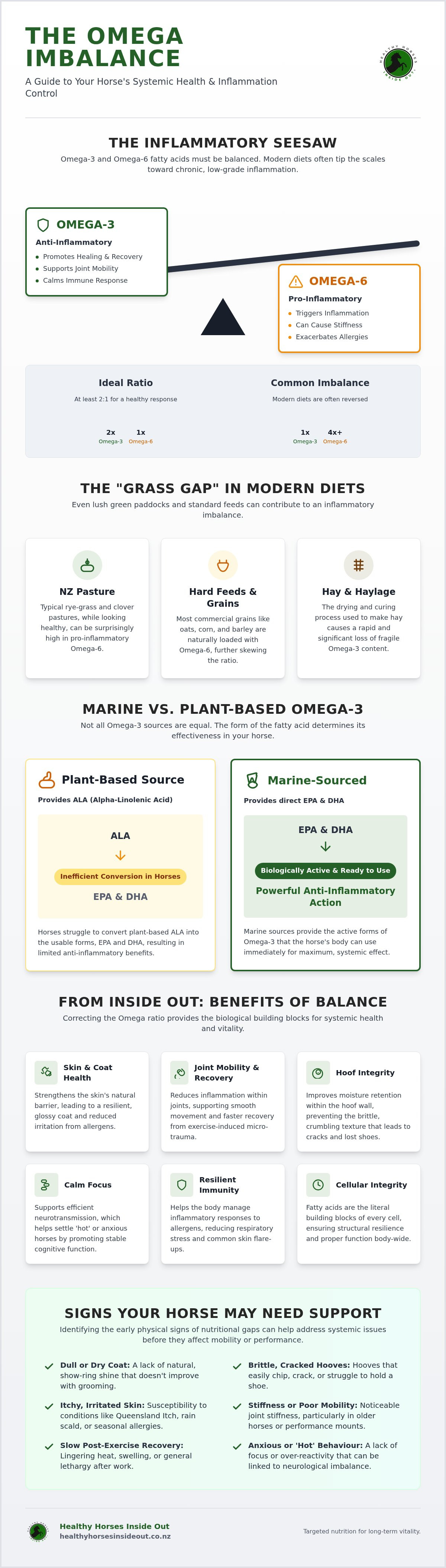
Omega 3 and 6 are essential fatty acids for horses, meaning the body cannot synthesise them independently; they must be provided through the daily diet. While both are necessary for survival, they serve opposing roles in the inflammatory response. Omega 3 is primarily anti-inflammatory, whereas Omega 6 is pro-inflammatory. In a natural, wild grazing environment, horses would consume a diet naturally high in Omega 3. However, the 'Grass Gap' in New Zealand occurs because our typical rye-grass and clover pastures, while looking lush and green, can be surprisingly high in Omega 6. This creates a systemic imbalance before you even consider the bucket feed. Current 2026 nutritional guidelines suggest that an ideal equine diet should maintain an Omega 3 to Omega 6 ratio of at least 2:1 to ensure a balanced and healthy inflammatory response.
Understanding the Inflammatory Seesaw
Think of these fatty acids as a seesaw. Omega 6 triggers necessary inflammatory pathways, which are vital for healing after an injury or fighting off infection. If this response isn't countered by sufficient Omega 3 levels, the body remains in a state of chronic, low-grade inflammation. Performance horses and seniors are particularly sensitive to this. High-intensity exercise creates micro-trauma that requires a rapid inflammatory reset, while older horses often deal with age-related joint degradation that is exacerbated by an Omega 6-heavy diet. Without the right horse omega 3 supplements, these horses struggle to recover, leading to stiffness and reduced vitality.
The Impact of Modern Equine Diets
The problem deepens when we look at common hard feeds. Most commercial grains, like oats, corn, and barley, are naturally high in Omega 6. Even when horses are off the track or out of work, their hay and haylage won't necessarily bridge the gap. The drying process used to create hay causes a rapid loss of natural Omega 3 content, leaving behind a profile that is skewed toward inflammation. Just because a paddock looks vibrant doesn't mean it's nutritionally balanced for long-term health. This is why intentionality in choosing horse omega 3 supplements is crucial for any owner looking to protect their horse's internal wellbeing. Balancing these fats isn't just about a shiny coat; it's about ensuring the foundational biological mechanisms that control inflammation are functioning correctly.
The Biological Role of Fatty Acids in Equine Systemic Health
Fatty acids serve as the literal building blocks of every cell in a horse’s body. They form the lipid bilayer of cell membranes, ensuring structural integrity and regulating the delicate flow of nutrients and waste. When you provide high-quality horse omega 3 supplements, you're essentially reinforcing these cellular walls to make them more resilient. This biological foundation is vital for the production of anti-inflammatory eicosanoids. These signalling molecules act as the body’s internal messengers, instructing the immune system to dampen inflammatory responses rather than letting them spiral into chronic issues.
Neurological health also depends on these specific lipids. Proper fatty acid levels facilitate efficient neurotransmission, which can help settle 'hot' or anxious horses by supporting stable cognitive function and focus. Similarly, by incorporating horse omega 3 supplements, you're providing the tools needed to build resilience against seasonal allergens. This prevents the overreactions that lead to common skin irritations and respiratory stress, keeping the horse comfortable throughout the changing seasons.
From Skin to Hoof: Visible Results of Internal Balance
Visible health is a direct reflection of this internal lipid balance. Omega 3 strengthens the skin’s natural barrier, which is the first line of defence against conditions like Queensland Itch and rain scald. This barrier is equally important for the hooves. Lipids are required for moisture retention within the hoof wall, preventing the brittle, crumbling texture that often leads to cracks and lost shoes. True show-ring shine doesn't come from a bottle of silicone spray. It’s the result of hair follicles being nourished from the inside out, creating a resilient and glossy coat.
Joint Mobility and Recovery
For the performance mount, hard work inevitably leads to heat and swelling. Omega 3 works to reduce inflammation within the synovial fluid, which is the lubricant that keeps joints moving smoothly under pressure. Senior horses benefit immensely from this as well, as it helps manage the chronic stiffness that often comes with age. Choosing the best omega-3 option ensures these benefits are delivered where they are needed most. Faster muscular recovery after a long day of competition is another significant advantage, letting your horse return to their best sooner. To maintain this level of systemic support, integrating specific horse supplements into your routine provides the consistency required for long-term health.
Marine vs. Plant-Based: Choosing the Right Omega 3 Source
Choosing between plant and marine sources is the most common point of confusion for owners. While both fall under the Omega 3 umbrella, their biological utility differs significantly. Most plant-based horse omega 3 supplements contain alpha-linolenic acid (ALA). For the horse to use this, they must convert it into eicosapentaenoic acid (EPA) and docosahexaenoic acid (DHA). This conversion process is remarkably inefficient in equines. By the time the body processes ALA, very little of the anti-inflammatory "active" ingredient remains to support systemic health.
Flaxseed and Linseed: The Traditional Choice
Flaxseed and linseed are the traditional mainstays of the tack room. Whether fed as whole seeds, meal, or cold-pressed oil, they are accessible and generally cost-effective for the everyday horse. They provide excellent energy and help with coat shine, but as a tool for managing deep-seated systemic inflammation, they often fall short. Because of the low conversion rate from ALA to EPA, an elite athlete or a horse with chronic skin issues would need to consume vast quantities to see a therapeutic effect. For these reasons, plant sources are best viewed as a maintenance tool rather than a clinical solution.
Marine Oils and Algae: The Direct Route
Marine oils and algae-based products are now considered the gold standard for addressing inflammation. These sources skip the conversion challenge by providing EPA and DHA in their direct, biologically active forms. This means a smaller, more concentrated dose of marine oil can often outperform a much larger volume of plant oil. While some owners worry about a "fishy" smell, modern 2026 processing techniques have significantly improved palatability. Many high-quality horse omega 3 supplements now use refined oils or algae powders that even the most fussy eaters will accept without hesitation.
Stability is a critical factor when selecting any fatty acid product. Omega 3 fatty acids are highly prone to oxidation, meaning they can turn rancid quickly if not stored correctly or stabilised with antioxidants like Vitamin E. Rancid oil is pro-inflammatory, which completely defeats the purpose of supplementation. Whether you choose a sustainable algae source or a high-potency fish oil, ensuring the product is fresh and shelf-stable is paramount. Balancing ethical sourcing with biological efficacy allows you to support your horse’s vitality while maintaining peace of mind regarding the integrity of their diet.
Identifying the Signs: When Your Horse Needs an Omega 3 Boost
Recognising a nutritional gap requires a methodical eye for detail. The most obvious indicator is often the coat. If it appears dull and brittle, or if the skin feels dry and flaky despite a rigorous grooming routine, the internal lipid barrier is likely struggling. This deficiency also shows in the hooves; slow growth and a tendency toward cracking or crumbling suggest that the horse lacks the essential fats needed for structural integrity. You may also observe physical stiffness, particularly when they first move out of the stable or paddock in the morning. This "creakiness" is a classic sign of systemic inflammation that high-quality horse omega 3 supplements are designed to address.
Behavioural Indicators of Nutritional Stress
We often attribute "spooky" or reactive behaviour solely to a lack of training, but systemic inflammation can play a significant role in a horse's temperament. When the body is in a pro-inflammatory state, it can lead to a heightened sense of anxiety and a lack of focus. A balanced fatty acid ratio supports stable neurological function, helping to create a more settled and resilient mount. Before assuming a horse is simply difficult, it's worth considering if they are experiencing nutritional discomfort that makes it impossible for them to remain calm. Providing the right horse omega 3 supplements can often be the missing link in achieving a more focused performance.
Seasonal and Life Stage Considerations
The New Zealand climate presents specific hurdles for fatty acid management. During the spring flush, the rapid growth of rye-grass and clover can skyrocket Omega 6 levels, while winter conditions often involve poor-quality hay that lacks any natural Omega 3. Broodmares have even higher requirements, as DHA is vital for the neurological and retinal development of the foal. In the wet, muddy months, a strong skin barrier is the only thing standing between your horse and rain scald or mud fever. Maintaining internal health ensures they have the resilience to withstand these environmental pressures. If you’ve identified these signs in your own horse, you can find targeted solutions in our range of specific horse supplements to restore their natural vitality.
Optimising Vitality with HHIO: A Methodical Approach to Supplementation
At HHIO, we believe that external performance is a direct reflection of internal systemic health. Our philosophy is rooted in an "Inside Out" approach, where we focus on providing the foundational building blocks a horse needs to thrive rather than masking symptoms with temporary fixes. This requires a commitment to integrity, opting for high-quality ingredients and avoiding the low-grade fillers often found in traditional retail products. When you integrate horse omega 3 supplements into your routine, you're not just adding an oil; you're participating in a methodical strategy to balance inflammation at a cellular level.
HHIO Pellets serve as the perfect foundational base for this journey. Designed specifically to address New Zealand’s unique mineral and nutritional gaps, these pellets provide the stable environment necessary for targeted nutrients to work effectively. For many owners, the most efficient way to achieve this balance is through our Horse Supplement Bundles. These bundles streamline the process, ensuring that your horse receives a scientifically balanced diet that supports long-term vitality without the confusion of managing dozens of individual containers.
The Methodical Mentor's Guide to Feeding
Success with any new supplement requires patience and a structured introduction. We recommend starting slow, adding a quarter dose of your chosen oil or powder to the feed and gradually increasing it over seven to ten days. This methodical approach allows the digestive system to adapt and prevents the pickiness that can occur with sudden dietary changes. Consistency is far more valuable than "loading doses." Daily, steady supplementation ensures a constant supply of fatty acids for cell membrane repair and anti-inflammatory signalling.
Monitoring progress is an essential part of being a partner in your horse's health. In the first 30 days, you'll often notice a subtle change in skin hydration and a softening of the coat. By the 60-day mark, the "show-ring shine" becomes evident as new, nutrient-rich hair grows in. By 90 days, the systemic benefits are fully realised, often manifesting as improved joint comfort, a more settled temperament, and a resilient immune response that can withstand seasonal pressures.
Simplifying Your Equine Care Routine
Navigating nutritional choices doesn't have to be overwhelming. Most owners find success by using everyday horse supplements to cover the essential mineral bases first. From there, you can layer in specific horse supplements to provide the targeted inflammatory support your horse requires. By choosing the best horse supplements New Zealand has to offer, you gain the peace of mind that comes from knowing your horse’s diet is scientifically sound and intentionally designed for their unique environment.
Empowering Your Horse with Science-Led Nutrition
Balancing the inflammatory response is a foundational step in modern equine care. By addressing the Omega 3:6 ratio and choosing high-potency marine or algae sources over less efficient plant alternatives, you provide your horse with the biological tools needed for resilient skin, strong hooves, and fluid movement. This methodical approach ensures you aren't just treating symptoms but are instead optimising health from the inside out. As a New Zealand owned and operated partner in wellness, HHIO remains dedicated to animal welfare and integrity.
Our science-led nutritional formulas are specifically designed to bridge the gaps found in local grazing conditions. If you're ready to see the difference that high-quality horse omega 3 supplements can make to your horse’s bloom and comfort, we are here to guide you with evidence-based solutions. Shop our range of scientifically formulated horse supplements today and enjoy the peace of mind that comes from a truly balanced diet. Your horse’s journey toward lasting vitality starts with the right nutritional foundation.
Frequently Asked Questions
Can I just feed my horse supermarket vegetable oil for Omega 3?
No, standard supermarket vegetable oils like corn or soy oil are typically very high in Omega 6 fatty acids. While these oils provide extra calories for weight gain, they can actually worsen systemic inflammation by skewing the fatty acid ratio further away from the ideal balance. For effective results, you should choose dedicated horse omega 3 supplements that prioritises anti-inflammatory lipids rather than generic fats that might trigger inflammatory pathways.
How long does it take to see results from horse Omega 3 supplements?
Visible changes usually appear within 30 to 90 days of consistent daily use. You'll likely notice a softer, glossier coat and improved skin hydration within the first month as the lipid barrier begins to repair itself. Deeper systemic benefits, such as improved joint mobility and reduced stiffness in senior horses, typically take 60 to 90 days to manifest because cellular turnover in these tissues occurs at a slower rate.
Will Omega 3 supplements make my horse too 'hot' or energetic?
Omega 3 fats provide "cool" energy and don't cause the excitable, "fizzy" behaviour often associated with high-starch grains or sugars. In fact, these fatty acids support stable neurological function and neurotransmission, which often helps reactive or anxious horses remain more focused and settled. By reducing systemic discomfort, you're more likely to see a horse that is calm and willing to work rather than one with excess nervous energy.
Is it possible to over-supplement Omega 3 in a horse's diet?
While horses tolerate fat well, excessive amounts can lead to loose stools or unwanted weight gain if the total caloric intake exceeds their requirements. The primary risk of high fat supplementation is the depletion of Vitamin E, as the body uses this antioxidant to metabolise fats. Following a methodical feeding plan and staying within recommended dosages ensures your horse receives the anti-inflammatory benefits of horse omega 3 supplements without disrupting their overall nutritional equilibrium.
Do Omega 3 supplements help with horses prone to laminitis?
Yes, they are a valuable component of a preventative nutritional strategy for laminitic horses. Omega 3 fatty acids help improve insulin sensitivity and reduce the chronic, low-grade inflammation often associated with metabolic disorders. While they aren't a substitute for veterinary care or proper farriery, providing these essential fats supports the structural integrity of the laminae and helps manage the underlying inflammatory triggers that can lead to painful hoof episodes.
What is the difference between EPA, DHA, and ALA for horses?
ALA is a short-chain fatty acid found in plants like flaxseed, which the horse must convert into longer chains to use. EPA and DHA are long-chain fatty acids found in marine sources that are already in their biologically active forms. Because horses are remarkably inefficient at converting ALA, feeding marine-based EPA and DHA provides a more direct and potent anti-inflammatory effect for managing joint health and skin irritations.
Should I feed Omega 3 as an oil or a powder?
Both formats can be effective, provided they are stabilised to prevent oxidation. Oils must be cold-pressed and stored in a cool, dark place to avoid rancidity, which can turn a healthy supplement into a pro-inflammatory one. Powders, particularly those derived from algae, are often more shelf-stable and can be easily mixed into a foundational base like HHIO Pellets, making them a convenient option for busy owners who value consistency.
Does my horse need Omega 3 if they are on a high-fat rice bran feed?
Yes, supplementation is still necessary because rice bran is naturally very high in Omega 6. A "high fat" diet is not automatically a "balanced" diet. If your horse consumes large amounts of rice bran, their Omega 6 levels are likely quite high, which could promote inflammation. Adding specific horse omega 3 supplements helps restore the critical 2:1 ratio required to dampen inflammatory responses and support long-term systemic health.


