

A mare’s mood swings aren’t always hormonal, so a horse mood swings supplement shouldn’t be the first response to every change in behaviour. Chasteberry may suit some mares when their behaviour appears linked to fluctuating hormones, but pain, diet, routine and other medical issues can also affect how a horse feels and acts.
It’s understandable to look for a nutritional way to support a mare who seems unsettled or unusually reactive. Her estrous cycle typically lasts 21 to 23 days, but a pattern around her cycle doesn’t rule out another cause. Persistent or marked behaviour changes warrant veterinary attention.
This guide explains when chasteberry may be relevant and why it isn’t a universal fix. You’ll also learn how to consider environmental and nutritional influences, recognise when discomfort or illness may be involved, and choose a sensible next step for your mare.
Key Takeaways
- Track when behaviour changes occur and whether they follow a recurring pattern before considering chasteberry support.
- Keep feeding times and daily routines consistent, and make sure your mare’s diet meets her needs.
- Take behaviour changes seriously as possible signs of pain or discomfort, not simply a mare being difficult.
- Persistent or unusual mood changes deserve veterinary attention, especially when they may have a medical cause.
Chasteberry supplement for moody mares
Chasteberry may suit a mare whose behaviour appears linked to fluctuating hormones, but it isn’t a universal answer. Consider a horse mood swings supplement in light of behaviour patterns, your mare’s health and her overall diet.
Competition rules for calming supplements depend on the event and discipline. Check the relevant rules before giving a supplement to a horse entered in competition.
Ingredients for calm behaviour
Chasteberry is used for some mares to support normal hormone regulation and pituitary gland function. A mare’s oestrous cycle typically lasts 21 to 23 days, so note whether behaviour changes appear to follow a recurring pattern. However, a study of mares referred for behavioural concerns found increased hormone levels associated with abnormal behaviour in fewer than 10% of examined samples.
Valerian and chamomile are also used to support calm behaviour. Valerian has shown effectiveness for anxiety and stress in horses. HAPP-E-MARE is a supplement for mares; review its ingredients and directions rather than assuming every mare needs it.
Dosage, onset and duration
There isn’t one weight-based dose that applies to every calming supplement. Feeding amounts depend on the product’s formulation and directions, so don’t transfer a dose between products or horses. Onset and duration also vary by ingredient and formulation; don’t assume a supplement will act immediately or last for a set period. Before choosing a horse mood swings supplement, consider its intended use and your mare’s needs.
Supplement risks and product selection
Active levels in raw herbs can vary with growth stage, season and environmental conditions, making feeding rates difficult to determine without a standardised extract. Compare the ingredient list, directions and formulation. Discuss possible interactions with existing medication with your veterinarian, and observe your mare after introducing a supplement. If she competes, review event rules before use. Persistent low moods or sudden behaviour changes need assessment, not just a calming ingredient. A horse mood swings supplement cannot replace investigating an underlying health concern.
Environmental and nutritional influences
Behaviour can change when feeding times, daily routines or social conditions shift. A consistent schedule and nutritionally complete diet provide a useful foundation alongside calming herbs.
Magnesium supplements
Magnesium is one option owners may encounter in calming products, but it isn’t interchangeable with tryptophan or B vitamins. Compare the declared ingredients and feeding directions, then consider whether your horse’s existing ration already supplies the nutrients she needs. A supplement label alone can’t show whether magnesium addresses the cause of a behaviour change.
Start with the whole ration, including forage, hard feed and existing supplements. Note what changes when your horse moves paddocks, joins a different herd or receives feed at another time. These examples can help distinguish a management pattern from a nutritional gap. Keep feeding times consistent while assessing the situation, rather than adding several products at once.
Tryptophan and B-vitamin supplements
Tryptophan and B vitamins provide different nutrients, so compare them by ingredient and intended use. They shouldn’t be treated as equivalent calming treatments or selected solely because a horse seems tense. Review the full feed label and your horse’s current diet before adding either option. This helps avoid overlooking nutrients already present in a complete ration.
For example, record the feed, supplement and amount given at each meal, alongside any behaviour changes. A clear record can show whether a change coincides with a new product, altered routine or different social setting. Introduce one nutritional change at a time so its relationship to behaviour is easier to assess. Keep the feeding schedule steady during that observation.
Calming herbs work alongside, not instead of, consistent care and a nutritionally complete diet. Check that the daily ration meets your horse’s needs, then maintain regular feeding times. A missed meal, a new feed or a disrupted routine may complicate your assessment. A simple feeding record can help identify patterns and guide a more considered nutrition decision.
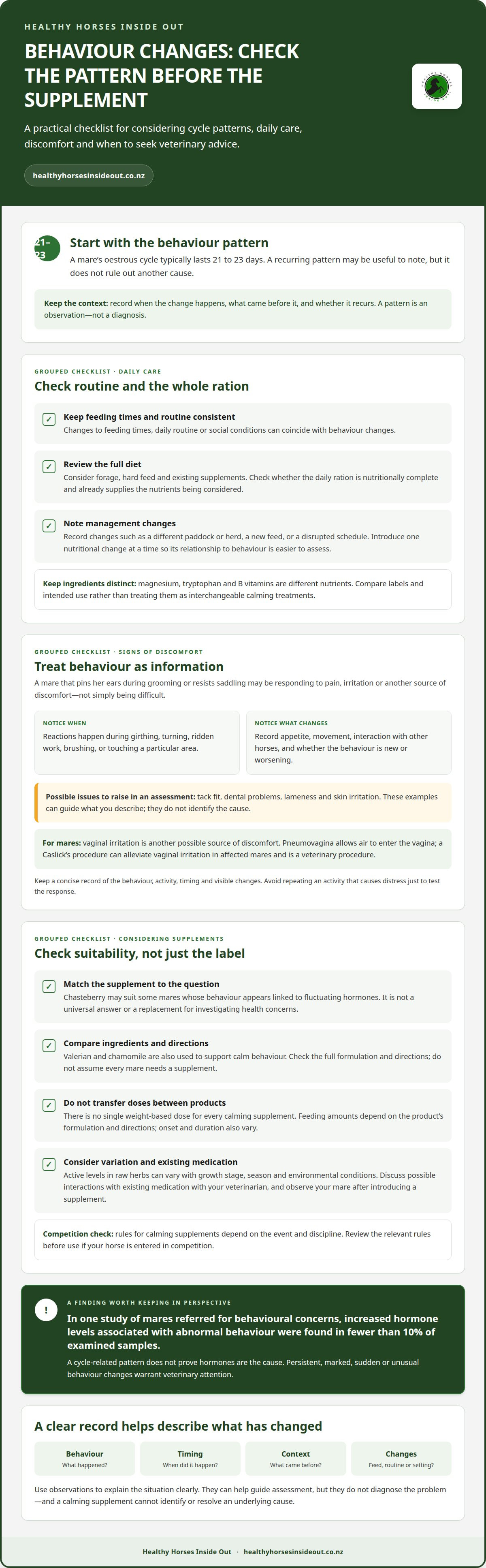
Pain and discomfort as causes of behaviour changes
A mare that pins her ears during grooming or resists saddling isn’t necessarily being difficult. Behaviour changes can be a response to pain, irritation or another source of discomfort. A calming supplement won’t identify or resolve the cause. Note when the change happens, what activity comes before it and whether it occurs consistently.
Look for patterns during ordinary handling, exercise and rest. For example, record whether your mare reacts during girthing, when turning or while being touched in a particular area. Include changes in appetite, movement and interaction with other horses. These observations help describe what has changed, but they don’t diagnose the problem. Avoid repeating an activity that causes distress simply to test her response.
Discomfort can have different sources, so consider the whole picture rather than focusing only on mood. Tack fit, dental problems, lameness and skin irritation are examples to raise during a veterinary assessment. A change that appears during ridden work but not at rest provides useful context. So does a reaction during routine care, such as brushing or lifting a hind leg.
For mares, vaginal irritation is another possible cause. Pneumovagina allows air to enter the vagina, and a Caslick’s procedure can alleviate vaginal irritation in affected mares. This is a veterinary procedure, not something a supplement can address. If signs suggest genital discomfort, describe them clearly to your veterinarian rather than assuming the behaviour follows the estrous cycle.
Keep a concise record before an appointment: note the behaviour, activity, timing and any visible changes. Include whether your mare’s response is new, worsening or linked to a specific task. A veterinarian can use this history alongside an examination to assess pain and other medical causes. Seek that assessment before relying on a calming product when behaviour changes persist or interfere with handling, movement or daily care.
Patterns around activities, times of day or social interactions may help identify disruptions affecting a horse’s mood.
Chaste tree berries are described as suitable for behavioural problems in mares that may be associated with fluctuating hormone levels. The page describes chamomile as traditionally used for sleeplessness and useful for nervous tension, anxiety, pain, allergies and gastrointestinal issues.
Medical causes of equine mood changes
A sudden change in behaviour can have a medical cause, so don’t assume a mare is simply moody. Estrus typically lasts five to seven days, but behaviour outside that period, or a marked change from her usual pattern, deserves attention. Record the timing, signs and circumstances to give your veterinarian a clear starting point.
Hormonal patterns are one part of the assessment, not a diagnosis by themselves. Researchers analysed hormonal profiles from 2,914 mares referred to the UC Davis Clinical Endocrinology Laboratory and Equine Reproduction Service. That figure shows the scale of a referral group, not a reason to assume every mare’s behaviour is hormone-related. Your veterinarian can interpret signs alongside the mare’s history and examination.
Make the history specific. Note whether a change occurs during handling, exercise, feeding or social contact, and whether it follows a recurring pattern. Include relevant changes to routine and any other signs you’ve noticed. For example, a mare reacting during several different activities presents a different pattern from one reacting only during a particular task.
Bring these observations to a veterinary assessment, especially when behaviour is persistent, worsening or interfering with daily care. Describe what changed, when it began and what seems to precede it. A veterinarian can decide whether examination or further investigation is appropriate, and whether a reproductive or other medical factor needs attention. Avoid treating a suspected medical problem with a calming supplement alone.
Once medical concerns have been assessed, nutritional support can form part of a broader care plan. Explore horse supplements for targeted nutritional support when diet is the next area to consider.
Oral altrenogest (Regu-Mate) is the most frequently used medication for suppressing estrus in mares, but it may cause muscle soreness. Any decision to use it belongs in a veterinary discussion, taking your mare’s observed signs and history into account rather than assuming estrus explains a change. Chaste berries are described as a relatively common dietary supplement for horses with equine Cushing’s disease. That description does not make them a substitute for assessing a mare’s behaviour; discuss any supplement choice with your veterinarian and focus on the individual mare.
Healthy Horses Inside Out: Horse Supplement Bundles
Healthy Horses Inside Out offers Horse Supplement Bundles for owners considering nutritional support after reviewing possible causes of behaviour changes. Bundles can bring relevant supplements together, while Everyday Horse Supplements and Specific Horse Supplements offer other options for equine nutrition. HHIO Pellets are also part of the range.
If a veterinarian has assessed your mare and you’re considering nutritional support, choose supplements in the context of her overall diet and needs. A supplement isn’t a substitute for investigating persistent mood changes, pain or illness. Matching nutrition to the reason for support is more considered than adding products without a clear purpose.
For help exploring the available horse supplements, contact Healthy Horses Inside Out.
Choose the next step with care
Before adding a horse mood swings supplement, decide what you want it to support and how you’ll assess any change. Keep a brief record of your mare’s behaviour and care routine, then use that information to guide conversations about her nutrition. This makes the next step more deliberate than choosing a product based on mood alone.
Healthy Horses Inside Out offers Everyday Horse Supplements, Specific Horse Supplements and Horse Supplement Bundles for different nutritional needs. These options can help you consider dietary support as part of a wider plan, while veterinary assessment remains central when behaviour changes persist or cause concern.
A considered plan also helps distinguish a nutrition goal from a medical concern, rather than expecting one supplement to address every cause. Keep the purpose of any nutritional change clear, and consider your mare’s response as part of her day-to-day care.
Take the next step with her wellbeing central. Contact Healthy Horses Inside Out to discuss supplement options for her needs and continue towards a thoughtful approach to her care.
Frequently Asked Questions
What causes mood swings or behavioural changes in horses?
Behaviour changes can stem from pain, illness, reproductive hormones, diet, or changes in a horse’s surroundings and routine. For example, a horse that becomes unsettled after a feed change may be responding to a different part of its daily care, while resistance during grooming can signal discomfort. Note what happens before each change. Sudden, persistent or worsening behaviour needs veterinary assessment.
How can owners choose a reputable horse calming supplement in New Zealand?
Compare the ingredient list, feeding directions and formulation, and consider whether the supplement suits your mare’s needs. Discuss possible interactions with existing medication with your veterinarian, and check event rules before use if your horse competes.


