
Forage is the foundation of a horse’s diet, with fresh water and a balanced supply of nutrients supporting overall health. A practical equine nutrition checklist starts with those essentials, then matches feed to your horse’s body weight, workload and life stage. Any feed change should happen gradually.
It’s understandable to want a clear answer about what your horse needs to eat. The right ration depends on more than what goes in the bucket: body condition and the quality of available forage also guide feeding decisions.
This equine nutrition checklist explains the roles of energy, protein, vitamins, minerals and water, and how to approach feed changes gradually. It also shows how body weight and condition can help you assess whether your feeding plan meets your horse’s needs.
Key Takeaways
- Use forage as the foundation of the ration, then assess whether energy, protein, vitamins and minerals are balanced for your horse’s needs.
- Keep fresh water available and account for how heat, work and lactation can increase a horse’s water needs.
- Introduce feed changes gradually, and consider how feeding frequency and portion size affect your horse’s digestion.
- Use body weight and body condition together to guide feeding decisions, rather than relying on appearance alone.
Energy, carbohydrates, protein, vitamins, and minerals
Build the ration around forage, then match energy and nutrients to your horse’s age, workload, pregnancy status and body condition. Consider these factors together when adjusting feed, as growth, gestation and lactation can change nutritional requirements.
Workload and energy requirements
Workload spans maintenance, light, medium and hard work. Greater activity raises energy demand. At maintenance, a 500 kg horse needs an estimated 16.7 Mcal digestible energy daily. Light work uses a 1.2 multiplier; heavy work uses 1.6. At 11 months’ gestation, a non-exercising 500 kg mare needs an estimated 21.4 Mcal daily. In the first month of lactation, a 500 kg mare’s estimated need is 31.7 Mcal daily. Reassess energy against work and body condition.
Carbohydrates as an energy source
Carbohydrates provide energy, but the ration’s overall value depends on ingredients and activity. Forage should remain the foundation before concentrates are added. Alfalfa illustrates why forage type matters: legume hay can contain 2 to 3 times more protein and calcium than grass hay, and alfalfa may contain 25-30% protein. This difference can shift the ration’s balance. Account for forage before adding concentrates, and match additional energy to workload rather than assuming every active horse needs the same feed.
Protein, vitamins and minerals
Most adult horses need 8 to 10% protein in the ration. For a mature 500 kg horse at maintenance, the estimated minimum crude protein requirement is 630 g daily. Its estimated minimum calcium requirement is 20 g daily. The calcium-to-phosphorus ratio should be 2:1 and never below 1:1. These values make the whole ration more useful to assess than any single ingredient. Include vitamins and minerals in that assessment alongside protein and energy. Age and body condition also inform feeding decisions, while pregnancy and lactation can change nutrient requirements.
Essential nutrients and water
Water supports digestion and helps maintain normal body functions. For an equine nutrition checklist, consider water access alongside forage, concentrate and any supplements in the ration.
Hindgut digestion and water needs
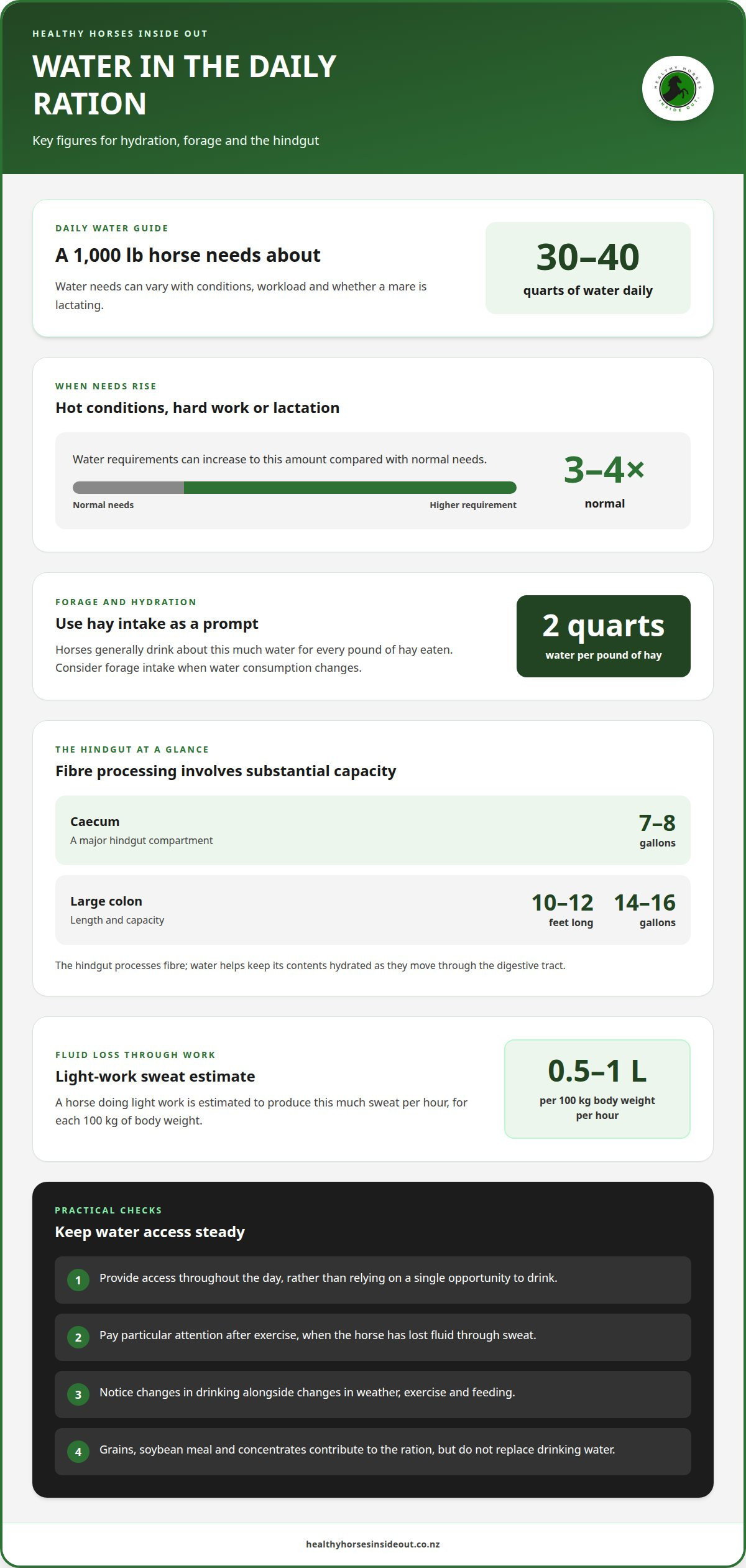
The hindgut processes fibre, and water helps keep its contents hydrated as they move through the digestive tract. A horse’s caecum holds 7 to 8 gallons, while its large colon is 10 to 12 feet long and holds 14 to 16 gallons. These structures make steady access to water important, especially when the ration includes hay or other dry forage.
Horses generally drink about 2 quarts of water for every pound of hay eaten. That relationship offers a useful prompt: consider forage intake when assessing whether water consumption has changed. Grains, soybean meal and a concentrate also contribute to the overall ration, but they don’t replace drinking water.
Daily water needs
A 1,000 lb horse needs about 30-40 quarts of water daily. Requirements can rise to 3 to 4 times normal in hot conditions, during hard work or when a mare is lactating. Provide access throughout the day, rather than relying on a single opportunity to drink. Monitor changes in drinking alongside changes in weather, exercise and feeding.
Work can increase fluid loss through sweat. A horse doing light work is estimated to produce 0.5-1 L of sweat per 100 kg body weight per hour. This makes water access especially relevant after exercise, when the animal has lost fluid. Keep the daily routine consistent, and note when water intake shifts.
Minerals such as copper are part of a balanced ration, but the right amount depends on the whole diet. Supplements should address a dietary need, not displace forage or fresh water. Review feeds and supplements together, including grains and soybean-based products, to keep the ration balanced. Changes in appetite, drinking or body condition can signal that the feeding plan needs closer attention.
Gradual feed changes and feeding schedules
In New Zealand, import conditions vary by feed type and origin. Store feed in a clean, dry place. Each day, check forage access, water, feed amounts and any recent changes, as well as pasture, hay or feed for visible spoilage or contamination.
Gradual feed changes
Introduce a new feed or ration gradually instead of replacing the existing diet abruptly. Sudden changes can cause colic, so take care when changing forage, concentrates or supplements. Keep the rest of the routine consistent during the transition, making it easier to spot changes in appetite or manure that may follow a new ingredient.
Feeding behaviour and forage access
Horses are grazers, spending about 16 hours a day feeding on pasture grasses. Forage access supports this natural pattern, so avoid leaving a horse without forage for longer than 4-6 hours. A consistent supply also helps prevent long gaps between meals. In New Zealand, assess pasture and hay for visible spoilage or contamination before feeding.
Feed amounts and feeding frequency
Use body weight to guide feed amounts: horses generally need roughage equal to 2% of body weight daily. The page recommends feeding at 1.5 to 2% of body weight, while maximal daily dry matter intake is estimated at 2.5-3%. These measures describe different intake considerations, so don’t treat them as interchangeable. If feeding concentrates, offer them at least twice daily, with no more than 0.5% of body weight per feeding.
Trickle feeding and stomach health
Trickle feeding means providing forage across the day, reflecting the horse’s grazing behaviour and reducing long periods without feed. An average-sized 1,000-pound horse has a stomach capacity of 2 to 4 gallons, so smaller, regular concentrate meals suit its limited capacity better than one large serving. Avoid excess feed, and consider how calcium, magnesium and other ration components fit together.
Hay cubes need special care: soak them thoroughly before feeding to help prevent colic and choking. Make this part of the daily routine, especially when cubes replace or supplement other forage.
Horse body weight and estimated adult weight
In New Zealand, pasture and grass hay are common forage foundations; concentrates and supplements suit a ration only when they address its needs. Oats contain about 13% fibre, while beet pulp is a high-fibre energy source, not a grain. Suitable choices depend on forage, exercise, body condition and nutrient levels, including minerals such as potassium.
Horses have digestive-system limits that make ration size and composition important. The stomach is approximately the size of a rugby ball, and the small intestine is 50 to 70 feet long. The caecum is 3 to 4 feet long. These structures help explain why feeding decisions should account for the whole diet, rather than relying on one ingredient or supplement.
Estimate an adult horse’s weight to make feeding amounts more relevant. For an adult horse over 2 years old, estimate kilograms by multiplying heart girth squared by body length, then dividing by 11,880. To estimate pounds, divide heart girth squared multiplied by body length by 330. For a yearling, divide by 301; for a weanling, divide by 280.
Weight is only one guide. Assess body condition regularly, since changes in fat cover and muscle can show whether energy intake matches exercise. For a horse at maintenance, the listed optimal body condition score is 4-6; score 9 on the Henneke scale identifies obesity. Each score point corresponds to about 50 lb of body weight, making consistent scoring useful alongside weight estimates.
If a specific nutrient gap remains after considering forage and condition, explore horse supplement options to support a more considered ration.
Healthy Horses Inside Out
Healthy Horses Inside Out offers horse supplements to complement a considered feeding plan. If your horse’s forage, workload or body condition suggests a possible nutritional gap, Everyday Horse Supplements, Specific Horse Supplements, Horse Supplement Bundles and HHIO Pellets offer options for targeted dietary support. Choose according to your horse’s existing ration and needs, and use supplements alongside forage and other feeds rather than as a replacement for a balanced diet.
Use the feeding principles in this guide to review your horse’s daily ration and identify where additional support may be relevant. For help exploring suitable supplement options, contact Healthy Horses Inside Out.
Make your next feeding decision with confidence
Treat your feeding plan as a living record, not a fixed guess. Use your equine nutrition checklist to track what your horse eats, changes to the routine and what you observe over time. These notes can help you see whether the current ration still suits your horse or whether a closer look at nutritional support may be useful.
Keep the next step practical: identify the question you want to answer, such as whether a supplement could complement your horse’s existing diet. A focused conversation can help you explore relevant options while keeping the whole ration in view. Healthy Horses Inside Out offers supplements for everyday and specific nutritional needs.
Discuss suitable options with Healthy Horses Inside Out, and take your next feeding decision one considered step at a time.
Frequently Asked Questions
What Does Your Horse Need to Eat?
A horse needs forage, fresh water and a ration that meets its energy and nutrient requirements. The right balance varies with body weight, workload, age and reproductive stage. A growing horse, for example, won’t necessarily need the same feed as a horse in light work. Consider the whole diet, including pasture, hay, concentrates and supplements, rather than choosing feeds in isolation.
How much forage should a horse eat per day by body weight?
A general guide is roughage equal to 2% of body weight daily. For a 500 kg horse, that equates to 10 kg of roughage. Treat this as a starting guide, not a substitute for considering forage quality, body condition and the rest of the ration. Weighing hay provides a clearer estimate than judging a feed pile by eye.
How do you calculate a horse’s daily energy and protein requirements?
Start with body weight and workload, then account for life stage. A mature 500 kg horse at maintenance has estimated minimum requirements of 16.7 Mcal digestible energy and 630 g crude protein daily. A 500 kg horse in light work uses a 1.2 energy multiplier. Pregnancy and lactation also change energy needs, so avoid applying maintenance figures to every horse.
What vitamins and minerals do horses need, and when is a supplement necessary?
Vitamins and minerals are essential parts of a balanced ration, but a supplement is useful only when it addresses a dietary shortfall. Forage type affects the nutrients your horse receives, so assess pasture and hay alongside concentrates. A hay analysis can help show what the forage contributes; compare that with your horse’s needs before adding a product.
How much clean water and salt should a horse get each day?
A 1,000 lb horse needs about 30-40 quarts of water daily, with needs rising in heat, hard work or lactation. Provide clean water and watch for changes in drinking, especially when exercise or weather shifts. A precise salt amount isn’t given as one figure for every horse; ration, sweat losses and conditions affect the amount. Provide salt separately as part of the feeding plan.
What are safe feeding changes and transition times for horses?
Change feed gradually instead of replacing the ration abruptly, as drastic changes can cause colic. The right transition period varies with the feed being changed. Introduce the new feed progressively while keeping other parts of the routine steady. Monitor appetite and manure, and avoid adding several new ingredients at once, so you can more easily identify how your horse responds.


