
Biotin may support hoof quality, but it is not a complete solution for weak or slow-growing hooves. Sound feeding for hoof growth also depends on a balanced diet that supplies the protein, amino acids and minerals needed to form healthy hoof horn.
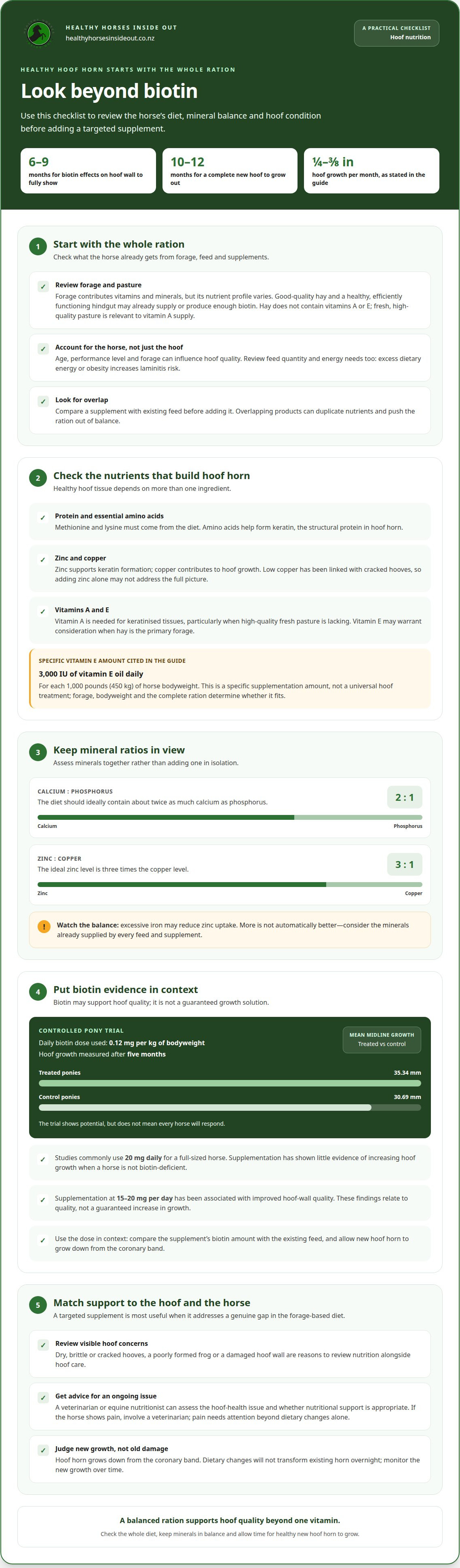
It is understandable to look first at biotin when hooves are brittle or damaged. Yet supplementation has shown little evidence of increasing hoof growth in horses that are not biotin-deficient, and any improvement takes patience: biotin’s effects on the hoof wall can take six to nine months to fully show.
This guide explains when biotin may help, which other nutrients and feed components support hoof quality, and when a specific hoof supplement could be useful. It also explains why the whole diet matters, helping you make an informed choice rather than relying on a single nutrient to do all the work.
Key Takeaways
- Biotin can support hoof quality, but it may not be enough on its own; allow time for any changes to grow through the hoof wall.
- Look beyond a single ingredient: protein, amino acids and balanced minerals all contribute to hoof-horn formation.
- Dry, brittle or damaged hooves may prompt a closer look at nutritional support alongside the horse’s overall hoof care.
- Review forage, feed quantity and your horse’s energy needs before deciding whether a targeted supplement could help.
What is the best hoof supplement for horses with slow hoof growth?
A biotin supplement may support hoof quality, but it isn’t enough for every horse. Studies commonly use 20 mg daily for a full-sized horse; biotin has shown little evidence of increasing growth when a horse isn’t deficient.
Biotin supplementation and hoof growth
Biotin supplementation supplies a vitamin involved in forming keratin, the structural protein in hoof horn. A controlled pony trial used 0.12 mg per kg of bodyweight daily: after five months, treated ponies had mean midline hoof growth of 35.34 mm, compared with 30.69 mm in controls. That difference shows potential, but it doesn’t mean every horse will respond. Hooves grow around 1/4 to 3/8 inch monthly, so changes take time to appear.
Biotin and brittle hooves
Biotin helps the body form keratin from amino acids, and insufficient biotin can contribute to brittle hooves. Supplementation at 15-20 mg per day has been associated with improved hoof-wall quality, while continuous use of 20 mg daily has also shown benefits. These findings relate to hoof quality, not a guaranteed increase in growth. A hoof supplement is most relevant when the diet doesn’t provide adequate biotin or hoof horn is weak.
Hindgut health matters because horses can produce biotin in the hindgut. A horse eating good-quality hay with a healthy, efficiently functioning hindgut may already produce enough. Consider pasture and forage quality before adding a supplement. Digestive health and the whole ration influence whether extra biotin addresses a genuine nutritional gap.
Use the dose in context rather than assuming more biotin means faster growth. Compare the supplement’s biotin amount with the horse’s existing feed, then allow time for new hoof horn to grow down from the coronary band. A complete hoof takes about one year to grow out, so monitor new growth rather than expecting damaged horn to change overnight. A balanced feeding plan supports hoof quality beyond one vitamin.
What should you look for in a horse feed to support hoof health?
Choose feed that complements the whole ration, supplying amino acids and minerals without creating imbalances. Excess or overlapping supplements can disrupt mineral balance, and excessive iron can reduce zinc uptake. Effective feeding for hoof growth considers every feed source together.
Key nutrients for hoof support
Amino acids, vitamins and minerals each contribute to hoof-horn formation and healthy hoof tissue. Methionine and lysine are essential amino acids horses must obtain through their diet, while zinc supports keratin formation. Vitamin A is needed for keratinised tissues, particularly when a horse lacks high-quality fresh pasture. Consider the whole feed, not one nutrient in isolation.
Balancing macro and trace minerals
Macro minerals such as calcium and phosphorus work alongside trace minerals, including zinc and copper. A horse’s diet should ideally contain about twice as much calcium as phosphorus. Zinc and copper also need to be balanced: the ideal zinc level is three times the copper level. Low copper has been linked with cracked hooves, so adding zinc alone may not address the full dietary picture.
Balancing minerals and vitamins
Forage contributes minerals and vitamins, but its nutrient profile varies. Hay does not contain vitamins A or E, while fresh, high-quality pasture is relevant to vitamin A supply. Zinc supports keratinised tissue, and copper contributes to hoof growth. Assess these nutrients alongside protein and amino acids, including methionine, rather than assuming a vitamin supplement can correct every gap.
Risks of excess minerals and supplements
More is not automatically better: overlapping feeds and supplements can push the ration out of balance. Excessive iron may reduce zinc uptake, while too little copper has been linked to cracked hooves. Excess dietary energy or obesity also increases laminitis risk. For feeding for hoof growth, consider what the current feed already contributes before adding another product, such as a targeted horse supplement, to address an identified nutritional gap.
When a horse may benefit from a hoof supplement
Dry, brittle or cracked hooves, a poorly formed frog or a damaged hoof wall can be a reason to review nutrition. A supplement is most useful when it addresses a gap in the horse’s forage-based diet.
Assessing the need for supplements
Assess a horse’s need by considering hoof condition alongside its full diet and management. Age, performance level and forage can all influence hoof quality. A veterinarian or equine nutritionist can assess a hoof-health issue and whether nutritional support is appropriate. If the horse shows pain, involve a veterinarian, as pain requires attention beyond dietary changes alone.
Match any supplement to a specific nutritional need. Methionine is an essential amino acid horses must obtain from their diet, and it contributes to keratin formation. Zinc and copper also support hoof tissue, but their balance matters. Adding these nutrients without considering existing feed can duplicate what the horse already receives instead of addressing the cause of weak horn.
Vitamin E may also warrant consideration when hay is the primary forage. The cited feeding recommendation is 3,000 IU of vitamin E oil daily for each 1,000 pounds (450 kg) of horse bodyweight. This is a specific supplementation amount, not a universal hoof treatment. The horse’s forage, bodyweight and complete ration determine whether it fits.
Hoof growth after dietary changes
A complete new hoof takes approximately 10 to 12 months to grow out, so dietary changes won’t transform existing hoof horn overnight. Hooves grow down from the coronary band, and improved horn becomes visible as it grows. This timeline helps set realistic expectations: assess new growth over time, rather than judging a feeding change by older, damaged hoof wall.
For slow growth or poor hoof quality, review the ration and hoof condition together. A balanced diet supplies energy and nutrients for tissue formation, while suitable trimming and farriery remain part of hoof care. Nutrition alone cannot address an underlying problem if a horse’s hoof is painful or damaged. Veterinary assessment is important, especially when pain is present.
Not sure how to work “hoof health” into your horse’s diet?
A balanced equine diet supports hoof-wall formation by supplying adequate energy, protein and minerals. In New Zealand, pasture quality affects the nutrients and energy grazing contributes, so assess forage as part of the whole ration.
Evaluating diet and nutritional balance
Evaluating the diet means reviewing forage, hard feed and supplements together to identify nutritional gaps or excesses. Start with the forage’s quality and quantity, then consider whether other ingredients supply adequate energy and protein for the horse’s body condition, age and workload. Copper and other minerals also contribute to the nutritional picture. A balanced ration supports hoof growth, while extra supplements may duplicate nutrients already present.
Balancing forage and hard feed
Forage provides the foundation of an equine diet, while hard feed can supply nutrients the forage does not provide adequately. The right balance depends on forage quality and quantity, as well as the horse’s energy needs. Insufficient energy can leave less available for hoof growth because the body prioritises essential functions. Excess energy can contribute to obesity and increase laminitis risk, so feed amounts should suit body condition and workload.
Calcium and phosphorus balance
Calcium and phosphorus need to be considered together because their ratio affects mineral balance. A horse’s diet should ideally contain about twice as much calcium as phosphorus. Some alfalfa and grass hays can have a calcium-to-phosphorus ratio of 5-7:1, which may contribute to functional phosphorus depletion. Higher phosphorus relative to calcium can also interfere with calcium absorption. Forage assessment helps reveal whether the full ration is balanced.
Pasture quality and hoof growth
Pasture quality influences the nutrients and energy available from grazing, but pasture alone may not meet every horse’s needs. Assess forage quality and quantity alongside hard feed, workload and body condition. Nutritional gaps can affect hoof-wall formation, while excess energy may undermine hoof health by increasing laminitis risk. Changes in pasture or forage should prompt a fresh look at the complete ration, not an automatic addition of supplements.
For a targeted addition to an assessed ration, explore horse supplement options that complement forage and existing feed.
Healthy Horses Inside Out
Healthy Horses Inside Out offers horse supplements to support owners addressing nutritional gaps that may affect hoof quality. After reviewing forage, hard feed and existing supplements, consider a targeted addition if the ration needs further support.
The range includes Everyday Horse Supplements, Specific Horse Supplements, Horse Supplement Bundles and HHIO Pellets. These options offer different ways to add dietary support. The right choice depends on what the horse already receives and the nutritional need you are addressing. A supplement complements a balanced diet; it does not replace suitable forage, feed management or hoof care.
If you’re weighing up supplement options for your horse’s diet, contact Healthy Horses Inside Out to discuss the next step.
Make your next feeding decision with confidence
Build a clear picture before changing your horse’s ration. Note what has changed in the feed, pasture access or management, then track the hoof wall as new growth appears. This gives you a more useful basis for deciding whether to adjust the diet or maintain the current approach.
Good feeding for hoof growth is intentional, not a race to add more ingredients. A measured change, paired with consistent observation, can help you understand what supports your horse’s individual needs. Keep the horse’s overall wellbeing in view, and involve a veterinarian when hoof pain or a concerning change needs attention.
If you’re ready to consider suitable nutritional support, contact Healthy Horses Inside Out. A thoughtful next step can make daily feeding decisions feel clearer and more manageable.
Frequently Asked Questions
Is biotin enough to improve hoof quality in horses?
No, biotin alone does not address every cause of poor hoof quality. A horse may already receive biotin from its feed or produce it through a healthy hindgut, while other dietary gaps remain. For example, brittle horn may call for a broader review of protein, amino acids and minerals. Consider the complete ration before adding another supplement, especially if several feeds are already in use.
What nutrients are important for hoof health?
Hoof health relies on a combination of nutrients, not a single ingredient. Protein supplies amino acids used to build keratin, with methionine and lysine among the relevant amino acids. Zinc and copper contribute to hoof tissue integrity, while vitamins support normal body processes. Energy matters too: a horse needs enough to maintain essential functions and support ongoing tissue formation.
What levels should I be looking for?
Useful dietary reference points include 15-20 mg of biotin daily, a zinc-to-copper ratio of about 3:1, and a calcium-to-phosphorus ratio near 2:1. Treat these as whole-ration considerations, not automatic supplement instructions. For example, a feed label only shows one part of the intake if the horse also receives forage, hard feed or another supplement. Compare the combined diet before choosing a product.
Why are omega fatty acids good for skin, hair coat and hoof health?
Omega fatty acids contribute to cell membranes, including structures in hoof tissue, and support the body’s skin and coat. Pasture typically provides omega-3 and omega-6 fatty acids in a ratio between 4:1 and 6:1. Ground flax is another dietary source of essential fatty acids; the suggested amount is 80-150 grams daily. These fats complement balanced nutrition rather than replace protein or minerals.
Why are trace minerals good for horses?
Trace minerals support biochemical processes throughout a horse’s body. Zinc is involved in keratin formation, while copper contributes to hoof growth and tissue integrity. Their balance matters: excessive iron in feed can reduce zinc uptake, and low copper has been linked with cracked hooves. Consider the mineral content of the full ration, since forage and multiple feeds can all contribute to intake.
What nutrients support healthy hoof growth in horses?
Healthy hoof growth draws on adequate dietary energy, quality protein and essential amino acids, alongside minerals such as zinc and copper. Vitamins also contribute to the horse’s overall nutritional support. For a practical example, a ration based mainly on hay should be considered differently from one that includes fresh pasture, because forage sources vary in their nutrient contribution. Hoof care and balanced feeding work together.


