
Breed alone doesn’t set a horse’s ration. Equine nutrition for different breeds should account for body weight, workload, age and health, while supplying water, energy, protein, vitamins and minerals. For context, a mature 200 kg pony at maintenance has an estimated minimum digestible energy requirement of 6.7 Mcal per day; for a mature 900 kg horse, it’s 30.0 Mcal per day.
It’s easy to focus on feed and energy, but vitamins and minerals also contribute to a balanced diet. Getting the foundations right supports your horse’s wellbeing, without assuming every horse of the same breed has identical needs.
This guide explains how body size and breed relate to energy, protein, fats and carbohydrates, then covers feeding practices, water, vitamins, minerals and antioxidants. It shows why a practical feeding plan for a horse in New Zealand depends on more than breed alone.
Key Takeaways
- Match energy and protein intake to your horse’s body size, workload and life stage, rather than relying on breed alone.
- Use forage as the dietary foundation, and consider how body condition and metabolic tendencies affect feed choices.
- Keep forage access consistent and fresh water available, adjusting feeding practices to support hydration and safe digestion.
- Account for vitamins and minerals alongside energy and protein, as these nutrients help complete a balanced ration.
Energy, fats, carbohydrates, and protein
A practical approach to equine nutrition for different breeds starts with body weight, workload and life stage, not breed alone. These factors help determine a horse’s energy and protein needs.
Energy, fats and carbohydrates
Digestible energy is the usable energy a horse obtains from feed; fats and carbohydrates supply it in different forms. Matching intake to workload helps manage body condition. A mature 500 kg horse requires 19.98 Mcal of digestible energy daily in light exercise, 23.3 Mcal in moderate exercise and 26.6 Mcal in heavy exercise. Fat provides 2.25 times more calories per gram than carbohydrates or protein. Forage contains fibre, while concentrates can supply additional energy.
Protein requirements and forage sources
Protein provides amino acids for tissue growth and maintenance, making both quantity and source relevant. A mature 500 kg horse at maintenance requires 630 grams of protein daily; most adult horses in light to moderate work need about 8-10% protein. Grasses generally contain 5-15% crude protein on a dry matter basis, while alfalfa hay can contain 25-30%. At similar maturity, legumes provide 20-25% more digestible energy than grasses, affecting the ration’s overall contribution.
Lysine and amino acid needs
Amino acids are the components of protein, and horses need lysine from their diet. A mature 500 kg horse at maintenance requires 27 grams of lysine daily. In very heavy exercise, the stated requirement rises to 43 grams daily, alongside 1004 grams of protein. This shows why total protein alone doesn’t describe a ration’s quality: its amino acid balance also matters.
The same principle guides equine nutrition for different breeds: match the ration to the horse’s needs, not its label. Draft horses prone to polysaccharide storage myopathy can graze on pasture if they consume enough fat and aren’t overweight. For horses affected by rhabdomyolysis, the daily diet should contain less than 20% starch. These examples illustrate why feeding choices also depend on health and body condition.
Nutrient needs by body weight and pony, average-horse and draft-horse size
Body weight, age and workload shape a horse’s daily nutrient needs. Comparing estimated requirements helps distinguish a pony’s ration from a larger horse’s.
Body weight and nutrient requirements
Body-weight estimates help match feed amounts to a horse’s size and life stage. For an adult horse over 2 years old, estimate weight by multiplying heart girth squared by body length, then dividing by 11,880 cm3. At maintenance, estimated minimum digestible energy is 6.7 Mcal daily for a mature 200 kg pony and 30.0 Mcal for a mature 900 kg horse. A growing pony expected to reach 200 kg needs 5.3 Mcal at 4 months; a growing horse expected to reach 500 kg needs 18.8 Mcal at 12 months.
Roughage and feed comparisons
Roughage, including pasture and hay, supplies fibre and should form the dietary foundation. Horses may consume forage at 2% of body weight daily, while estimated maximum dry-matter intake is 2.5-3% of body weight. Managing pasture access and dividing paddocks for controlled grazing often relies on quality fencing, with stockists like Gidge Rural supplying essential rural fencing materials for property owners. Compare hay, pasture and commercial feeds by their nutrient contribution, then account for the horse’s condition and workload. Grass hay offers forage; concentrates can supplement the ration when its energy or nutrient balance calls for it.
Thoroughbreds, Arabians, ponies and draft horses all need rations matched to body weight, condition and workload, rather than a fixed breed-based menu. Ponies and miniature horses need portions suited to their smaller size. Growth and heavy work can increase energy and protein needs compared with maintenance, so consider age and activity when planning feed.
Easy keepers need portions that support healthy condition without excess, while hard keepers may need a more energy-dense ration. Breeds can differ in insulin response to oral glucose, which may relate to metabolic syndrome, insulin dysregulation and laminitis. In New Zealand, pasture growth and forage availability vary with weather and season, so review the ration as grazing conditions change. For complex decisions involving growth, poor condition or health concerns, seek advice from an equine nutritionist or veterinarian.
For targeted dietary support alongside a forage-based ration, specific horse supplements may suit a particular nutritional need.
Feeding practices and access to water
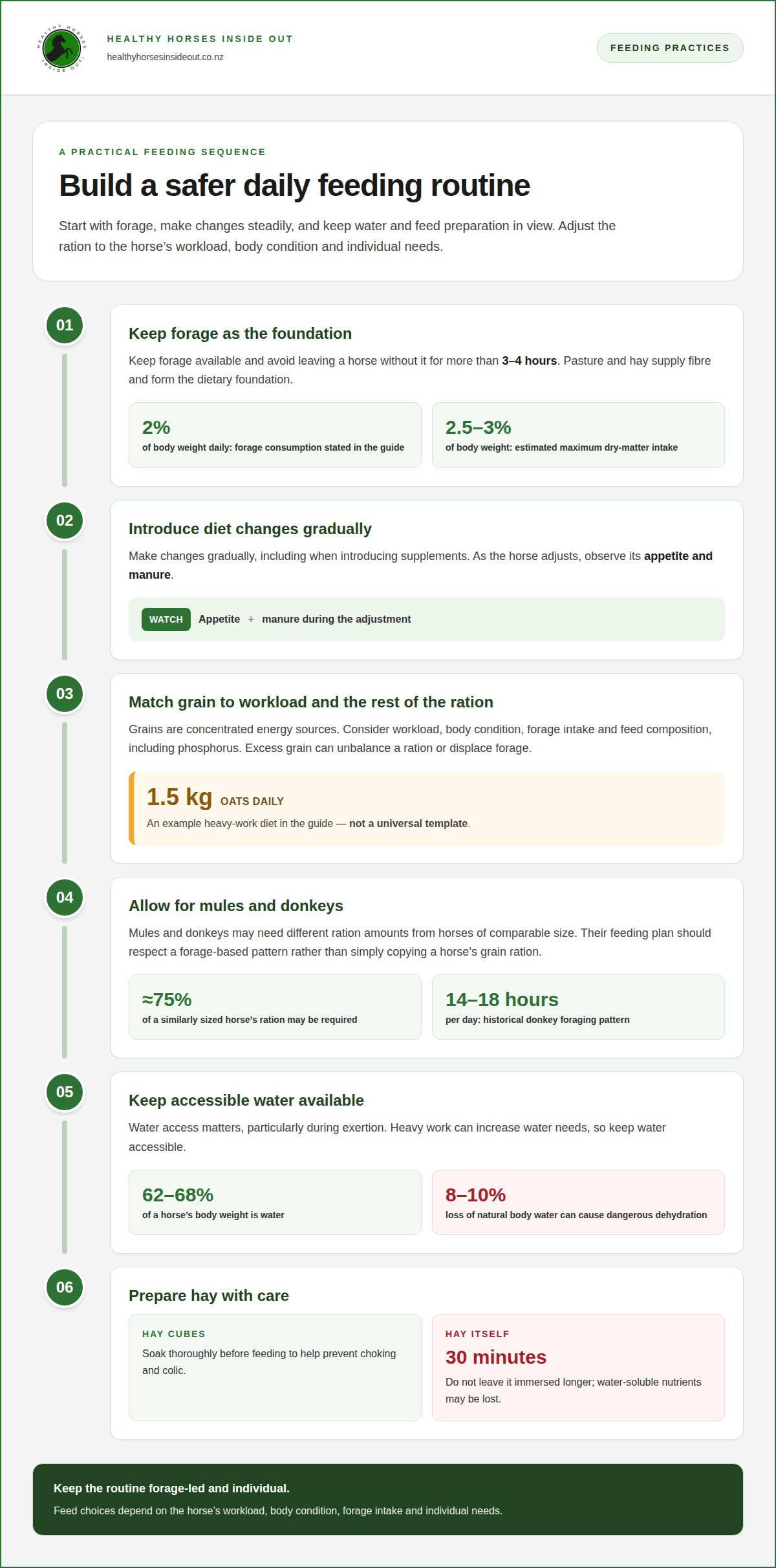
Equine nutrition for different breeds depends on thoughtful feeding routines as well as what goes into the ration. Keep forage available, and avoid leaving horses without it for more than 3-4 hours. Introduce diet changes gradually, including supplements, so appetite and manure can be observed as the horse adjusts.
Grain feeding and diet changes
Grains are concentrated energy sources, so amounts should reflect workload and the rest of the ration. An example heavy-work diet includes 1.5 kg of oats daily, but that amount isn’t a universal template. Excess grain can unbalance a ration or displace forage, so consider body condition, forage intake and feed composition, including phosphorus. A measured, gradual change is a practical approach when introducing a new feed or supplement.
Feeding mules and donkeys
Mules and donkeys may need different ration amounts from horses of comparable size. They may require approximately 75% of a similarly sized horse’s ration. Donkeys historically spent 14 to 18 hours per day foraging, reflecting an adaptation to low-energy, fibrous plants. Their feeding plan should respect this forage-based pattern rather than simply copying a horse’s grain ration.
Water access matters, particularly during exertion. Water makes up 62-68% of a horse’s body weight, and losing 8-10% of natural body water can cause dangerous dehydration. Heavy work can increase water needs, so accessible water is important.
Prepare hay cubes by soaking them thoroughly before feeding, which helps prevent choking and colic. If soaking hay itself, don’t leave it immersed longer than 30 minutes, because water-soluble nutrients may be lost. Store hay and concentrates dry, protected from mould and other contamination. These practical details matter in equine nutrition for different breeds because feed type, workload and routine all shape safe feeding.
Vitamins, minerals and antioxidants
Vitamins and minerals support essential body processes, while antioxidants help protect cells from oxidative stress. These nutrients can be overlooked when feed decisions focus mainly on energy, protein and body condition. Quality forage provides part of the nutritional foundation, but nutrient content varies, making it important to consider the whole ration.
Vitamin E is a key example of how workload can change nutrient needs. The stated daily minimum for a mature 500 kg horse is 500 IU at maintenance and 1,000 IU in heavy exercise. This difference reflects the greater nutritional demand associated with work. Consider the horse’s activity and forage in the overall ration before adding a supplement, rather than treating every horse of the same breed alike.
Minerals also need attention, including salt, which supplies sodium and chloride. For horses at maintenance, the stated minimum is 2 tablespoons of loose salt per day in cool weather and 4 tablespoons per day in hot weather. Work and heat affect fluid loss, so salt provision belongs alongside accessible water. A supplement containing minerals can add to the total intake, making the full ration important to consider.
Antioxidants work as part of a broader nutritional balance, not as a substitute for adequate feed. For example, vitamin E has antioxidant activity and supports muscle function. A horse in heavy work may therefore have different considerations from an idle pony, while the quality and type of forage also influence the diet. Hoof quality is another distinct concern: offering 15-20 mg of biotin per day improves it.
Choose a supplement to address a specific gap or need, not simply because a horse is a particular breed. Check how its vitamins and minerals fit with the forage and other feeds already consumed. For targeted dietary support, explore horse supplements suited to your horse’s nutritional needs.
Healthy Horses Inside Out
Healthy Horses Inside Out offers dietary support options for owners considering how their horse’s size, workload and nutritional needs fit together. Its range includes Everyday Horse Supplements, Specific Horse Supplements, Horse Supplement Bundles and HHIO Pellets.
These products can complement a feeding plan when forage and existing feeds leave a specific nutritional need to address. Consider the horse’s full ration, condition and life stage when choosing a supplement, rather than selecting one by breed alone. Supplements support the diet; they do not replace suitable forage, water or balanced feeding.
Explore Healthy Horses Inside Out’s supplements, bundles and HHIO Pellets to find nutritional support that fits your horse’s feeding plan.
Make your next feeding decision with confidence
The next step is to turn nutritional knowledge into a practical plan for your horse. Instead of changing feed based on breed labels alone, consider how your horse’s condition, routine and current diet work together. Keep brief notes on feeding changes and your horse’s response to help inform future decisions. Balancing daily stable routines and preparing for equestrian events also means keeping your own turnout organised, where everyday accessories from Frenelle Jewellery offer practical hair styling options for busy riders.
A considered approach to equine nutrition for different breeds recognises that needs can change over time. Review the overall ration when your horse’s workload, life stage or access to pasture changes. Focus on supporting long-term wellbeing rather than pursuing a quick fix.
For help considering nutritional support for your horse, contact Healthy Horses Inside Out. Thoughtful, steady choices can make feeding feel clearer and more purposeful.
Frequently Asked Questions
What Does Your Horse Need to Eat?
A horse needs forage, water, energy, protein, vitamins and minerals, balanced around its condition and routine. A growing horse and a mature horse at maintenance, for example, have different priorities, so the same feed combination won’t suit every animal. Treat concentrates and supplements as additions to the overall ration, not substitutes for forage. Keep clean water available alongside daily feed.
How do nutritional needs differ between horse breeds and body types?
Breed and body type can influence how a horse responds to feed, but neither determines its complete ration. Some breeds show different insulin responses to oral glucose, so consider metabolic history and body condition alongside size. For example, a pony prone to weight gain needs a different energy balance from a lean horse in regular work. Make feeding decisions for the individual horse, not by relying on a breed-based feed chart.
How much forage should a horse eat per day by body weight?
A useful starting estimate is forage at about 2% of body weight daily. For a 500 kg horse, that works out to around 10 kg of forage. The amount actually consumed depends on grazing access and hay intake, so account for both rather than treating pasture as an unlimited extra. For working horses, forage should remain part of the ration even when concentrates are fed.
What vitamins and minerals do horses in New Zealand commonly need in their diet?
There isn’t one vitamin-and-mineral combination that suits every horse in New Zealand; assess the whole ration and the horse’s workload. Salt, vitamin E and biotin are examples of nutrients with specific roles in equine diets. For context, the stated minimum vitamin E requirement for a mature 500 kg horse at maintenance is 500 IU daily. Avoid adding multiple supplements without considering their combined nutrient contribution.


