

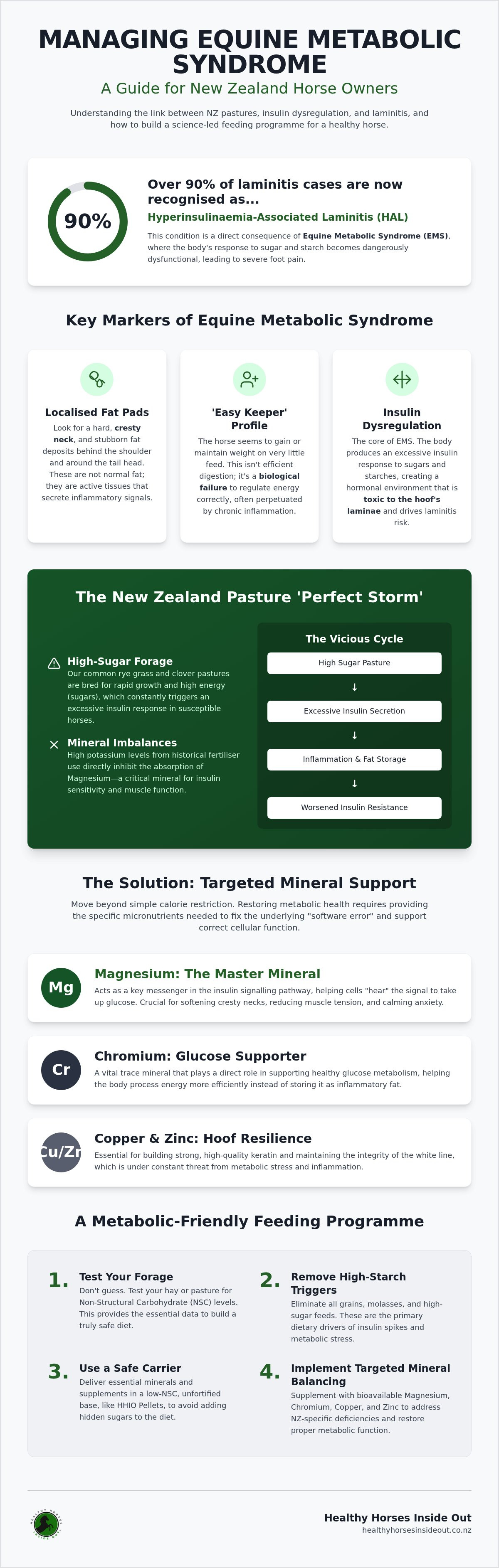
Over 90% of laminitis cases in our horse and pony population are now recognised as hyperinsulinaemia-associated laminitis (HAL), a condition directly driven by Equine Metabolic Syndrome. It's an exhausting cycle for New Zealand owners who find themselves constantly battling the "good" grass while fearing the sudden onset of foot pain. When you're searching for effective equine metabolic syndrome supplements NZ pastures demand, it's easy to feel overwhelmed by conflicting advice and the sight of stubborn fat pads that won't shift despite your best efforts at calorie restriction.
We understand the anxiety that comes with managing a metabolic horse, which is why this guide focuses on moving beyond simple starvation tactics. You'll discover how to address the underlying biological triggers of insulin dysregulation through evidence-based nutritional support and precise mineral balancing tailored for our local conditions. We will explore the latest 2026 research on insulin management, explain how to identify truly safe forage, and outline a methodical feeding programme that restores both your horse's vitality and your own peace of mind. By focusing on foundational, systemic health, you can move from constant crisis management to a stable, science-led routine.
Key Takeaways
- Understand the biological mechanisms behind insulin dysregulation and why New Zealand's rye grass and clover pastures often trigger the "easy keeper" phenomenon.
- Learn how to address specific NZ soil deficiencies using targeted magnesium and chromium to support healthy glucose metabolism and muscle function.
- Identify the most effective equine metabolic syndrome supplements NZ owners can use to reduce visible fat pads and support horses at risk of laminitis.
- Implement a practical, step-by-step feeding programme that includes forage testing and the removal of high-starch triggers to help stabilise insulin levels.
- Discover how low-NSC foundations like HHIO Pellets provide a safe carrier for essential minerals without introducing hidden sugars to a metabolic diet.
Understanding Equine Metabolic Syndrome (EMS) in New Zealand Horses
Equine Metabolic Syndrome is not merely a weight management issue; it is a complex endocrine disorder that requires a clinical understanding of systemic health. At its core, EMS represents a cluster of metabolic disturbances, primarily insulin dysregulation and obesity. In New Zealand, our unique environmental factors often exacerbate these internal imbalances, leading to the well-known "easy keeper" profile where horses appear to gain weight on even the most sparse rations. This isn't just a matter of overfeeding. It's a biological failure to regulate energy correctly.
Identifying the primary markers of EMS is the first step toward effective management. Owners should look for localised adiposity, which presents as a hard, cresty neck, fat pads behind the shoulder, and bulging deposits around the tail head. These are not just aesthetic concerns; they are active endocrine tissues that secrete inflammatory signals. As we move through 2026, the prevalence of EMS in New Zealand continues to rise. This is largely due to a shift in pasture management toward high-sugar, high-energy forage that provides a "perfect storm" for genetically predisposed horses and ponies.
The Insulin-Laminitis Connection
The most dangerous consequence of EMS is the direct link between high insulin levels and hoof health. When a horse suffers from insulin dysregulation, their body produces an excessive insulin response to the sugars and starches in their diet. These elevated levels are toxic to the laminae, the delicate tissues that bond the hoof wall to the pedal bone. This biological process leads to hyperinsulinaemia-associated laminitis (HAL), often colloquially called "grass founder." While EMS usually affects younger or middle-aged horses, it's vital to distinguish it from PPID (Cushing's), though both conditions can lead to laminitis through different hormonal pathways.
The 'Easy Keeper' Trap
Many owners find that traditional calorie restriction or "starvation paddocks" fail to resolve metabolic dysfunction. This happens because adipose tissue is biologically active; it produces cytokines that perpetuate a state of chronic low-grade inflammation, which further impairs insulin sensitivity. Simply reducing hay doesn't fix the underlying metabolic "software" error. Because New Zealand's improved pastures are often deficient in key trace elements, many owners are turning to targeted equine metabolic syndrome supplements NZ formulated to support glucose metabolism. By addressing mineral gaps, we can help the horse's system process energy more efficiently rather than storing it as inflammatory fat.
The Role of Targeted Minerals in Managing Insulin Dysregulation
Addressing the internal "software error" of Equine Metabolic Syndrome requires a shift from simple calorie restriction to precise cellular support. While reducing sugar intake is vital, the horse's ability to process that sugar depends heavily on specific micronutrients. In the New Zealand environment, where soil mineral profiles are often skewed by intensive farming history, standard fortified feeds frequently miss the mark. Effective equine metabolic syndrome supplements NZ must bridge these specific gaps to restore metabolic equilibrium.
Magnesium: The Foundation of Metabolic Support
Magnesium serves as the master mineral for insulin sensitivity. It acts as a second messenger in the insulin signalling pathway; without it, cells cannot effectively "hear" the signal to take up glucose from the bloodstream. When magnesium levels are low, the body compensates by secreting even more insulin, worsening the cycle of hyperinsulinaemia. Many New Zealand pastures are high in potassium due to historical fertiliser use, which directly inhibits magnesium absorption in the horse's gut. This deficiency often manifests as physical and behavioural markers:
- Persistent fat pads and a cresty neck that won't soften.
- Muscle tension or a "tight" way of going.
- Heightened anxiety or hyper-reactivity to the environment.
Trace Minerals and Hoof Resilience
Structural integrity is often the first casualty of metabolic stress. Copper and zinc are essential for the production of high-quality keratin and the maintenance of the white line. In metabolic horses, the laminae are under constant inflammatory pressure. Correctly balanced ratios of copper and zinc help protect the hoof wall from stretching and seeping, providing a physical buffer against laminitic changes. Integrating a high-specification mineral base from Healthy Horses Inside Out can provide the foundational support needed to break the cycle of metabolic stress.
Chromium also plays a critical role by enhancing the action of insulin. Because New Zealand soils are notoriously deficient in chromium, many horses struggle with glucose tolerance even on a low-sugar diet. Similarly, selenium and Vitamin E are vital antioxidants that combat the oxidative stress caused by chronic inflammation in adipose tissue. In 2026, soil data continues to show that New Zealand is selenium-deficient. Providing a safe, measured dose of selenium is essential for thyroid function and systemic recovery, ensuring the horse has the internal resources to manage the metabolic load of our lush, improved pastures.
Navigating NZ Pasture: The Hidden Triggers of Metabolic Stress
New Zealand's reputation for lush, year-round "green gold" is a point of pride for the dairy industry, yet it represents a significant challenge for the metabolic horse. Our improved pastures, dominated by perennial rye grass and white clover, are specifically bred for high Non-Structural Carbohydrate (NSC) content to drive production. For a horse with insulin dysregulation, these pastures are not a natural diet; they are a high-octane fuel source that the equine system is poorly equipped to process. Managing this environmental pressure requires a methodical understanding of the "Sugar Spike" cycle.
The safety of pasture fluctuates based on the balance between photosynthesis and respiration. During the day, grass produces sugars through photosynthesis. At night, it uses those sugars to grow (respiration). If the temperature drops below about five degrees Celsius, the grass stops growing but continues to produce sugar when the sun hits it the next morning. This results in a dangerous accumulation of fructans. Consequently, "stressed" grass, such as that found during a drought or after a heavy frost, is often more hazardous than a tall, mature stand of summer grass.
The High-Sugar Danger Zones
Spring and autumn flushes are well-known high-risk periods, but the subtle daily shifts in sugar levels are equally critical. A classic danger zone occurs on bright, sunny days following a frosty morning. The grass becomes a concentrated source of NSC, providing a massive insulin trigger with every mouthful. To assess safety, owners can use a simple tactile test: grass that feels particularly "sticky" or sweet when crushed often indicates high sugar levels. If the pasture is under stress, it's safer to use track systems, grazing muzzles, or dry lots to strictly control intake while maintaining movement.
Balancing Forage with Mineral Integrity
Restricting pasture often means relying on hay, but even hay can be deceptively high in sugar. While soaking hay for sixty minutes can significantly reduce NSC levels, it also leaches out vital water-soluble minerals and electrolytes. This creates a nutritional void that must be filled. When forage is restricted or soaked, the use of everyday horse supplements becomes non-negotiable to prevent secondary deficiencies.
Providing a mineral-dense base ensures that the horse's cellular machinery continues to function despite a lower calorie intake. By moving away from high-sugar "hard feeds" and molasses-laden mixes, you reduce the glycemic load on the horse's system. Integrating high-quality equine metabolic syndrome supplements NZ owners trust allows for a more targeted approach, supporting the horse from the inside out while you navigate the external challenges of the New Zealand paddock.
Developing a Metabolic-Friendly Feeding Plan: A Step-by-Step Checklist
Creating a sustainable management plan for an EMS horse requires a shift from reactive crisis management to proactive nutritional design. It's not enough to simply take things away; we must replace high-risk triggers with foundational support that addresses the horse's systemic needs. This methodical approach ensures your horse receives the necessary micronutrients without the glycemic spikes that lead to laminitis. Follow this evidence-based checklist to stabilise your horse's metabolic health.
- Step 1: Test your forage. Don't rely on visual assessment alone. Testing your hay and pasture for Non-Structural Carbohydrates (NSC) and mineral content provides the data needed to balance the diet accurately.
- Step 2: Strip the diet of triggers. Remove all high-starch grains, molasses-coated mixes, and sugary treats. Even "low calorie" feeds can be deceptively high in starch.
- Step 3: Establish a safe base. Select a high-fibre, low-NSC carrier such as horse pellets NZ owners use to provide a consistent, grain-free foundation.
- Step 4: Targeted fortification. Introduce equine metabolic syndrome supplements NZ specifically formulated to bridge the magnesium and trace mineral gaps common in our local soils.
- Step 5: Implement metabolic conditioning. Consistent, structured exercise is a powerful tool for improving insulin sensitivity and reducing systemic inflammation.
If you're ready to start building a safer diet today, you can explore our targeted metabolic support options designed for New Zealand conditions.
Reading Labels Like a Pro
Marketing terms like "cool" or "grain-free" don't always guarantee safety for a metabolic horse. You must look for the actual NSC percentage, which is the sum of water-soluble carbohydrates (sugar) and starch. For a horse with EMS, the total daily ration should ideally remain under 10% NSC. Beware of hidden sugars listed as molasses, maltodextrin, or unspecified "cereal by-products." Understanding the difference between "low calorie" (which may still be high sugar) and "low NSC" is the key to preventing sub-clinical laminitis.
The Role of Exercise in Metabolic Recovery
Exercise acts as a natural "insulin mimic" by triggering GLUT4 translocation, a process where muscle cells take up glucose from the bloodstream without requiring high levels of insulin. While paddock movement is beneficial, it's rarely enough to shift the stubborn fat pads of a truly metabolic horse. For horses returning from a laminitic episode, start with low-impact walking on firm, level ground. As they strengthen, increasing the duration and intensity of work will significantly enhance their ability to regulate blood glucose levels, leading to a visible reduction in cresty necks and inflammatory fat deposits.
Optimising Metabolic Health with Healthy Horses Inside Out
Restoring health to a horse with Equine Metabolic Syndrome requires more than just removing triggers; it demands a proactive, systemic realignment of the body's internal chemistry. At Healthy Horses Inside Out, our "Inside Out" philosophy is built on the understanding that external symptoms, such as cresty necks or foot pain, are simply the visible markers of an internal biological struggle. By focusing on high-bioavailability ingredients that the horse's system can actually utilise, we provide the foundational support necessary to break the cycle of metabolic dysfunction. Our equine metabolic syndrome supplements NZ owners rely on are formulated to bridge the gap between clinical science and daily paddock management.
Our Specific Horse Supplements are engineered to target the specific pathways of insulin dysregulation and laminitis. Rather than using generic formulas, we select minerals and antioxidants based on their ability to support glucose transport and reduce the oxidative stress within adipose tissue. When these nutrients are introduced to a system that has been struggling under the weight of inflammation, the results are often visible. Owners typically report a softening of fat pads and a renewed vitality as the horse's body begins to process energy correctly once again, providing a sense of relief for both horse and owner.
Why HHIO is Different
The New Zealand equine environment presents unique challenges, from high-sugar rye grass to significant soil mineral deficiencies identified in 2026 data. Many off-the-shelf products contain fillers, molasses, or grain by-products that can inadvertently spike insulin levels in a sensitive horse. HHIO products are strictly free from these hidden triggers. We use HHIO Pellets as a low-NSC carrier, providing a safe, grain-free base that ensures your horse receives their essential minerals without the risk of a sugar-induced crisis. If you're unsure where to begin your journey, our guide on what supplements does my horse need NZ provides a methodical framework for selecting the right support.
Peace of Mind for the NZ Horse Owner
Managing a metabolic horse is often a lonely and stressful experience, but you don't have to navigate it without an evidence-based roadmap. By choosing a science-led approach, you gain the confidence that comes from understanding the logic behind your feeding programme. Our community of owners prioritises long-term systemic wellness over the hollow promises of quick fixes. This commitment to nutritional integrity ensures that your horse isn't just surviving their condition, but is actively thriving within the constraints of their biology. You can Explore our Equine Metabolic Support range today to take the first step toward a more stable, secure future for your horse.
Restoring Your Horse’s Systemic Balance
Successfully managing a metabolic horse in New Zealand requires a shift in perspective. It's not just about what you remove from the diet, but what you put back in to support cellular function. By understanding the unique sugar spikes of our local pastures and implementing a methodical feeding plan, you can break the cycle of insulin dysregulation. The right equine metabolic syndrome supplements NZ owners choose are those that address our specific soil deficiencies while avoiding the hidden fillers that perpetuate inflammation.
Healthy Horses Inside Out is a proudly NZ-owned and operated partner in your horse's wellness. We prioritise science-led formulations and transparent ingredient lists to ensure you have complete peace of mind. Every product is designed to work with the horse's biology, providing foundational support for New Zealand conditions without the use of molasses or unnecessary sugars. You can secure your horse's metabolic future with HHIO's targeted supplements today. Taking these intentional steps now will lead to a more stable, comfortable life for your horse, allowing you both to enjoy your time together with confidence.
Frequently Asked Questions
What are the best equine metabolic syndrome supplements in NZ for 2026?
The most effective equine metabolic syndrome supplements NZ owners can utilise in 2026 are those providing high-bioavailability magnesium, chromium, and trace minerals without hidden fillers. HHIO Specific Horse Supplements are designed for this purpose, addressing the unique mineral gaps in New Zealand soil. Look for formulations that prioritise systemic health rather than just masking symptoms; providing a transparent ingredient list ensures you aren't inadvertently introducing molasses or starch into a sensitive system.
Can a horse recover from EMS with just supplements?
No, supplements alone cannot "cure" EMS; they are one pillar of a comprehensive management strategy. While they provide the essential micronutrients for glucose metabolism, you must also address calorie intake and physical activity. A successful outcome requires a combination of low-NSC forage, consistent exercise to improve insulin sensitivity, and targeted nutritional support. Think of supplements as the tools that allow the horse's internal biological "software" to function correctly alongside proper environmental management.
How do I know if my horse's supplement is low in sugar and starch?
You must look past marketing claims and examine the Non-Structural Carbohydrate (NSC) content on the label. A truly safe supplement or feed for a metabolic horse should have a total NSC of less than 10%. Avoid products that list molasses, cereal by-products, or "fillers" in the ingredients. If the NSC percentage isn't clearly stated, contact the manufacturer directly to ask for the combined starch and sugar values to ensure it won't trigger an insulin spike.
Is Magnesium enough to treat Equine Metabolic Syndrome?
Magnesium is a foundational "master mineral" for insulin sensitivity, but it rarely works in isolation. For effective metabolic support, the horse also requires chromium to enhance glucose transport and balanced copper and zinc to maintain hoof integrity. Additionally, New Zealand's selenium-deficient soils mean that antioxidant support is vital to combat the oxidative stress caused by chronic inflammation. A multi-mineral approach ensures all biological pathways involved in energy regulation are supported simultaneously.
Should I soak my hay if my horse has EMS?
Soaking hay is a highly effective way to reduce sugar content if you cannot source low-NSC forage. Submerging hay in cold water for 60 minutes can significantly lower the fructan levels, making it safer for horses at risk of laminitis. However, soaking also leaches out essential water-soluble minerals and vitamins. If you choose to soak hay, it's critical to provide a high-specification mineral supplement to replace the nutrients lost during the process.
What is the safest grass for an EMS horse in New Zealand?
The safest grass for a metabolic horse in New Zealand is mature, "unimproved" pasture that hasn't been fertilised for high production. Avoid the lush spring and autumn flushes of perennial rye grass and white clover, as these are bred for high sugar content. Brown, "standing hay" is generally safer than short, stressed grass, which often contains high concentrations of fructans. Utilising a track system or grazing muzzle can help manage intake on riskier pastures.
How long does it take for metabolic supplements to show results?
You will typically begin to see visible changes, such as a softening of the cresty neck or reduction in fat pads, within four to six weeks of starting a targeted programme. However, internal metabolic stabilisation is a longer process. It takes several months of consistent mineral balancing and dietary management to fully reset the system. Patience is essential, as the goal is long-term foundational health rather than a temporary quick fix.
Can I feed my EMS horse fruit or vegetables as treats?
Most fruits and vegetables, including carrots and apples, are too high in sugar for a horse with active EMS. Even a small "healthy" treat can contribute to a glycemic spike that compromises the laminae. If you want to reward your horse, celery is a much safer, low-sugar alternative. Alternatively, using a small handful of low-NSC HHIO Pellets as a reward allows you to treat them without risking their metabolic stability or triggering an unwanted insulin response.


