

What if the right electrolyte choice depends less on the length of the ingredient list and more on how much your horse sweats? For horse owners asking “equine electrolytes what to look for”, the label is a useful starting point, but it needs to be considered alongside your horse’s workload, conditions and everyday diet.
It’s easy to feel unsure when a product lists minerals without explaining their purpose or how the formula fits your routine. Not every horse needs the same support. Adding a supplement without reviewing existing feed and other supplements can also make it harder to understand the overall diet.
This guide explains common electrolyte ingredients and label details, then compares powders, pastes and other formats for practical use. You’ll also learn how work, heat and sweating can influence whether supplementation is appropriate, and when to seek veterinary advice. The aim is to help you make a considered choice for your horse, rather than follow a one-size-fits-all approach.
Key Takeaways
- Consider how sweating, workload and environmental conditions may affect your horse’s electrolyte needs.
- Use “equine electrolytes what to look for” as a prompt to check ingredients, serving directions and declared mineral amounts.
- Compare powders, pastes and other formats by how they fit your feeding routine, not as a measure of effectiveness.
- Before adding a supplement, review your horse’s whole diet and access to clean water, then follow the product directions.
- Consider how everyday and specific supplements, HHIO Pellets and bundles fit into your horse’s overall nutrition plan.
What equine electrolytes do, and when your horse may need them
Electrolytes are minerals that carry electrical charges in body fluids, supporting fluid balance, nerve signalling and muscle function. This describes their role in the body, not what a supplement can guarantee. Product claims don’t replace considering your horse’s workload, sweat loss, diet and access to water.
For a horse doing ordinary daily activity, a suitable diet and constant access to clean water may provide the foundation it needs. Prolonged or strenuous work, particularly when it leads to substantial sweating, can increase mineral losses and may change what support is appropriate. Needs vary between horses and situations, so supplementation isn’t automatically a daily requirement.
Which electrolytes matter in a horse’s diet?
Sodium and chloride are major minerals lost in sweat. Together, they also help regulate fluid balance. Potassium supports fluid balance as well as normal nerve and muscle activity. The amount of these minerals lost varies with the horse and the conditions.
Consider the whole diet, not one ingredient in isolation. Forage and feed contribute nutrients, while access to clean water is essential to the wider hydration picture. An electrolyte product should be considered in that context, not as a substitute for water or balanced feeding.
Does every horse need an electrolyte supplement?
No. Consider whether your horse is sweating noticeably, how hard and how long it’s working, and whether hot or humid conditions add to the demand. A horse at rest or in light work with little sweat loss may not need routine supplementation. Base the decision on the circumstances, not on an assumption that every horse needs electrolytes every day.
Serious muscle problems such as exertional rhabdomyolysis, often called tying-up, aren’t something to manage by simply adding electrolytes. If your horse is unwell, unusually lethargic, or you’re concerned about dehydration, seek veterinary advice rather than relying on a supplement. Electrolytes support normal body functions; they don’t diagnose or treat illness.
When considering equine electrolytes what to look for, start with your horse’s actual workload and sweating, then review its diet and access to water. This gives you a more useful basis for deciding whether to compare products at all.
Equine electrolyte labels: ingredients and details worth checking
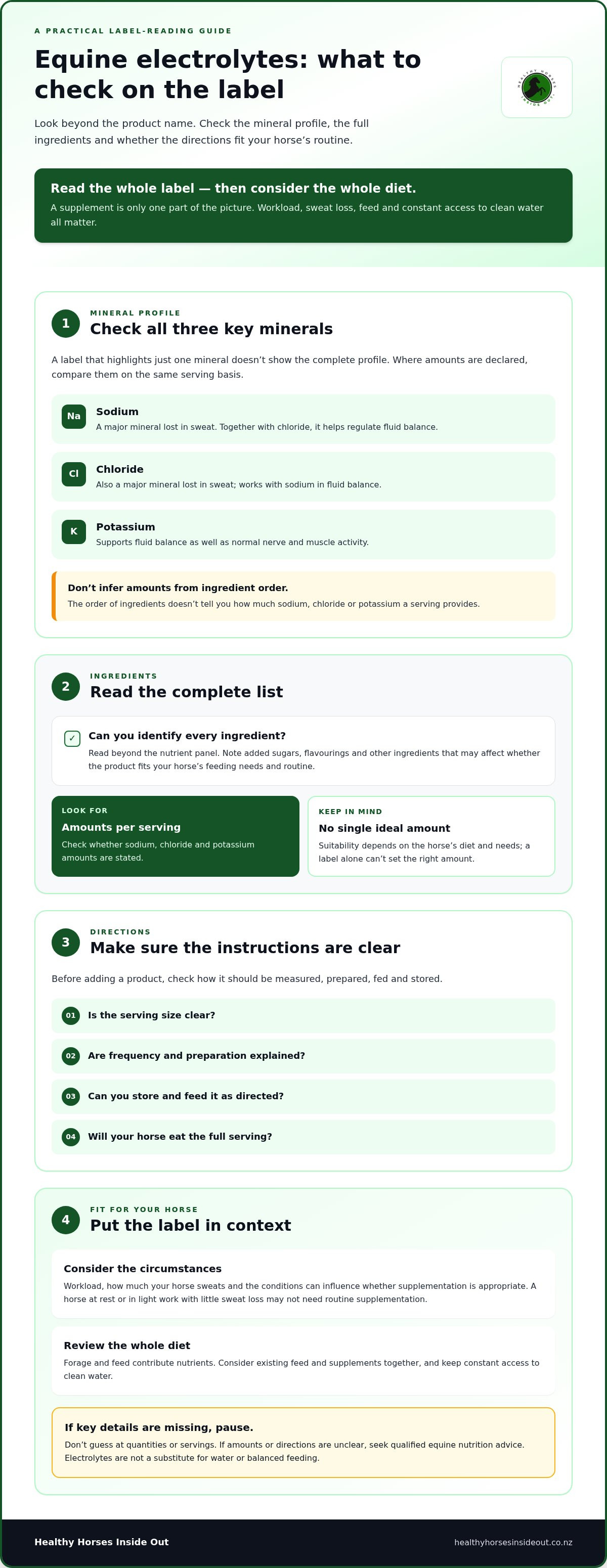
A label is most useful when it shows what’s in each serving and how to use it. For equine electrolytes what to look for means reading beyond the product name or front-of-pack claims. Find the full ingredient list, feeding directions and any table declaring the amount of each mineral.
Ingredient order alone won’t tell you how much sodium, chloride or potassium a serving provides. If amounts are declared, compare them on the same serving basis. Check how each mineral is identified, too. Different ingredient forms can appear on labels, so assess the full profile rather than choosing by one prominent mineral or a broad claim such as “electrolyte support”. If quantities are unclear, don’t guess at a serving; seek qualified equine nutrition advice.
Check the whole mineral profile
Sodium, chloride and potassium each contribute to the overall mineral profile, so a label that highlights only one doesn’t show the complete picture. Compare the amounts per serving where these are stated, and note whether the directions vary with the horse’s circumstances. There’s no single ideal amount to infer from a label alone. Suitability depends on the horse’s diet and needs.
Review the ingredients and directions
Read the complete ingredients list, not just the nutrient panel. Added sugars, flavourings or other ingredients may affect whether a product fits your horse’s feeding needs and routine. Then check the serving size, frequency, preparation instructions and storage directions. Consider whether your horse will eat it as directed. For more guidance on interpreting ingredient lists, see this guide to horse supplement ingredients.
Label checklist
- Full ingredients: Can you identify all listed ingredients, including added sugars or flavourings?
- Mineral amounts: Are sodium, chloride and potassium amounts declared per serving?
- Serving directions: Is the serving size clear, with preparation and frequency explained?
- Routine fit: Can you feed and store the product as directed in a way that suits your horse?
If key quantities or directions are missing or hard to interpret, pause before adding the product. A thoughtful nutrition plan considers the whole diet and the purpose of each supplement. Explore equine nutrition products from Healthy Horses Inside Out as you make an informed choice.
Powder, paste or another format: compare electrolytes for your routine
The most useful format is one you can prepare and give correctly as part of your horse’s routine. Powder, paste and solid formats such as pellets involve different practical steps, but the format alone doesn’t show whether a product is more effective. Assess the label and suitability of the formula separately from convenience.
| Format | Practical advantages | Limitations | Questions to consider |
|---|---|---|---|
| Powder | May be mixed into regular feed, making it straightforward to include in an established routine. | Requires measuring and preparation. If the horse leaves feed behind, it may not consume the full serving. | Can you measure and mix it as directed? Does your horse finish the ration? |
| Paste | Can be portable and may suit situations where mixing feed isn’t practical. | Administration may be less familiar for some horses and handlers, and it still needs to follow the product directions. | Can it be given calmly and safely? Is this approach comfortable for both horse and handler? |
| Pellets or another solid format | May fit a routine that already uses measured solid feed or supplements. | The horse’s acceptance and the product’s preparation and serving directions still matter. | Will your horse eat it consistently, and does the label explain how to feed it? |
When might a powder or feed-mixed format suit?
A powder may fit an established feeding routine if it can be measured and mixed according to the label. Check that your horse eats the whole ration. If feed is left behind, the intended serving may not have been consumed. Taste and texture preferences vary, so don’t assume a product accepted by one horse will suit another.
When might a paste or portable format be practical?
A paste or other portable option may be convenient when preparing feed isn’t practical. Portability is a practical advantage, not evidence of faster action or better results. Follow the product directions and prioritise calm, safe administration. For broader feeding context, read this guide to choosing everyday horse supplements.
When considering equine electrolytes what to look for, match the format to your horse’s feeding habits and the situation in which you’ll use it. Keep supplement choices in the context of the wider diet with equine nutrition products from Healthy Horses Inside Out.
A practical checklist for matching electrolytes to your horse
Use this sequence to make a considered decision rather than adding a supplement by default. Work through each step with your horse’s usual diet and routine in view.
- Assess sweating. Consider how much your horse sweats during work, and whether the session is prolonged or strenuous. A short, light outing differs from sustained work that leads to substantial sweating.
- Review the whole diet. Look at forage, feed and any supplements already being given. Consider your horse’s access to clean drinking water, which should remain available and isn’t replaced by an electrolyte product.
- Compare labels. Check the declared mineral amounts per serving, ingredients and directions. Consider whether the formula fits the horse’s existing diet and the circumstances in which you plan to use it.
- Follow the directions. Use the product as labelled. Don’t add extra servings by guesswork or use a supplement to manage signs of illness.
The right electrolyte choice depends on your horse’s actual need and whether the formula suits its diet and circumstances.
What to consider after work or heavy sweating
After strenuous work or heavy sweating, consider recovery as a whole: your horse’s behaviour, drinking, workload and access to water, not just whether to give a supplement. Follow the label and don’t offer unmeasured extra servings. If your horse seems unwell or its recovery concerns you, contact a veterinarian for advice rather than relying on electrolytes alone.
When to pause and seek professional advice
Pause supplementation decisions and seek veterinary advice if your horse is ill, drinking less than usual, behaving unusually or showing ongoing signs that concern you. A supplement can’t assess the cause of a health problem or replace veterinary care. For broader context on targeted nutrition, read the guide to specific horse supplements.
If you’re considering equine electrolytes what to look for, start with your horse’s circumstances, then assess the formula against its whole diet. Explore equine supplement options from Healthy Horses Inside Out as part of thoughtful nutritional planning.
Build a thoughtful equine nutrition plan with Healthy Horses Inside Out
An electrolyte decision makes more sense as part of your horse’s overall nutrition plan than as an isolated product choice. Start with what prompted you to consider supplementation, then look at the whole diet and daily routine. This measured approach helps you decide whether there’s a need and avoid adding something simply because it’s commonly used.
How electrolyte decisions fit into the whole diet
Review forage, hard feed, existing supplements and access to clean water together. Check product labels for ingredients that may overlap, especially if you’re considering adding more than one supplement. Without that overview, it can be difficult to understand what each product contributes to the ration or whether a combination is suitable for your horse.
There’s no universal supplement routine that suits every horse. Workload, sweating, feeding habits and individual circumstances all inform the decision. A horse in a steady routine may have different needs from one whose work or conditions change. Revisit the plan when those circumstances shift, rather than assuming the same approach will always be appropriate.
Choose informed, steady support over quick fixes
Clear labels, appropriate feeding directions and measured decisions make it easier to understand what you’re adding and why. Keep a note of the products already in the feed routine, follow each label and review changes in the context of the whole ration. If your horse is unwell or you’re concerned about its hydration or recovery, seek veterinary advice rather than relying on a supplement to address the problem.
Healthy Horses Inside Out offers everyday and specific horse supplements, HHIO Pellets and supplement bundles for horse owners across New Zealand. These products can form part of broader nutritional planning, but they aren’t a substitute for assessing your horse’s needs. Aim for thoughtful choices that suit the individual horse, rather than quick fixes or unnecessary additions.
If you’re still considering equine electrolytes what to look for, return to the basics: your horse’s circumstances, its full diet, and the product’s ingredients and directions. For a wider view of nutrition support, explore Healthy Horses Inside Out’s equine products.
Make your next electrolyte choice with confidence
The most suitable electrolyte choice starts with your horse, not the product label. Consider workload, sweating, conditions and access to clean water, then review the whole diet before deciding whether supplementation is needed. If you’re weighing up equine electrolytes what to look for, compare declared mineral amounts and directions, and choose a format that fits your routine. Follow the label and seek veterinary advice if your horse seems unwell or you’re concerned about its recovery.
Thoughtful nutrition is built on informed, measured decisions rather than quick fixes. Healthy Horses Inside Out is a New Zealand business serving horse owners nationally, with everyday and specific supplements, HHIO Pellets and supplement bundles to consider as part of a broader feeding plan.
Explore equine nutrition products from Healthy Horses Inside Out and keep learning about choices that suit your horse’s individual needs. A clear plan can help you care for your horse with greater confidence, one considered step at a time.
Frequently Asked Questions
What should I look for in an equine electrolyte supplement?
If you’re researching “equine electrolytes what to look for”, start with the full ingredient list, declared amounts of sodium, chloride and potassium, and clear serving directions. Check the serving size, preparation instructions and any added ingredients, then consider whether the format suits your horse’s feeding routine. Compare the product with the horse’s whole diet and circumstances, rather than relying on front-of-pack claims or choosing by one mineral alone.
Does every horse need electrolytes every day?
No, a daily electrolyte supplement isn’t automatically necessary for every horse. Consider the horse’s workload, how long it works, how much it sweats and the environmental conditions. A horse doing light work with little sweating may have different needs from one completing prolonged or strenuous work in hot conditions. Review its existing diet before adding a supplement, and seek veterinary advice if the horse seems unwell or you’re concerned about hydration.
Can horses get enough electrolytes from their regular feed?
That depends on the horse’s diet and circumstances. Forage and feed contribute minerals, but the amounts available vary with the ration, while sweating during work can contribute to electrolyte losses. Consider all feed and supplements together rather than assuming a standard ration will suit every horse. A qualified equine nutrition professional can help assess the whole diet if you’re unsure whether it meets your horse’s needs.
How do I compare sodium, chloride and potassium on an electrolyte label?
Compare the declared amounts of sodium, chloride and potassium per serving, where the label provides them, rather than relying on ingredient order. These minerals have related but distinct roles, so one prominent amount doesn’t show the whole profile. Check the ingredient forms and serving directions as well. If the quantities are unclear or the label uses vague claims, avoid guessing and seek qualified equine nutrition advice.
Are electrolyte powders or pastes better for horses?
Neither format is automatically better. The right choice depends on the horse and your routine. Powder may suit a feed-mixing routine, provided the horse eats the full ration. Paste can be portable when preparing feed isn’t practical, but administration needs to be calm and safe. Follow the label directions for either format and consider what your horse accepts. Convenience alone doesn’t establish that a product is more effective.
Can I give my horse electrolytes after exercise?
Electrolytes may be appropriate after exercise if the horse’s workload and sweating make supplementation suitable, but they aren’t needed after every session. Consider the horse’s overall recovery and access to clean water, and use the product only as directed. Don’t give extra servings by guesswork. If your horse appears unwell or its recovery raises concern, contact a veterinarian rather than relying on a supplement.
Should my horse always have access to water when receiving electrolytes?
Yes. Keep clean drinking water available; an electrolyte supplement isn’t a replacement for water. This matters during and after work, particularly if the horse has been sweating. Follow the product’s preparation and feeding directions, and don’t use electrolytes to try to manage reduced drinking or suspected dehydration. If your horse is drinking less than usual or seems unwell, seek veterinary advice promptly.


