
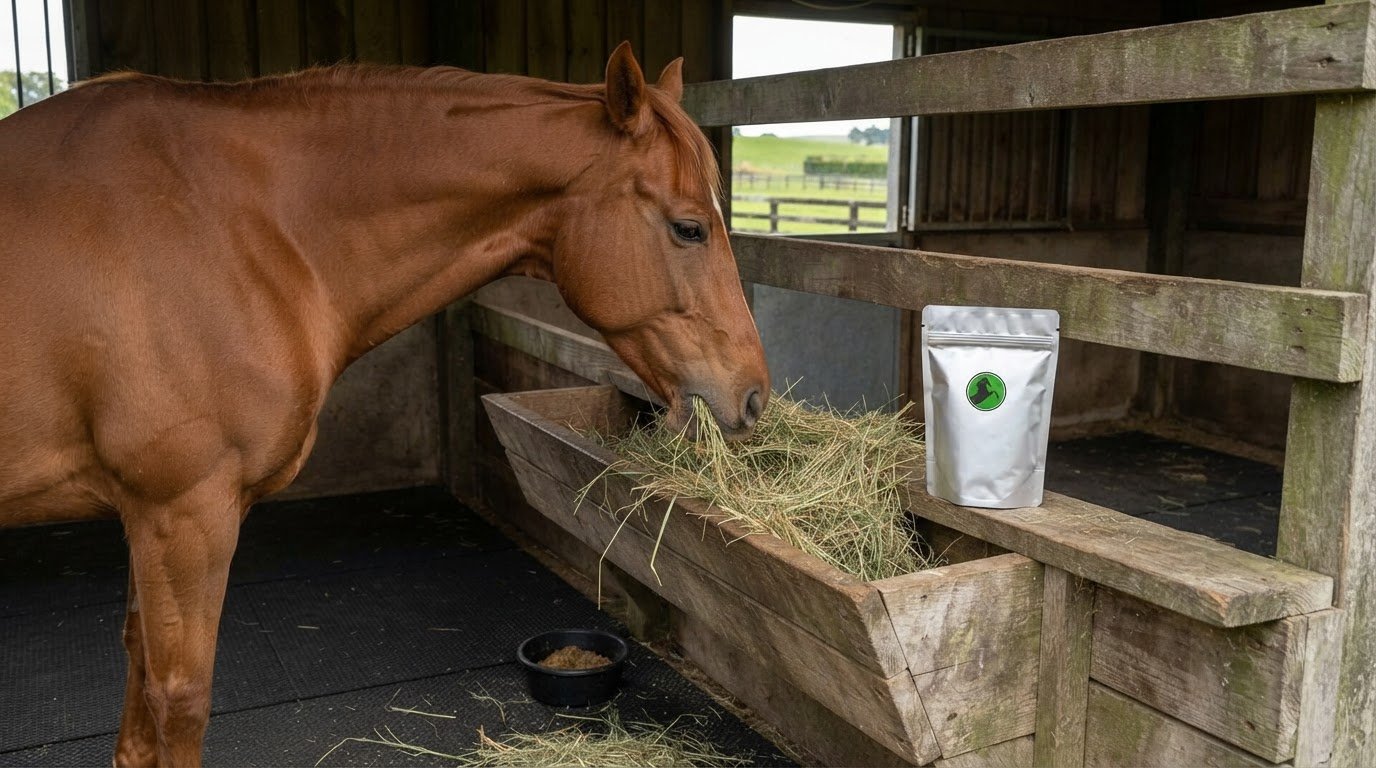
Nearly 90% of performance horses may suffer from gastric ulcers. An equine digestive aid should match the digestive area being supported: stomach protection and hindgut function involve different processes. Aloe vera, digestive supplements and pectin-lecithin complexes may support stomach health, while hindgut microbes ferment fibre to produce energy.
Digestive comfort depends on more than a single supplement: feeding patterns, forage and gut microbial activity all matter. Understanding how these factors work together can help you make informed choices for your horse’s daily care.
This guide explains how aloe vera and other digestive supplements may support the stomach, why hindgut fermentation matters, and what pectin-lecithin complexes may contribute to ulcer support. It also covers practical feeding considerations to help you understand the role each approach may play in equine digestive health.
Key Takeaways
- Match digestive support to the area you’re aiming to support, as stomach and hindgut needs differ.
- Consider how aloe vera and targeted supplements may contribute to stomach lining support.
- Understand how fibre fermentation and feeding patterns influence hindgut function.
- Learn where pectin-lecithin complexes may fit when supporting horses with gastric ulcers.
Aloe vera and stomach lining protection
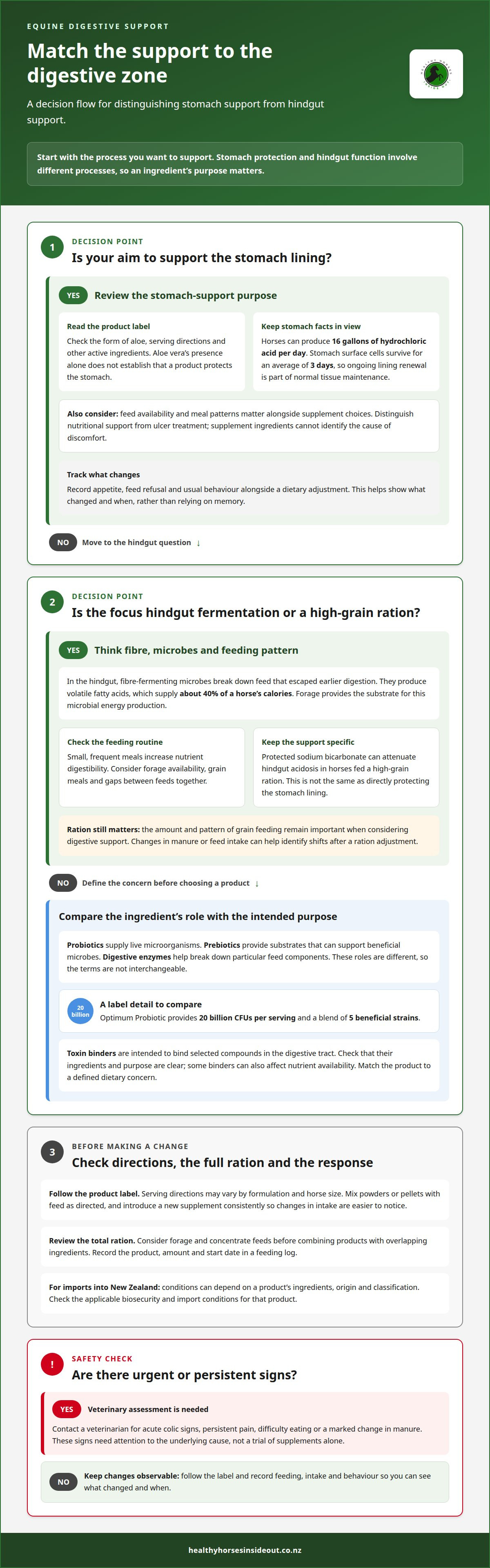
Horses can produce 16 gallons of hydrochloric acid per day, so stomach contents remain acidic. The stomach lining must maintain a protective barrier while food passes through. Its surface cells survive for an average of 3 days, making ongoing renewal part of normal tissue maintenance. Feed availability and meal patterns matter alongside supplement choices.
Aloe vera is a botanical ingredient used in some digestive formulas, but its presence alone does not establish that a product protects the stomach. Read the label for the form of aloe, serving directions and other active ingredients. Match the stated purpose to your horse’s needs instead of assuming all aloe supplements work alike. A clear label helps you understand what you’re feeding.
Distinguish nutritional support from ulcer treatment. A supplement’s ingredients cannot identify the cause of a horse’s discomfort. To monitor practical changes, record appetite, feed refusal and usual behaviour alongside any dietary adjustment. This helps show what changed and when, rather than relying on memory.
Long-chain polyunsaturated fatty acid supplementation has also been studied in exercised Thoroughbreds. Reported findings included increased red blood cell levels and reduced prevalence and severity of squamous gastric ulcers. This evidence concerns a specific supplement and type of horse. It does not show that aloe vera has the same effect or that all digestive formulas work alike.
Protected sodium bicarbonate addresses a different part of digestion. It can attenuate hindgut acidosis in horses fed a high-grain ration, but this is not the same as directly protecting the stomach lining. When reviewing a formula, identify whether it is intended to support the stomach or hindgut, then consider how the horse’s ration and feeding routine fit that purpose.
In a study of broilers, diets supplemented with peppermint oil at 200 or 400 mg/kg showed greater protein digestibility. This finding concerns poultry nutrition, not evidence of aloe vera’s effects in horses.
Digestive health supplements
Choose a supplement according to the digestive process you want to support. Consider the ingredient’s purpose, your horse’s current ration and the product’s feeding directions.
Probiotics, prebiotics and enzymes
Probiotics supply live microorganisms; prebiotics provide substrates that can support beneficial microbes. Digestive enzymes help break down particular feed components. These roles differ, so compare the ingredient list with the intended purpose rather than treating the terms as interchangeable. Optimum Probiotic provides 20 billion CFUs per serving and a blend of 5 beneficial strains, useful details when assessing a probiotic’s label.
Choosing aids for symptoms and diet
Start with your horse’s signs and feeding routine. Note changes such as reduced appetite or altered manure, and consider whether the ration, including forage and concentrate feeds, has changed. Toxin binders are intended to bind selected compounds in the digestive tract, so their ingredients and purpose should be clear. Some binders can also affect nutrient availability; match the product to a defined dietary concern.
In New Zealand, import conditions can depend on a product’s ingredients, origin and classification. Before importing a supplement, check the applicable biosecurity and import conditions for that product.
Dosage and administration
Follow the product label’s serving directions, which may vary by formulation and horse size. Mix powders or pellets with feed as directed, and introduce a new supplement consistently so changes in intake are easier to notice. Consider the total ration before combining products with overlapping ingredients. Record the product, amount and start date in a feeding log.
Digestive supplements are not a substitute for veterinary assessment. Contact a veterinarian if your horse shows acute colic signs, persistent pain, difficulty eating or a marked change in manure. These signs need attention to the underlying cause, not a trial of supplements alone.
For support that fits routine feeding, explore supplement options for everyday feeding.
Horse digestion and hindgut fermentation
Hindgut function depends on fibre, microbial fermentation and feeding patterns. These factors also determine how digestive support fits into a ration.
Hindgut fermentation
In the hindgut, fibre-fermenting microbes break down feed that escaped digestion earlier. They produce volatile fatty acids, which supply about 40% of a horse’s calories. Forage therefore supports more than chewing and gut fill: it provides substrate for microbial energy production. A ration’s fibre profile influences the fermentation process.
Small, frequent meals increase nutrient digestibility in horses. Meal feeding and using grain as an energy source differ from the conditions horses evolved under, as do solitary stall confinement and limited grazing. Consider these management factors together rather than treating a supplement as a substitute for suitable forage access and feeding routines.
Acidosis and pH balance
Hindgut acidosis involves an imbalance in the fermentation environment. A high-grain ration can challenge hindgut conditions, while protected sodium bicarbonate can attenuate acidosis in horses fed such a ration. This does not make ration composition irrelevant: the amount and pattern of grain feeding remain important when considering digestive support.
Assess the whole feeding pattern, including forage availability, grain meals and gaps between feeds. A horse receiving grain in large meals has a different fermentation context from one eating smaller, more frequent meals. Changes in manure or feed intake can help you identify shifts after a ration adjustment.
Risks, side effects and interactions depend on the supplement’s ingredients and the existing ration. Combining products can duplicate ingredients or alter the balance of dietary support, so consider each product as part of the full feeding programme.
Solitary stall confinement, limited grazing, grain as an energy source and meal feeding are modern management practices that differ from the conditions horses evolved under. This context helps you consider digestive support alongside the feeding routine.
Pectin-lecithin complexes and ulcers
Pectin-lecithin complexes combine two ingredients used in equine digestive formulas. Two studies found that pectin-lecithin supplementation can aid ulcer healing in horses. This makes the complex relevant to digestive support, but does not establish that every formulation works identically. Check the product label for both ingredients and follow its feeding directions.
Pectin is a soluble fibre, while lecithin is a phospholipid. Together, they are used in supplements intended to support the digestive tract’s protective barrier. Their proposed purpose differs from simply buffering stomach acid. When comparing products, focus on ingredient names and intended functions rather than broad claims about “gut health”.
Ulcers can involve different parts of the digestive tract. Colon ulceration is not interchangeable with gastric ulceration, so location matters when interpreting research or choosing support. The two studies discussed here concern ulcer healing in horses, but do not establish that pectin-lecithin is effective for colon ulceration specifically. Do not extend a finding beyond the condition studied.
For a practical assessment, note your horse’s feeding routine, appetite and behaviour, then discuss persistent changes with a veterinarian. A supplement cannot identify an ulcer’s location or explain its cause. Diagnosis can distinguish a suspected stomach problem from colon involvement or another digestive issue, helping determine whether nutritional support belongs in the broader management plan.
When reviewing a pectin-lecithin product, consider its full ingredient list, serving directions and fit with the existing ration. Record when you add it to the feeding routine, so subsequent changes have a clear reference point. This keeps supplementation deliberate instead of adding several products at once.
Explore horse supplement options as part of a considered digestive-support plan.
Healthy Horses Inside Out: Everyday Horse Supplements
Healthy Horses Inside Out offers Everyday Horse Supplements to support considered choices for your horse’s daily nutrition. For a particular dietary focus, explore Specific Horse Supplements, Horse Supplement Bundles and HHIO Pellets.
Choose a supplement according to the role you want it to play alongside your horse’s existing ration. A bundle may suit a broader supplementation plan, while a specific supplement may better match a defined nutritional need. Supplements can support feeding management, but they do not diagnose or treat ulcers or other medical conditions.
Explore Healthy Horses Inside Out’s supplement options to find one that fits your horse’s feeding routine.
Make your next feeding decision with purpose
Turn what you’ve learned into a clear plan for your horse’s daily routine. Before changing the ration, identify what you want nutritional support to address and how the current feeding programme fits that goal. This gives you a practical basis for choosing an equine digestive aid rather than adding products without a defined purpose.
Keep the plan simple: make one change at a time, follow product directions and record what you observe. Healthy Horses Inside Out offers supplements for different feeding needs. For persistent or sudden signs of illness, involve your veterinarian in decisions about your horse’s care.
Contact Healthy Horses Inside Out to discuss supplement options for your horse’s feeding routine. A thoughtful next step can help you make daily nutrition decisions with greater clarity and confidence.
Frequently Asked Questions
What is an equine digestive aid and what problems can it help with?
An equine digestive aid is a feed supplement intended to provide targeted nutritional support for digestive function. Depending on its ingredients, it may support stomach lining health, microbial activity or hindgut conditions. For example, probiotics and pectin-lecithin formulas have different purposes. Supplements do not diagnose ulcers or explain ongoing discomfort, so persistent changes in appetite, manure or behaviour need veterinary assessment.
What types of digestive aids are available for horses in New Zealand?
New Zealand horse owners can choose supplements with different ingredients and nutritional purposes, including probiotics, prebiotics, digestive enzymes, toxin binders and pectin-lecithin products. Options also include everyday and specific supplements, bundles and pellets. Compare the product’s intended role and full ingredient list with your horse’s existing feed. Do not choose by a broad “gut health” label alone, as formulas may support different parts of digestion.
Which ingredients have evidence for supporting equine digestion?
Evidence depends on the ingredient and the horses studied. Two studies found that pectin-lecithin supplementation can aid ulcer healing in horses. Long-chain polyunsaturated fatty acids were associated with reduced prevalence and severity of squamous gastric ulcers in exercised Thoroughbreds. Protected sodium bicarbonate can attenuate hindgut acidosis in horses fed a high-grain ration. These findings apply to specific contexts, not every horse or supplement formula.
What are the risks, side effects and interactions of horse digestive aids?
Risks and interactions depend on the ingredients and your horse’s existing ration. Some toxin binders can affect nutrient availability, while combining products may duplicate ingredients or alter the balance of dietary support.
How much do equine digestive aids cost in New Zealand?
Where can I buy equine digestive aids in New Zealand?
Healthy Horses Inside Out offers Everyday Horse Supplements, Specific Horse Supplements, Horse Supplement Bundles and HHIO Pellets. Import conditions in New Zealand depend on the product’s ingredients, origin and classification.


