
Equine antioxidant supplements can support a horse’s cells as they manage free radicals produced during normal metabolism and exercise. Oxidative stress occurs when free radical production exceeds the body’s antioxidant defences, and intense exercise can increase that challenge. Antioxidants such as vitamin E and selenium also relate to immune function, but a supplement is only one part of the picture.
It’s understandable to look for nutritional support when a horse is working hard or needs extra attention. A useful starting point is understanding what antioxidants do, how exercise affects oxidative balance, and how forage and the rest of the diet contribute. This article explains those connections, with a closer look at vitamin E, selenium and immune support, to help you consider where supplementation may fit into everyday care.
Key Takeaways
- Understand how exercise-related free radicals can contribute to oxidative stress and affect muscle health and recovery.
- Consider how pasture, hay and the overall diet shape the antioxidants available to your horse.
- Learn how vitamin E and selenium contribute to antioxidant defences and support immune function.
- Use your horse’s workload and existing diet to guide whether additional nutritional support may be useful.
How can I include antioxidants in my horse’s diet?
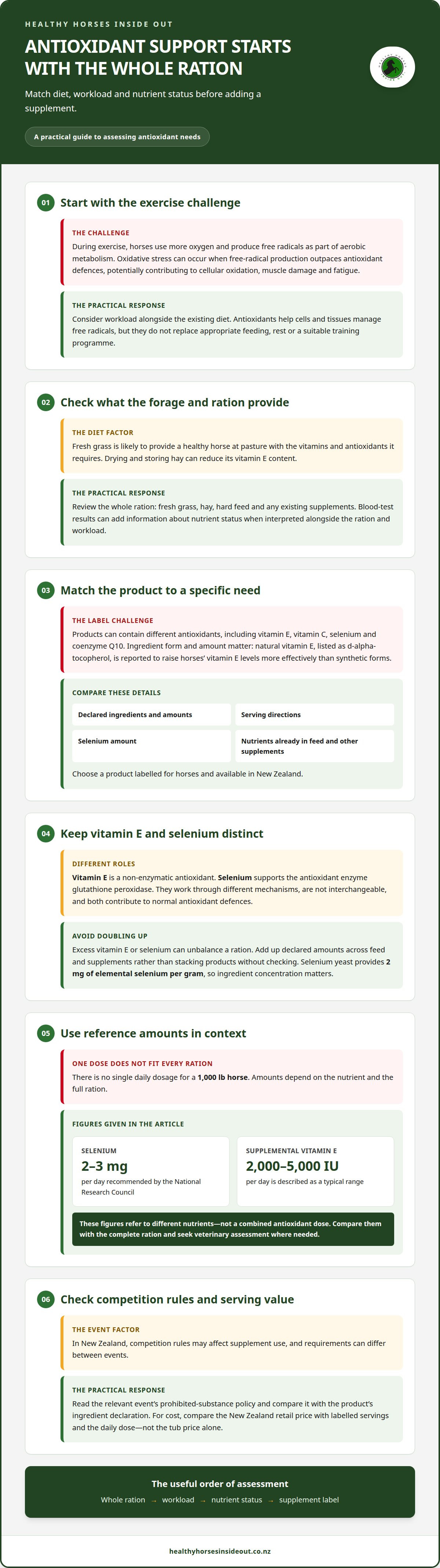
Start with the whole ration: fresh grass, hay, hard feed and any existing supplements. Then consider whether the horse’s workload creates extra demands for antioxidant support.
During exercise, horses use more oxygen to meet their muscles’ needs, and free radicals form as part of aerobic metabolism. Oxidative stress can develop when their production outpaces antioxidant defences. An imbalance may contribute to cellular oxidation, muscle damage and fatigue, affecting performance and recovery. Antioxidants help cells and tissues manage free radicals, but they don’t replace appropriate feeding, rest or a suitable training programme.
Assessing antioxidant needs
Assess antioxidant needs by considering the horse’s diet, workload and relevant blood-test results together. A pasture-fed horse and one in intense competition have different nutritional contexts. Fresh grass is likely to provide a healthy horse at pasture with the vitamins and antioxidants it requires, while drying and storing hay can reduce its vitamin E content. Blood-test results can add information about nutrient status when interpreted alongside the ration and workload.
Equine antioxidant supplements available in New Zealand include vitamin E, vitamin C and selenium, as well as products containing coenzyme Q10. Dietary antioxidants also include beta-carotene. Supplementation may benefit horses during intense exercise, including training and competition, and is commonly used to support muscle health and recovery. Its relevance depends on the horse’s existing diet and exercise demands, rather than the supplement category alone.
Choosing an available supplement
Choose a supplement by matching its declared ingredients and amounts to a specific dietary need. Labels may distinguish natural vitamin E, listed as d-alpha-tocopherol, from synthetic forms; natural vitamin E is reported to raise horses’ vitamin E levels more effectively. Read the full ingredient panel, serving directions and selenium amount, then compare them with nutrients already supplied by feed and other supplements. Choose a product labelled for horses and available in New Zealand.
When considering muscle support, recovery or performance, assess workload alongside the ration before adding nutrients. Antioxidants are also used to support immune function, while their use as adjunct therapy for neurological challenges is a separate consideration. Vitamin E and selenium help prevent tying up and other muscle problems in horses exercising at high intensity, but supplementation should suit the individual horse’s overall diet.
Oxidative stress and reactive oxygen species in horses
Reactive oxygen species form during normal metabolism, and exercise can increase their production. Their effects depend on the balance between these molecules and the body’s antioxidant defences.
Reactive oxygen species in horses
Reactive oxygen species are oxygen-containing molecules that can react with cell structures. They form primarily in mitochondria, where adding a free electron to an oxygen molecule creates a reactive species. Oxidative stress occurs when production exceeds antioxidant defences, allowing cellular damage to build. Enzymes also help combat these molecules: superoxide dismutase uses copper, manganese and zinc to help neutralise free radicals.
Antioxidants support cells as they respond to oxidative stress, but they don’t eliminate every reactive molecule. Unchecked cellular oxidation can contribute to muscular fatigue severe enough to compromise performance. The immune system also relies on balanced cellular function, but antioxidants are nutritional support, not a treatment for disease.
Antioxidants for horses in training
Antioxidant supplements provide dietary compounds intended to support a horse’s defences during demanding training. They may be relevant for horses undertaking intense exercise or competition, when aerobic metabolism increases free-radical production. Their usefulness depends on workload, current diet and the antioxidant supplied. Vitamin E and selenium are among the nutrients associated with muscle support during high-intensity work.
There is no single daily dosage for a 1,000 lb horse: amounts depend on the nutrient and the full ration. The National Research Council recommends 2 to 3 mg of selenium per day for horses; a typical supplemental vitamin E range is 2,000 to 5,000 IU per day. These figures describe different nutrients, not a combined antioxidant dose.
In New Zealand, competition rules may affect supplement use. Read the relevant event’s prohibited-substance policy and compare it with the product’s ingredient declaration, as requirements can differ between events. Serving cost varies by product: compare the New Zealand retail price with the labelled servings and daily dose rather than relying on the tub price alone.
For a practical way to compare nutrition options, explore horse supplement choices alongside your horse’s current ration and workload.
Vitamin E and selenium
Vitamin E, selenium and vitamin C support antioxidant defences in different ways. Their distinct roles help explain why it’s important to consider the horse’s full ration.
Vitamin E and selenium roles
Vitamin E is a non-enzymatic antioxidant, while selenium supports the antioxidant enzyme glutathione peroxidase. The nutrients work through different mechanisms, and selenium also helps vitamin E’s antioxidant effects. Vitamin E supports cell activity; selenium is a micromineral. Together, they contribute to a horse’s normal antioxidant defences, but they aren’t interchangeable. Consider their total contribution to the diet rather than treating one as a substitute for the other.
Other antioxidants include vitamin C, beta-carotene and minerals used by antioxidant enzymes. Excess vitamin E or selenium can unbalance a ration, so avoid stacking products without adding up their declared amounts. Selenium yeast provides 2 mg of elemental selenium per gram, making the ingredient concentration important when assessing intake. A veterinary assessment can help interpret dietary needs and relevant test results.
Vitamin E in hay
Vitamin E in hay can decline during drying and storage, changing the antioxidant contribution of a forage-based ration. Hay can lose as much as 80 percent of its vitamin E content through these processes. That matters when pasture is limited: the horse may receive less vitamin E from stored forage than from fresh grass. Include forage type and storage in a diet review.
Fresh grass is likely to provide a healthy horse at pasture with the vitamins and antioxidants it requires. A ration that relies on stored hay, by contrast, needs to be assessed in context, including other feeds and supplements. Forage source helps explain why vitamin E intake can differ between horses, even when their daily feeding routines look similar.
Non-enzymatic antioxidants
Non-enzymatic antioxidants, including vitamins E and C, help neutralise harmful free radicals without acting as antioxidant enzymes. Vitamin E protects cell membranes, while vitamin C, also called ascorbic acid, helps neutralise free radicals. Healthy horses can synthesise vitamin C in the liver, so its role differs from vitamin E’s dietary contribution.
Vitamin C absorption in the small intestine is low, and prolonged additional feeding when unnecessary may affect the body’s own production. For that reason, the purpose and duration of supplementation matter. Compare vitamin E, vitamin C and selenium by their distinct functions, not simply by whether a product is labelled an antioxidant.
Cell membrane protection
Vitamin E acts within cell membranes, helping protect them from free-radical damage. This matters because membranes help maintain cell structure and activity. Oxidative molecules produced during normal metabolism can challenge those structures; vitamin E contributes to the horse’s defence against that process.
Hay storage can reduce vitamin E supply, while fresh grass contributes dietary antioxidants. These examples show why membrane protection depends on the whole feeding picture, not one ingredient alone. Assess forage and existing supplements together, then consider vitamin E alongside selenium and other antioxidant nutrients.
Antioxidants and immune function
Antioxidants support immune function by helping cells manage the oxidative demands of normal metabolism. Immune cells rely on healthy cellular function to respond to challenges. Vitamin E and selenium contribute to a horse’s antioxidant defences, while an adequate overall diet supplies nutrients that support these processes. Supplementation complements balanced feeding; it doesn’t replace it.
Workload and environmental stress can change a horse’s nutritional context. Exercise increases oxygen use and free-radical production, while travel to competition can make the period around an event more stressful. Vitamin E and selenium supplementation supports the immune system, and antioxidants are also used to support muscle health and recovery. Consider how these needs fit the horse’s existing ration, rather than assuming one ingredient supports every function.
Vitamin C has a different role in this discussion. Healthy horses can synthesise it in the liver, and additional vitamin C is sometimes provided close to a stressful event. For example, suggested competition timing includes after travel to the event, during competition and after the journey home. A brief, event-related approach isn’t a reason for prolonged feeding when additional vitamin C isn’t considered necessary.
Antioxidants may also help alleviate seasonal allergies while supporting the body’s immune system. That doesn’t make them a treatment for allergy symptoms or disease. Instead, consider them nutritional support within a wider care plan that includes adequate feed, water, rest and workload management. A practical review of the horse’s feed, forage and supplements can help determine whether vitamin E, selenium or another antioxidant offers relevant support.
For a considered next step, explore horse supplement options in the context of your horse’s diet and daily demands.
Healthy Horses Inside Out: Everyday Horse Supplements
Healthy Horses Inside Out offers Everyday Horse Supplements to complement your horse’s existing diet. If you’re reviewing a specific nutrient or health priority, explore the Specific Horse Supplements range. Horse Supplement Bundles and HHIO Pellets are also available.
Start with a practical question: what does your horse already receive from pasture, forage and feed, and where might additional dietary support fit? This keeps supplement choices connected to the overall ration rather than treating antioxidants as a quick fix. The right option depends on the nutritional role you’re considering, such as general daily support or a specific requirement.
For help exploring supplement options for your horse, contact Healthy Horses Inside Out.
Make your next nutrition decision with confidence
Build a clear picture of your horse’s daily intake. Note its forage and feeds, any supplements already in the ration, and changes in workload or routine. This gives you a practical starting point for deciding whether equine antioxidant supplements have a relevant role, rather than adding another product without a defined purpose.
Keep the goal specific: support a recognised dietary need while maintaining balance across the whole ration. If you’re weighing up options, explore the Healthy Horses Inside Out supplement range in that context. A thoughtful next step can bring clarity to your horse’s nutrition and help you feel more assured in your care choices.
Contact Healthy Horses Inside Out to explore your next step.
Frequently Asked Questions
What is an antioxidant?
An antioxidant is a substance that helps limit oxidation by neutralising reactive molecules. In a horse’s body, vitamin E is one example: it works within cell membranes, while other antioxidants act in different parts of the body. The practical point is that “antioxidant” describes a function, not a single ingredient. Check which nutrient a product provides and how it fits the horse’s existing ration.
How can antioxidants maintain health and performance?
Antioxidants contribute to normal cellular function, supporting the systems involved in everyday health and physical work. For a horse in training, review its routine alongside its feed: changes in workload, forage or existing supplements can alter the nutritional picture. Use that context to assess whether support is relevant. Antioxidants are part of nutrition, not a substitute for appropriate care or recovery time.
What are free radicals?
Free radicals are reactive molecules produced in the body, including during normal metabolism. They’re a by-product of processes that help cells function, rather than substances that are always harmful. The body’s antioxidant defences help manage them. Their effects depend on the balance between their production and those defences, so their presence alone doesn’t mean a horse needs a supplement.
How should antioxidant supplements be dosed and introduced for horses?
Follow the directions for the specific product and nutrient, and assess the horse’s complete ration before adding a supplement. Products differ in concentration, so don’t transfer a dose from one formula to another or assume body weight alone determines the amount. Introduce one dietary change at a time and keep feed amounts consistent while observing acceptance and routine. Record existing supplements so you can spot any duplicate ingredients.
What are typical prices and serving costs for horse antioxidant supplements in New Zealand?
Serving costs vary by product; compare the New Zealand retail price with the labelled servings and daily dose.
What are the risks of excessive vitamin E or selenium in horses?
Excess vitamin E or selenium can unbalance a horse’s ration. Add up the declared amounts in feed and supplements, and avoid combining products without checking the total.


