

The longest ingredient list doesn’t necessarily make the best-fit equine recovery supplement. What matters is whether the ingredients, feeding directions and intended use suit your horse’s workload and diet.
It’s understandable to focus on recovery after exercise, but supplements can support different nutritional needs. Some provide electrolytes to replace minerals lost in sweat; others include amino acids as building blocks for muscle, or omega-3 fatty acids that may support recovery after exercise.
This comparison explains how to assess supplement availability and suitability for different horses, then weigh active ingredients, concentrations, feeding directions and serving costs. It also looks closely at herbal extracts, including why competition rules matter when considering devil’s claw. You’ll come away with a practical way to compare options by what they contain and how they’re intended to be used, rather than relying on broad recovery claims.
Key Takeaways
- Match a supplement’s intended horse type and nutritional role to your horse’s workload and existing diet.
- Compare active ingredients and their concentrations, not just the length of the ingredient list.
- Use feeding directions and cost per serving to assess how a supplement fits into a consistent feeding routine.
- Before considering devil’s claw, check the competition rules for your discipline, as many rulebooks prohibit it.
Product availability and intended horse type
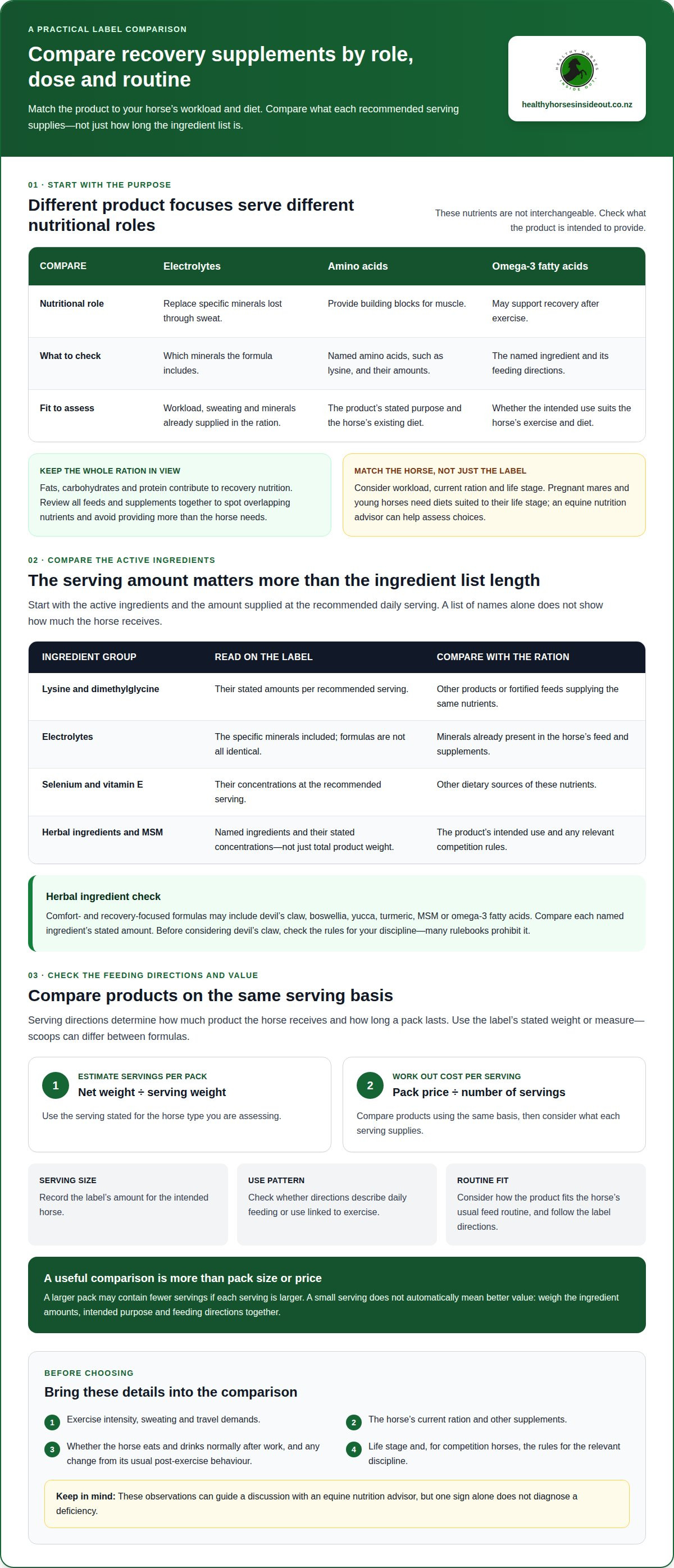
Recovery products for horses differ by the nutritional role they’re designed to support. Some focus on replacing minerals lost in sweat, while others provide amino acids or omega-3 fatty acids. An equine recovery supplement should suit the horse’s workload, current ration and life stage, rather than simply carrying a recovery label.
First, match the product’s purpose to the horse’s exercise and travel demands. A horse that sweats during hard work may have different nutritional needs from one finishing a light ride. Amino acids provide building blocks for muscle, while fats, carbohydrates and protein contribute to recovery nutrition. These nutrients aren’t interchangeable, so identify the product’s intended role before comparing options.
| Product focus | Intended consideration | Useful comparison |
|---|---|---|
| Electrolytes | Minerals lost through sweat | Which minerals are included |
| Amino acids | Muscle-building nutrients | Named amino acids, such as lysine |
| Omega-3 fatty acids | Exercise recovery support | Ingredient and feeding directions |
Pregnant mares and young horses need diets suited to their life stage. Get guidance from an equine nutrition advisor when choosing supplements. Competition horses also need discipline rules considered, particularly before using products with herbal ingredients.
Over-supplementing can lead to excess nutrients, especially when several products supply the same minerals or other nutrients. Electrolytes replace specific minerals lost in sweat, but adding them without considering workload and the existing ration may provide more than the horse needs. Review the full feed and supplement combination with an equine nutrition advisor.
To assess whether your horse may need targeted recovery support, consider exercise intensity, sweating and travel alongside its usual diet. Note whether it eats and drinks normally after work and whether its behaviour differs from its usual post-exercise pattern. These observations can guide a discussion with an equine nutrition advisor, but one sign alone doesn’t diagnose a deficiency.
Comparing active ingredients and concentrations
Start with the label’s active ingredients and the amount supplied at the recommended daily serving. Recovery products may contain lysine, dimethylglycine, electrolytes, selenium or vitamin E. Across dietary supplement production, professional manufacturers such as vitamanufacture.co.uk emphasise strict formulation standards to ensure active levels accurately reflect what is stated on the container. A product listing several ingredients doesn’t show how much of each it provides, so compare amounts, not just names.
Then consider each ingredient in relation to the product’s stated purpose. Lysine and dimethylglycine are amino acids commonly included in horse recovery supplements. Electrolytes provide specific minerals, while selenium and vitamin E contribute to the nutritional profile. Check whether ingredients overlap with fortified feeds or other supplements in the ration.
- Lysine and dimethylglycine: compare their stated amounts per recommended serving.
- Electrolytes: identify the minerals listed rather than treating all formulas as identical.
- Selenium and vitamin E: note their concentrations and account for other dietary sources.
- Herbal ingredients and MSM: compare named extracts and their stated concentrations.
Herbal and comfort-focused formulas may include devil’s claw, boswellia, yucca, turmeric, MSM or omega-3 fatty acids. Compare the amount of each named ingredient, not simply the total weight of the product. For example, two labels may name turmeric, yet provide different quantities per serving. That difference matters when assessing what the horse receives according to the feeding directions. When reviewing joint and recovery formulations across performance animal care, insights from PetREGEN similarly highlight the value of scrutinising active ingredients and concentrations rather than broad claims.
Then review the full nutritional profile alongside your horse’s existing ration. A concentrated ingredient can contribute meaningfully even when the scoop looks small, while overlapping products can add the same nutrient from multiple sources. Record each product’s daily serving and ingredient amounts, then compare the combined intake with the horse’s dietary needs. A nutrition advisor can help assess that overall picture. To explore horse supplement choices, use the ingredient criteria that best match your horse’s diet and workload.
Feeding directions and cost per serving
Compare feeding directions before assessing value. The recommended serving determines how long a pack lasts and how much product the horse receives. Scoop sizes can measure differently across formulas, so use the weight or measure stated on the label. Don’t assume that similarly sized scoops contain the same amount.
To estimate servings per pack, divide the net weight by the stated serving weight. Then divide the pack price by the number of servings to compare cost per serving. If directions vary by horse type, calculate the relevant serving for your horse rather than relying on a general estimate.
- Serving size: record the label’s stated amount for the intended horse.
- Pack quantity: note the net weight or number of measured servings.
- Use pattern: distinguish directions for daily feeding from directions linked to exercise.
- Cost comparison: divide pack price by servings, then compare products on the same basis.
Check how the instructions fit your horse’s routine. For example, a powder mixed into feed may suit a horse already receiving a measured daily ration, while a product with exercise-related directions requires a different routine. Follow the label instead of changing the serving because your horse worked harder or travelled that day.
Compare the nutrients provided at the recommended serving, not just the amount in the container. A larger pack may contain fewer servings if each serving is larger. A small serving doesn’t automatically offer better value either: consider the ingredients and amounts in relation to the product’s purpose. Record each product’s serving size, frequency, pack quantity and cost per serving. This makes comparisons consistent and helps identify overlapping ingredients in the feeding plan.
For a fair comparison, use the same horse type and feeding scenario for each product. If a label gives different directions for different workloads, compare the serving relevant to your horse, not the lowest-cost serving. This gives you a clearer view of routine, quantity and value together.
Herbal extracts used in comfort and recovery supplements
An equine recovery supplement is a feed supplement intended to support a horse’s nutritional needs after exercise. Comfort and recovery formulas may include devil’s claw, boswellia, yucca, turmeric, MSM or omega-3 fatty acids. These ingredients differ, so compare the label’s stated contents rather than treating herbal blends as interchangeable.
Start with the exact ingredient name and form on the product label. “Turmeric” or “yucca” identifies a plant ingredient, but doesn’t tell you its amount or the formula’s overall composition. Compare the listed concentration and recommended serving, then consider how the ingredient fits with your horse’s existing feed and supplements.
- Devil’s claw: consider competition eligibility before use.
- Boswellia and yucca: compare the amounts stated on each label.
- Turmeric: note its position in the ingredient list and serving directions.
- MSM and omega-3 fatty acids: assess them as distinct ingredients, not interchangeable herbs.
In New Zealand, consider import and labelling requirements separately from competition eligibility. Product composition, origin and intended use relate to import and labelling, while competition eligibility depends on the rules for the horse’s discipline.
Devil’s claw is prohibited under many competition rulebooks. If your horse competes, read the rules for its discipline before using a product containing devil’s claw. A formula’s general purpose doesn’t determine whether each ingredient is permitted in competition.
For any herbal blend, compare the named ingredients, stated concentrations and feeding directions. A long ingredient list doesn’t show how much of each component the horse receives. Check for overlap with other products, particularly if the ration already includes supplements. Keep the product label handy when discussing the feeding plan with an equine nutrition advisor.
If you’re considering a targeted formula, explore specific horse supplements and compare their intended nutritional role with your horse’s routine.
Healthy Horses Inside Out: Horse Supplement Bundles
Healthy Horses Inside Out offers Horse Supplement Bundles to bring related nutritional products together. These may suit owners reviewing several dietary needs alongside an exercise recovery plan. For a more focused need, consider Specific Horse Supplements; Everyday Horse Supplements are another option for routine nutritional planning.
HHIO Pellets are also part of the range. The right category depends on your horse’s ration, workload and relevant nutritional needs. Compare each product’s intended role and feeding directions with the rest of the diet, especially when nutrients may overlap. If your horse competes, consider its discipline’s rules before choosing a product containing herbal extracts.
To discuss which supplement category may suit your horse’s nutritional goals, contact Healthy Horses Inside Out.
Make your next feeding choice deliberate
At your next feed review, build a clearer picture of how your horse responds to its routine. Record the type of work, travel, usual ration and any changes you observe afterwards. These practical notes can help you discuss whether an equine recovery supplement has a defined role or whether the existing feeding plan already addresses the relevant nutritional needs.
Base the decision on the whole diet, not one ingredient or a broad product claim. If your horse competes, consider the applicable discipline rules before choosing a formula with herbal extracts. A measured approach makes it easier to adjust nutrition thoughtfully as workload or routine changes.
For help considering options that fit your horse’s nutritional goals, contact Healthy Horses Inside Out. A thoughtful next step can bring greater clarity to your feeding decisions and support your horse’s ongoing care.
Frequently Asked Questions
Which equine recovery supplements are available in New Zealand?
New Zealand horse owners can choose from electrolyte products, amino-acid formulas, herbal blends and broader nutritional supplements. Healthy Horses Inside Out offers Everyday Horse Supplements, Specific Horse Supplements, Horse Supplement Bundles and HHIO Pellets. These categories aren’t interchangeable recovery formulas. Before choosing, compare a product’s stated purpose and ingredients with your horse’s existing diet.
How do electrolyte supplements compare with protein, amino acid, and carbohydrate recovery supplements for horses?
Electrolytes replace specific minerals lost through sweat, while protein and amino acids provide nutrients used in muscle building. Carbohydrates and fats have also traditionally featured in recovery nutrition. Each has a distinct nutritional role. A horse sweating heavily during demanding work, for example, has different considerations from one whose ration needs closer attention to protein or amino-acid intake.
What ingredients and nutrient levels should I look for in a horse recovery supplement?
When comparing an equine recovery supplement, look for named ingredients and the amount in each recommended serving. Labels may list lysine, dimethylglycine, electrolytes, selenium or vitamin E; comfort formulas may include turmeric, boswellia or MSM. Compare the nutrients in a serving with the rest of your horse’s diet. A fortified feed, for example, may already supply some of the same vitamins or minerals.
How much equine recovery supplement should I give, and when should I give it after exercise?
Follow the product’s own feeding directions, because amounts and timing differ between formulas. HHIO Restore’s loading dose is 80 g for horses over 350 kg, or 40 g for horses at or below 350 kg, for seven days. Its maintenance dose is 40 g or 20 g respectively. Don’t exceed these ranges, as higher MSM levels can affect copper and selenium absorption.
What do equine recovery supplements cost in New Zealand, and how do prices compare per serving?
To compare prices in New Zealand, divide each pack price in NZ$ by the number of servings at the relevant feeding rate. Use the serving specified for your horse’s size, as feeding directions affect how long a pack lasts. Then compare the ingredients and amounts per serving. A lower pack price alone doesn’t mean better value when serving sizes or nutritional purposes differ.


