

Recent data reveals that 89% of New Zealand sport horse owners provide daily supplements, yet many still struggle with brittle hooves, dull coats, and persistent health niggles. You likely know the frustration of watching your horse graze on lush, green grass while their physical condition suggests something is missing. It's exhausting to navigate the sea of conflicting advice, especially when you're worried about the fine line between Selenium deficiency and toxicity. You want the best for your horse, but the "iron blockade" and our unique soil profile make balancing horse minerals NZ feel like an unsolvable puzzle.
This science-led guide changes that by shifting the focus from guesswork to precision nutrition. We'll explore how to identify the "Big Three" deficiencies, Copper, Zinc, and Selenium, while explaining the biological mechanisms that allow minerals to work in harmony rather than competition. You'll discover how to correct pasture imbalances to achieve a shiny coat, strong hooves, and a calmer temperament. This article provides a clear, simplified strategy to offer the foundational support your horse deserves, giving you total peace of mind that their diet is scientifically sound and perfectly suited to New Zealand conditions.
Key Takeaways
- Understand why New Zealand's volcanic history and high rainfall necessitate a targeted approach to equine nutrition rather than a one-size-fits-all supplement.
- Discover how balancing horse minerals NZ requires focusing on precise ratios of Copper, Zinc, and Selenium to overcome the "iron blockade" commonly found in local pastures.
- Learn to identify subtle physical and behavioural indicators, such as "girthiness" or a sun-bleached coat, that signal your horse's internal systems are struggling with mineral imbalances.
- Master the process of using forage analysis to calculate the exact nutritional gap between your horse's requirements and what the pasture currently provides.
- See how implementing a science-led foundational base with HHIO Pellets can simplify your daily feeding routine while ensuring long-term systemic health.
The Science of New Zealand Soil and Equine Pasture
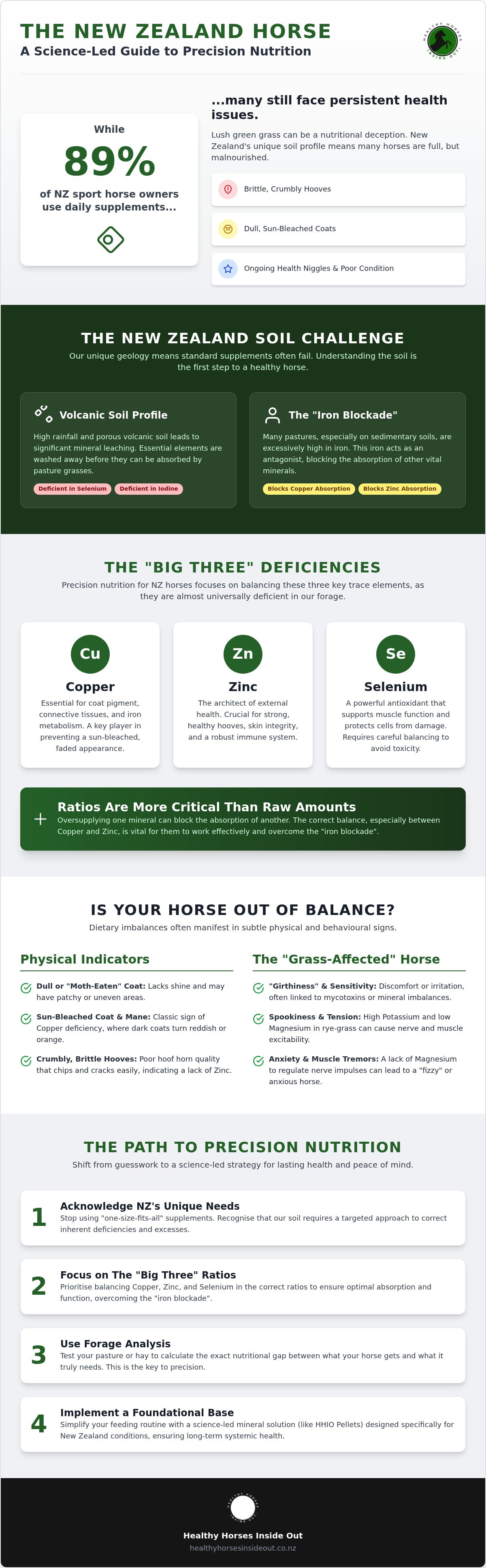
New Zealand's landscape is visually stunning, yet its geological history presents a significant challenge for horse owners. High rainfall and a legacy of volcanic activity have resulted in significant mineral leaching, leaving our pastures naturally deficient in several key trace elements. Mineral balancing is the methodical process of matching a horse's supplemental intake to the specific deficiencies or excesses found in their primary forage. This practice is not about adding more for the sake of it; rather, mineral balancing serves as the essential foundation of equine metabolic stability. Relying on "one-size-fits-all" supplements imported from overseas often misses the mark, as these products are rarely formulated to address the specific "iron blockade" or Selenium gaps unique to our soil.
Successfully balancing horse minerals NZ requires an understanding of how our environment influences plant biology. When we feed a supplement designed for North American or European soil, we risk oversupplying minerals already abundant in our paddocks while ignoring the chronic deficiencies that drive systemic health issues. True wellness starts with correcting these foundational imbalances.
Volcanic vs. Sedimentary Soil Profiles
Our paddocks aren't uniform, and the underlying geology dictates the nutrients available in your horse's diet. Volcanic soils are often porous, meaning essential minerals like Selenium and Iodine leach away easily during heavy rain. In contrast, sedimentary soils may carry high levels of iron, which acts as an antagonist to other vital minerals. "Lush green grass" is frequently a nutritional deception. Rapid growth during seasonal flushes can dilute mineral concentrations, meaning a horse may be physically full but still technically malnourished. Understanding Equine nutrition basics helps owners recognise that the visual quality of a paddock rarely reflects its true mineral value.
The "Grass-Affected" Horse Phenomenon
Many New Zealand owners are familiar with the "grass-affected" horse, where dietary imbalances manifest as behavioural red flags. When Magnesium and Calcium ratios are skewed, the nervous system loses its stability. High Potassium levels in our rye-dominant pastures often trigger nerve and muscle excitability, leading to unexplained spookiness or tension. Additionally, New Zealand’s humid grazing conditions are a breeding ground for mycotoxins. These fungal metabolites can cause systemic distress, including separation anxiety and "girthiness." Successfully balancing horse minerals NZ involves addressing these internal factors to restore a sense of calm and physical comfort from the inside out.
Key Minerals for the New Zealand Horse
Identifying the specific nutrients required for balancing horse minerals NZ starts with the "Big Three": Copper, Zinc, and Selenium. These elements are almost universally deficient in New Zealand forage. However, adding them haphazardly can do more harm than good. Precision nutrition relies on understanding that the ratios between minerals are far more critical than the raw amounts provided. When one mineral is oversupplied, it can effectively "lock up" another, leading to secondary deficiencies despite a seemingly fortified diet. Meeting veterinary nutritional requirements is a delicate balancing act that requires a methodical approach to supplementation.
Beyond the primary trace elements, Magnesium serves as a critical balancer for the "fizzy" New Zealand horse. Because our rye-dominant pastures are often high in Potassium, Magnesium is needed to regulate nerve impulses and muscle relaxation. Without it, horses often exhibit heightened sensitivity, muscle tremors, or anxiety. Similarly, Iodine and Manganese are essential supporting players. They maintain thyroid health and metabolic function, yet they are frequently overlooked in standard feeding programmes. Achieving the right levels when balancing horse minerals NZ involves more than just filling a bucket; it requires an understanding of how these elements interact within the horse’s system.
The Copper and Zinc Connection
Copper and Zinc are the architects of external health. They must be balanced together, typically in a specific ratio, to support skin integrity and coat pigment. When this balance is skewed, you'll see visible distress signals. Sun-bleached manes, "moth-eaten" coats, and crumbly hoof horn quality are classic indicators of a Copper or Zinc deficiency. In many New Zealand regions, high Iron levels in the water and soil act as a powerful antagonist, siphoning away these minerals before the horse can absorb them. Addressing this "Iron blockade" is a vital step in restoring a vibrant, healthy appearance.
Selenium: The NZ Safety Balance
New Zealand's status as a Selenium-deficient nation is well-documented. This mineral is a powerhouse for muscle function and cellular protection. However, the margin of safety for Selenium is remarkably narrow. Selenium is vital for immune response but requires methodical measurement. Owners often feel anxious about this mineral, but providing a scientifically calculated dose ensures your horse remains protected without risk. For those looking to simplify this process, using Everyday Horse Supplements specifically formulated for our unique conditions can provide the necessary precision and peace of mind.
Identifying Deficiencies: Is Your Horse Out of Balance?
Recognising a mineral imbalance requires more than a passing glance in the paddock. It demands a methodical "Inside Out" audit, where we treat the horse’s physical appearance and temperament as a direct reflection of their internal biochemistry. Before reaching for a new bucket of feed, it’s vital to assess the horse as a whole. This clinical observation ensures you aren't just masking symptoms but are actually balancing horse minerals NZ to address root causes. The importance of quality horse nutrition becomes evident when you realise that many common training issues or poor hoof genetics are actually nutritional gaps waiting to be filled.
Performance issues also provide critical clues. A lack of topline development despite correct work, chronic muscle soreness, or a slow recovery rate after exercise suggest that the horse’s internal systems are struggling. By observing these red flags through a science-led lens, you can begin the process of balancing horse minerals NZ with confidence, moving away from reactive feeding and towards proactive wellness.
Hoof and Coat Indicators
Your horse’s exterior is a living record of their mineral status. Crumbly hoof walls, persistent "seedy toe," or a lack of concavity often signal that the foundational building blocks of keratin are missing. In dark-coated horses, look for a tell-tale "orange tinge" or sun-bleaching on the mane and tail. While many owners attribute this to the harsh New Zealand sun, it's frequently a classic sign of Copper and Zinc deficiency. When Zinc levels are suboptimal, the skin’s natural barrier function is compromised, making the horse more susceptible to "mud fever" or general skin sensitivity.
Behavioural and Metabolic Red Flags
Internal imbalances often manifest as external tension. If your horse is uncharacteristically spooky, prone to separation anxiety, or shows signs of "girthiness," you might be looking at the "magnesium gap." This mineral is essential for modulating the nervous system, especially when grazing high-potassium New Zealand pastures. Beyond behaviour, keep a close eye on metabolic shifts. Abnormal fat deposits over the tail head or a cresty neck can indicate early metabolic stress. For a deeper dive into these markers, check out our guide on 5 Signs Your Horse Has a Mineral Deficiency.
Implementation: How to Balance the Ration
Moving from observation to action requires a structured, evidence-based approach. Effectively balancing horse minerals NZ begins with understanding the primary source of your horse's calories: forage. Since pasture and hay make up the vast majority of the daily intake, they dictate the baseline mineral levels. Calculating the gap between what the grass provides and your horse's actual requirements allows for surgical precision in your feeding routine. This methodical process replaces the "scattergun" approach of adding random supplements, ensuring every gram of minerals serves a specific biological purpose.
Forage Testing and Soil Analysis
To obtain reliable data, you need a representative sample of your horse's diet. For hay, this involves using a core sampler across multiple bales; for pasture, it means collecting "hand-plucked" samples from various areas where the horse actually grazes. When your lab report arrives, don't be overwhelmed by the "parts per million" (ppm) figures. These numbers represent the concentration of elements like Copper or Zinc, which you then multiply by the total weight of forage consumed. While soil tests are useful for fertiliser planning, they don't always reflect what the plant actually takes up or what the horse absorbs. Forage analysis remains the gold standard for precision nutrition.
Once you've identified the deficiencies, the next step is effective delivery. Minerals are often unpalatable on their own, so selecting the right "carrier" is essential. Dampened chaff or specialised pellets can help ensure the minerals are consumed rather than left at the bottom of the bin. Consistency is the most vital component here. Systemic health takes time to rebuild; you're looking for a long-term shift in metabolic function rather than a temporary boost.
Organising the Feed Room
Precision in the feed room prevents waste and ensures safety, particularly with minerals like Selenium where the margin between health and toxicity is narrow. Use a digital scale to verify that your scoops are delivering the correct weight, as density can vary between different batches of mineral powders. If you're dealing with a "picky eater," introduce new minerals gradually over 7 to 10 days. Masking the scent with a small amount of salt or a highly palatable base can reduce stress for both you and the horse. For more specific guidance on selecting the right products for your paddock, read our guide on What Supplements Does My Horse Need in NZ?.
Taking control of your horse's diet doesn't have to be an overwhelming task. By following a science-led framework, you can focus on the foundational elements that truly matter for New Zealand's unique environment. To simplify your daily routine while ensuring nutritional integrity, consider starting with a balanced base like our HHIO Pellets.
The HHIO Approach: Science-Led Mineral Solutions
Our philosophy at Healthy Horses Inside Out (HHIO) is built upon a foundation of nutritional integrity and evidence-based wellness. We recognise that balancing horse minerals NZ is not a task solved by broad-spectrum products designed for other continents. Instead, we act as a methodical mentor, guiding owners toward a deeper understanding of how internal health dictates external performance. We don't believe in quick fixes or high-pressure marketing; we believe in the quiet confidence that comes from knowing your horse's diet is scientifically sound and tailored to New Zealand's specific geological challenges.
A critical, often overlooked factor in equine nutrition is the state of the digestive tract. Even the most perfectly calculated mineral ratio is ineffective if the horse's gut cannot absorb it. We prioritise gut health as the essential first step in ensuring mineral bio-availability. By supporting the integrity of the intestinal lining and the balance of the microbiome, we ensure that the minerals you provide actually reach the cellular level where they are needed most. This systemic focus ensures that your investment in nutrition translates into visible results rather than being wasted.
HHIO Pellets: The Foundational Base
Precision feeding doesn't have to be complicated or time-consuming. HHIO Pellets are formulated to simplify the daily routine while ensuring that core mineral targets for New Zealand conditions are met with clinical accuracy. These pellets are highly concentrated, offering a low-dose delivery system that is ideal for easy keepers and horses with metabolic sensitivities. By providing a consistent, palatable base, you remove the risk of sifting or waste often associated with loose powders. HHIO Pellets act as the methodical bridge between forage and optimal health.
Targeted Bundles for Specific Needs
Every horse is an individual, and their nutritional requirements can shift based on age, workload, or underlying health conditions. Our curated supplement bundles take the guesswork out of complex nutrition by grouping synergistic products that address specific objectives. Whether you are seeking everyday support or need to focus on metabolic stability or gut repair, these bundles provide a logical, structured solution. Our "Inside Out" approach ensures that every dollar you spend on minerals is backed by science to ensure maximum absorption and long-term vitality. To find the right fit for your horse, explore the full range of HHIO Horse Pellets and Supplements.
Achieving Long-Term Vitality Through Precision Nutrition
Empowering your horse to thrive in the unique New Zealand environment requires moving beyond generic solutions toward a targeted, evidence-based approach. By understanding the geological factors that lead to mineral leaching and the "iron blockade," you can begin the rewarding process of balancing horse minerals NZ with clinical precision. Correcting these foundational gaps doesn't just improve coat shine or hoof strength; it provides your horse with the metabolic stability needed for a calm temperament and resilient health.
Our methodical, science-led approach ensures that every supplement is formulated specifically for New Zealand soil and pasture conditions. Trusted by owners nationwide for behavioural and metabolic support, our range focuses on long-term systemic wellness rather than temporary fixes. When you prioritise high-quality ingredients and gut-focused absorption, you gain the peace of mind that comes from a scientifically balanced routine.
Ready to transform your horse’s health from the inside out? View our range of scientifically formulated NZ Horse Supplements today. Your horse deserves a foundation built on integrity and expertise, and we're here to guide you every step of the way.
Frequently Asked Questions
Do I really need to balance minerals if my horse looks healthy?
Yes, because sub-clinical deficiencies often exist long before visible symptoms like brittle hooves or dull coats appear. A horse might look healthy on lush grass but lack the internal reserves required for long-term metabolic stability. Precision nutrition acts as a preventative measure, ensuring immune resilience and foundational health. By the time visible health issues emerge, the internal systemic imbalance is already well-advanced, making proactive mineral support a vital part of daily care.
Can I over-supplement minerals and cause harm to my horse?
Yes, mineral antagonism is a significant risk where over-supplementing one element blocks the absorption of another. For instance, excessive iron can interfere with copper and zinc uptake, leading to secondary deficiencies. Some minerals, such as Selenium, also have a narrow safety margin where high doses become toxic. This is why a methodical approach to balancing horse minerals NZ is essential to ensure every nutrient is provided in the correct, scientifically sound ratio.
How long does it take to see results after starting a mineral balancing programme?
While some behavioural improvements related to magnesium can be observed within days, physical changes take longer to manifest. Hoof quality improvements typically require six to twelve months as new, stronger horn grows down from the coronary band. Coat changes are usually visible after the next shedding cycle. Systemic health is a long-term commitment, so consistency is the most vital factor in achieving visible vitality and peace of mind for the owner.
Is it better to feed minerals in a pellet or a loose powder format?
Pellets are generally superior for ensuring accurate dosage and reducing waste. Many horses sift through loose powders, leaving essential minerals at the bottom of the feed bin. HHIO Pellets provide a concentrated, palatable base that ensures your horse actually consumes their full daily requirement. This format is particularly beneficial for picky eaters or horses on a restricted diet who need a low-dose delivery system that is easy to manage in the feed room.
Does my horse need different minerals in winter versus summer in NZ?
Yes, seasonal pasture changes significantly alter mineral availability in the paddock. Spring and autumn flushes often bring high potassium and sugar levels, which can disrupt the magnesium balance and cause "fizzy" behaviour. Winter forage is frequently more leached due to high rainfall, especially in volcanic soil profiles. Adjusting your supplement routine ensures you are precisely correcting the specific deficiencies of the current season rather than relying on a static, year-round feeding formula.
What is the most common mineral deficiency in New Zealand horses?
Selenium, Copper, and Zinc are the most frequent deficiencies found across New Zealand pastures. Our unique geological history and high rainfall mean these trace elements are often leached from the soil or blocked by high iron levels in the water and forage. Addressing these "Big Three" is the first step in balancing horse minerals NZ to support immune function, skin integrity, and muscle health from the inside out for every horse.
How do I know if my horse has Selenium toxicity or deficiency?
Deficiency often manifests as poor muscle function, weak immunity, or "white muscle disease" in young stock. Conversely, toxicity can cause horizontal cracks in the hoof wall, hair loss from the mane and tail, and eventually lameness. Because the symptoms can overlap and the safety margin is narrow, blood testing through your veterinarian is the only definitive way to measure current Selenium levels safely before adjusting your supplementation levels.
Can mineral balancing help with my horse’s spooky behaviour?
Yes, behavioural issues are frequently linked to mineral imbalances, particularly the "magnesium gap." When magnesium levels are low relative to potassium and calcium, the nervous system becomes over-reactive. This leads to heightened sensitivity, anxiety, and muscle tension. Correcting these ratios provides a calming effect by stabilising nerve impulses, helping your horse feel more physically comfortable and mentally focused during work, which ultimately leads to a more confident partnership.


