

What is the best feed for a horse with a sensitive stomach? It depends on the complete ration, feeding routine and the horse’s individual needs. A particular ingredient or recent change may seem linked to discomfort, but digestive signs can have different causes and are not a diagnosis.
A steady, forage-led routine is a sensible place to start. Forage, meal size and frequency, gradual feed changes and stress can all matter when you’re assessing what suits your horse. A new feed or supplement may not be the right first step, particularly if signs persist, worsen or need veterinary assessment.
This guide explains how to review your horse’s digestive needs, compare feed options by their ingredients and role in the complete ration, and make changes thoughtfully. You’ll also learn what consistent, forage-led feeding involves, when to seek veterinary advice, and how to consider options such as HHIO Pellets as a complement to suitable forage, not a universal solution or substitute for care.
Key Takeaways
- The best feed for horse with sensitive stomach concerns is assessed as part of the complete ration, not chosen by a “gentle” label alone.
- Compare forage, concentrates or pellets, and supplements by their role, ingredients and feeding directions.
- Write down the current ration and routine before deciding what, if anything, to adjust.
- Where a change is appropriate, adjust one relevant factor at a time and observe your horse’s response.
- Persistent or concerning signs call for veterinary advice. Supplements and HHIO Pellets should complement suitable forage, not replace diagnosis or care.
What does a sensitive stomach in horses mean?
“Sensitive stomach” describes an owner’s concern, but it isn’t a standalone veterinary diagnosis. A horse may seem uncomfortable after a meal, show a change in appetite or pass manure that looks different from usual. These observations are worth noting, but none identifies the cause on its own. The timing, frequency and severity of a change, alongside the horse’s diet, management and health history, provide useful context.
In practical terms, digestive sensitivity describes a perceived pattern of discomfort or feed tolerance; it does not confirm a particular disease or show which feed is responsible. A change noticed after introducing a new ingredient might be related, but it could also coincide with stress, altered forage, a disrupted routine or an unrelated health issue. A careful record can help establish a pattern, but it can’t replace veterinary assessment.
Sensitive digestion is not the same as a diagnosis
The horse’s digestive system includes the stomach and small intestine, as well as the large intestine, where hindgut fermentation takes place. Signs noticed by an owner may relate to different parts of this system, so “stomach trouble” shouldn’t automatically be taken to mean a stomach condition. This overview of equine nutrition and the digestive system explains why horses’ digestion has distinct features, including their reliance on forage and hindgut fermentation.
General feed tolerance is different from a suspected or diagnosed condition such as equine gastric ulcer syndrome. Similar outward signs can have different explanations, and a feed choice alone can’t confirm or rule out ulcers, colic or another intestinal problem. That distinction matters when searching for the best feed for horse with sensitive stomach: you can review a ration for suitability, but it shouldn’t be treated as a remedy for an undiagnosed problem.
When should an owner seek veterinary advice?
Contact your veterinarian if a change in appetite, manure, comfort or general condition persists, worsens or concerns you. Repeated episodes of apparent discomfort or unexplained weight change need context, not a quick feed fix. Note when changes occur, what the horse has eaten and any recent changes in routine. This information may help your veterinarian assess the situation.
Acute pain or serious deterioration needs prompt veterinary attention. Repeated rolling, marked sweating, a swollen-looking abdomen or a horse becoming unusually weak or distressed can be urgent warning signs. Don’t delay seeking advice to trial a new feed or supplement. A veterinarian can assess whether further investigation is needed and guide ration changes in light of the horse’s individual health needs.
Once urgent concerns are addressed, nutrition decisions can be considered more safely. Keep observation separate from diagnosis: record what you see, avoid assuming one ingredient is to blame, and use professional guidance when signs are persistent or significant. This provides a sound starting point for comparing feed choices.
How forage, feeding patterns and digestion fit together
A feed is only one part of the picture. The complete ration includes forage, concentrates or pellets, supplements, treats and access to pasture, along with how and when meals are offered. A product labelled as gentle may still be unsuitable if it duplicates nutrients already supplied elsewhere or doesn’t fit the horse’s workload and condition. Assess the whole pattern before deciding that one ingredient or feed is the answer.
Forage-led feeding means making suitable pasture or conserved forage the foundation of the ration, then considering additional feeds in relation to that base. Forage supports chewing and saliva production, while its fibre is used through the horse’s digestive tract, including the hindgut. There isn’t one formula for every horse. Forage type, quality, access and suitability all need to be considered for the individual animal.
Why the whole ration starts with forage
Start by reviewing what forage is available and what your horse actually eats. Consider whether it’s clean and palatable, whether access is consistent, and whether the pasture or hay suits the horse’s condition and needs. Seasonal pasture changes or a new batch of hay can alter the ration even when the bucket feed stays the same. If forage is limited or there are health concerns, seek qualified advice before trying to compensate with extra concentrate or supplements.
This is why the best feed for horse with sensitive stomach can’t be identified from a label alone. A pellet may contribute energy or nutrients, but its role depends on the rest of the diet and the horse’s requirements. A supplement should also have a clear purpose in the ration rather than being added automatically. Forage-led feeding and consistent routines provide a steadier basis for planning.
Why feeding consistency helps owners assess tolerance
Sudden changes can make it difficult to tell what a horse tolerates. If pasture access, forage, bucket feed and daily routine all change at once, it’s hard to know which factor coincided with a change in appetite, comfort or manure. Where a change is appropriate, introduce it gradually, following the feed’s directions and any professional guidance. Don’t alter a ration to manage suspected disease without veterinary advice.
Keep a simple record of what changes and when. Note the forage source, feed amounts, meal timing, turnout and supplements, along with observations to discuss with your veterinarian or an equine nutrition professional. For example, if a new hay batch arrives during a feed transition, record both changes rather than attributing any difference to the bucket feed alone. This won’t diagnose a problem, but it can make a review more useful.
Consistency doesn’t mean ignoring a concern or keeping an unsuitable ration unchanged. It means making considered adjustments, allowing the feeding plan to be assessed, and seeking veterinary guidance if signs persist or worsen. If you’re reviewing supplementary options, consider HHIO Pellets and horse supplements in the context of suitable forage and the complete ration.
How to compare feeds for a horse with a sensitive stomach
Compare each option by the role it needs to play in your horse’s ration, not by a claim that it is “gentle” or designed for digestion. Start with what the horse already eats, identify any nutritional need that remains, and consider whether a new feed is appropriate in light of veterinary advice. No single feed category or ingredient profile suits every horse.
| Feed type | Possible role in the ration | What to consider |
|---|---|---|
| Forage | Provides the fibre-based foundation of the ration. | Consider quality, access, suitability and how much the horse actually consumes. Forage needs vary between horses. |
| Concentrates or pellets | Can contribute energy or nutrients where the overall ration requires them. | Check ingredients, analysis, feeding directions and whether they duplicate other parts of the diet. |
| Supplements | May be considered for a specific, identified need within the ration. | Review the purpose and directions, and avoid adding products without considering existing feeds or veterinary guidance. |
What to look for on a feed label
Read the ingredient list, nutritional analysis, feeding directions and stated intended use together. Compare the recommended amount with what the horse currently receives, including other feeds and supplements. A product name or front-of-pack phrase doesn’t establish suitability. For a closer look at interpreting ingredient information, read this guide to horse supplement ingredients in NZ.
Starch, sugar and fibre are worth comparing, but there’s no universally correct profile for every horse described as sensitive. The relevance of these nutrients depends on the horse’s overall ration, workload, condition and health. If a veterinarian is investigating a suspected condition, follow their advice rather than treating general feed-selection rules as a solution.
How feed types fit different ration needs
Forage, concentrates or pellets, and supplements serve different purposes, so compare like with like. Ask whether an option fills a genuine gap, suits the horse’s needs and fits the complete ration. A supplement shouldn’t replace balanced feeding, and adding several products can make the total intake harder to assess.
HHIO Pellets are one product category to consider alongside other feed options. Assess their role using the product directions and the horse’s existing ration, rather than assuming they are a universal answer for sensitive digestion. The best feed for horse with sensitive stomach is the option that fits the individual horse’s needs and feeding plan, with veterinary input where health concerns are involved.
How to review and adjust your horse’s feeding routine
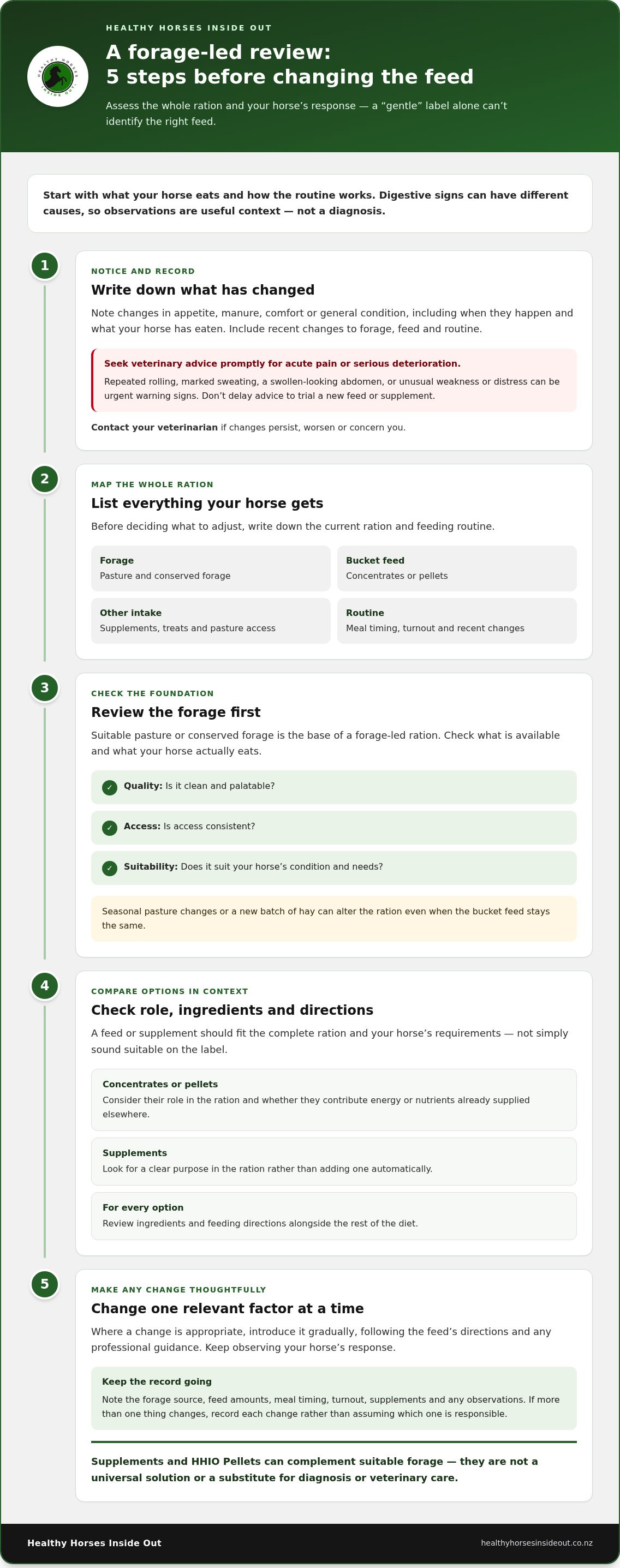
A clear record makes feeding decisions more useful. It shows what the horse’s routine actually involves, gives a veterinarian or equine nutrition professional practical information to work with, and reduces guesswork if you decide a change is needed. Use this process as an organised review, not as a way to diagnose a digestive problem at home.
Build a clear picture of the current ration
Record what your horse receives, how much and when, including forage, concentrates, pellets, supplements and treats. Include feed labels or product details where possible. Note the horse’s workload and any recent changes to pasture access, turnout, travel, stable routine or environment. These details can help clarify what changed and when.
- Write down the full ration. Include forage sources and feeding times, bucket feeds, supplements, treats and anything else the horse regularly eats.
- Review the forage. Note its source, condition, availability and any recent change. Consider whether access is consistent and whether the forage suits the horse’s individual needs.
- Check labels and directions. Compare ingredients, nutritional analysis, intended use and feeding directions with the full ration. Don’t add a product simply because its name suggests it may help.
- Seek guidance where needed. Share your notes with your veterinarian or an equine nutrition professional, particularly if the horse has ongoing signs, a diagnosed condition or specific dietary requirements.
Make changes carefully and monitor the response
If a change is appropriate, plan a gradual transition and follow the feed’s directions or professional advice. Avoid changing several feeds, supplements and routine factors at once unless a veterinarian advises otherwise. If you change the forage and bucket feed together, for example, it becomes harder to tell which change may be relevant. Approach the search for the best feed for horse with sensitive stomach as a review of the whole plan, not a rush to replace one product.
Keep observations brief and consistent. Note appetite, manure, behaviour, feeding times and any notable change in routine or environment. Record what you see rather than treating it as proof that a particular ingredient caused a problem. These notes can help a professional identify useful questions and decide whether further assessment is needed.
Supplements are one possible part of a ration, not a substitute for suitable forage or veterinary care. If you’re considering prebiotics, learn about prebiotics for horses as part of a broader, informed feeding review. If concerns persist, worsen or become acute, contact your veterinarian promptly rather than continuing to experiment with feed.
For a considered next step, explore HHIO Pellets and horse supplements as options to assess against your horse’s complete ration and individual needs.
Choosing a considered feed option with Healthy Horses Inside Out
There isn’t one feed that suits every horse described as having a sensitive stomach. A sound choice starts with the horse, not the product label. Consider the full ration, forage quality and access, existing feeding routine, label directions and any relevant veterinary advice. This keeps the decision grounded in nutritional needs rather than an assumption that a particular feed will resolve discomfort.
Before adding anything, ask what role the product would have. Does it contribute something needed in the current ration, and does its intended use align with the horse’s requirements? If the answer isn’t clear, review the ration with an equine nutrition professional or veterinarian, especially if the horse has ongoing signs or a diagnosed condition.
Where supplements and pellets may fit
Healthy Horses Inside Out offers everyday and specific horse supplements, horse supplement bundles and HHIO Pellets. Assess these product categories within the complete ration, not as universal solutions for sensitive digestion. Compare product information and feeding directions with what your horse already receives, so you can judge the product’s role without assuming ingredients or effects. A supplement should complement suitable forage and balanced feeding, not replace either.
Consider whether a bundle or additional supplement duplicates something already present in another feed. More products don’t automatically make a ration more suitable. If a veterinarian or nutrition professional has recommended a particular dietary approach, use that guidance when deciding whether an option fits.
Keep nutrition choices grounded in the horse
Individual needs vary with factors such as condition, workload, forage and health history. That’s why the best feed for horse with sensitive stomach isn’t a category or ingredient list that can be chosen in isolation. Use the product’s current description and directions, then compare them with your horse’s complete ration and the reason for considering a change.
Keep observation separate from diagnosis. If appetite, manure, comfort or general condition changes persist, worsen or concern you, consult your veterinarian before relying on a feed or supplement adjustment. Suspected ulcers, colic or other medical concerns need veterinary assessment. Nutritional products shouldn’t be presented as diagnosing, preventing or treating them.
A measured decision is often the most reassuring one: understand the horse’s current needs, check how a product fits, and make changes with suitable guidance. If you’re ready to review the available categories against your feeding plan, explore Healthy Horses Inside Out.
Take your next step with confidence
Choosing the best feed for horse with sensitive stomach starts with a practical question: what does this individual horse need from its complete ration right now? Let that guide your next step rather than making a change simply because a product sounds suitable. If signs are persistent or concerning, involve your veterinarian before adjusting the diet. Sound nutrition choices and veterinary assessment each have a role, and neither should be mistaken for the other.
Healthy Horses Inside Out is a New Zealand business serving horse owners nationally, with HHIO Pellets, everyday and specific supplements, and supplement bundles to consider as part of a horse’s feeding plan. Assess any option against your horse’s needs and professional guidance.
Explore Healthy Horses Inside Out’s equine nutrition range and take a considered next step for your horse. A steady, informed approach can help you make feeding decisions with greater confidence.
Frequently Asked Questions
What is the best feed for a horse with a sensitive stomach?
The best feed for horse with sensitive stomach concerns depends on the individual horse, not a single ingredient or product label. Consider the horse’s condition, workload, forage and existing feeds, then ask what a new option would add to the ration. For example, a feed intended to provide extra energy may not be needed for a horse maintaining condition. If signs persist, worsen or concern you, consult a veterinarian before relying on a feed change.
Can horses with sensitive stomachs eat pellets?
Some horses can have pellets in their ration if the specific product suits their needs and is fed according to its directions. The pellet format alone doesn’t show whether it’s appropriate or likely to resolve a concern. Check how it fits alongside the horse’s forage and other bucket feeds, and avoid stacking products with overlapping roles. If digestive signs are ongoing, get veterinary guidance rather than using pellets instead of investigating the cause.
Should I avoid grain for a horse with a sensitive stomach?
Not necessarily. A blanket rule to avoid grain won’t suit every horse or ration. “Sensitive stomach” doesn’t identify a specific dietary requirement, so consider the feed’s nutritional information and how it fits the horse’s overall needs. A grain-free product isn’t automatically suitable just because it excludes grain. If a medical condition is suspected or diagnosed, ask your veterinarian or a qualified equine nutrition professional how it affects the horse’s diet.
How should I change feed for a horse with a sensitive stomach?
Plan a gradual transition and avoid changing several parts of the ration at the same time, unless a veterinarian advises otherwise. Keep a note of the current feed and the change you’re making, including when it begins. If a new batch of forage or a change in turnout happens at the same time, record that too. This makes your observations more useful. Seek professional advice if signs continue or worsen during the transition.
Is forage important for a horse with a sensitive stomach?
Yes, forage is a central part of a horse’s ration, but the suitable type and feeding plan depend on the individual animal. A change in pasture access or hay source can alter what a horse eats, even if its bucket feed stays the same. Consider forage as part of the whole diet, especially if the horse has dietary restrictions or a health concern. A veterinarian or equine nutrition professional can help assess those needs.
When should I call a veterinarian about my horse’s stomach problems?
Contact a veterinarian if digestive changes persist, worsen, cause pain or otherwise concern you. Seek prompt veterinary attention for acute or severe signs, such as marked distress, repeated episodes of apparent pain or sudden deterioration. Don’t wait to see whether a new feed helps if your horse appears seriously unwell. A brief record of what the horse eats, recent routine changes and what you’ve observed can help you describe the situation clearly.


