

A small adjustment can make a supplement easier for a horse to accept. The best way to feed supplements to a picky horse is to introduce them gradually, choose a form that suits the horse and mix them into feed it already enjoys. A little water can help powdered or granular supplements cling to feed, while molasses may mask the flavour and make it harder to sort the supplement out.
It’s frustrating when a carefully prepared feed gets sniffed, sifted or left behind. These practical approaches help you work with your horse’s preferences, from testing textures and flavours to moistening feed, without turning every meal into a battle.
You can also simplify the feed bucket and watch for signs that a change in appetite may have another cause. Gastric ulcers, tooth problems, colic and chronic pain can all cause a horse to go off feed, so consider the bigger picture when changing its feeding routine.
Key Takeaways
- Try a small amount of molasses to mask a supplement’s flavour and help prevent your horse sorting it out of the feed.
- Match the supplement’s form to your horse’s preferences; a little water can help powdered or granular products cling to feed.
- Explore flavour preferences with options such as banana, fenugreek or anise, and observe which your horse accepts.
- Use water to adjust feed texture and help distribute supplements more evenly through the meal.
- Make one change at a time so you can tell which texture or flavour helps your horse eat more readily.
Adding molasses to feed
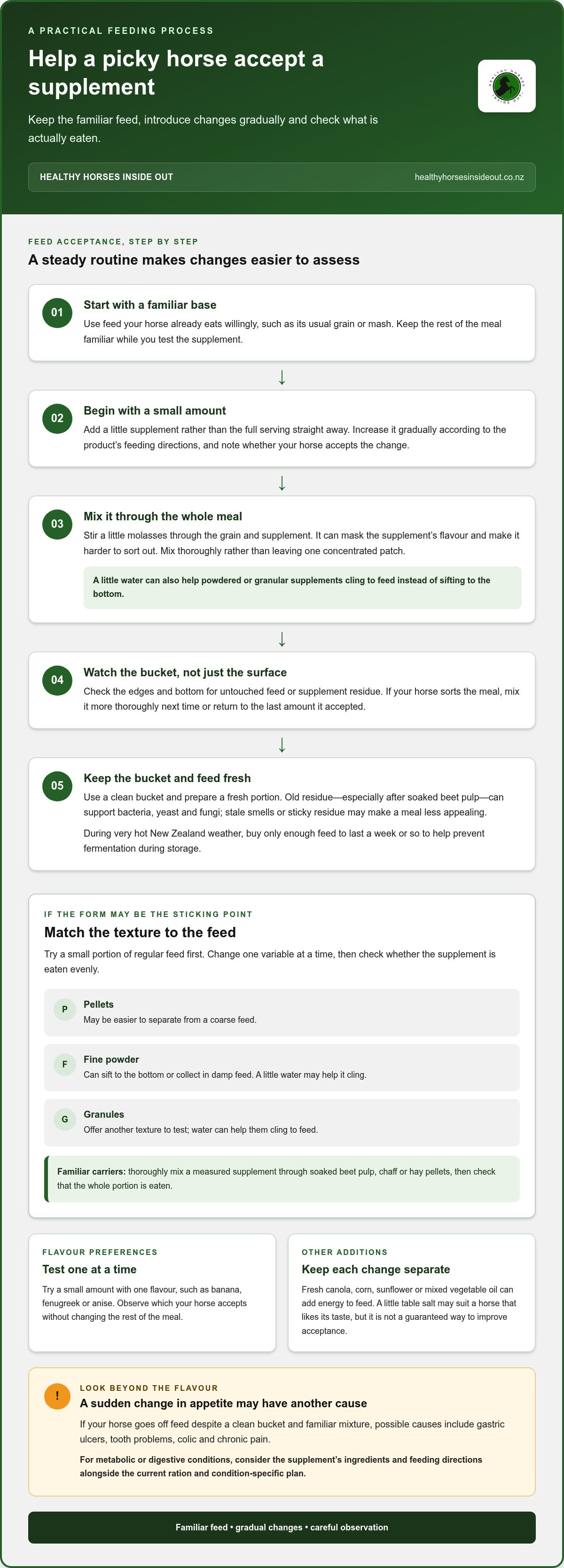
Introduce a new supplement gradually: begin with a small amount and increase it over time. Keep the rest of the meal familiar as your horse adjusts, so you can tell whether the supplement affects feed acceptance.
- Start with feed your horse already eats willingly, such as its usual grain or mash. Add a small amount of the supplement rather than offering the full serving straight away. Gradually increase the amount according to the product’s feeding directions. Keeping the base feed consistent makes it easier to see whether your horse accepts the change or starts leaving food behind.
- Stir a little molasses through the grain and supplement so the flavour spreads across the portion. Molasses can mask the supplement’s taste and make it harder for a horse to sort it out of the feed. Mix it through the whole meal rather than pouring it into one concentrated patch, so each mouthful is more likely to contain some supplement.
- Watch how your horse eats the molasses mixture, not just whether the bucket looks empty. Check for untouched feed around the edges and supplement left at the bottom. If your horse still sorts the meal, mix it more thoroughly next time or return to the last amount it accepted. Change one part of the meal at a time to identify what makes a difference.
- Use a clean feed bucket when testing molasses. Scrub away old residue, especially after serving soaked beet pulp, which can support the growth of bacteria, yeast and fungi. A stale smell or sticky layer may make a meal less appealing. Clean the bucket between feeds and prepare a fresh portion, so the molasses isn’t masking an unclean container or leftover feed.
- Keep stored feed fresh, particularly during very hot New Zealand weather. In hot conditions, buy only enough feed to last a week or so to help prevent fermentation during storage. If your horse suddenly goes off feed despite a clean bucket and familiar molasses mix, consider that flavour may not be the cause. Gastric ulcers, tooth problems, colic and chronic pain can all cause a horse to go off feed.
You can consider other additions alongside molasses, but make each change separately so you can tell what your horse accepts. Fresh canola, corn, sunflower or mixed vegetable oil are suitable choices for adding energy to horse feed. Blend a fresh oil through the feed rather than changing the meal in several ways at once. Salt is considered beneficial for horses whether or not they are picky eaters, and a little table salt may help if your horse likes its taste. It is not a guaranteed way to improve acceptance, so observe whether the meal is eaten and don’t assume every horse will like the flavour. Keep the familiar base feed in place while assessing any addition, and choose according to what your horse accepts.
Choosing supplement textures and forms
Compare the supplement’s form with what your horse already eats willingly. Granular, pellet and powdered supplements behave differently in a feed bucket.
-
Choose a suitable supplement texture
Try a form that suits your horse’s usual feed, then watch what happens in the bucket. Pellets may be easier to separate from a coarse feed, while fine powder can sift to the bottom. Granules offer another texture to test. New Zealand equine vets’ practical advice is to prioritise acceptance, follow feeding directions and consider the horse’s health needs when choosing.
-
Mix supplements with soaked feed
Mix the measured supplement thoroughly through familiar soaked beet pulp, chaff or hay pellets. These can carry supplements, but check that your horse eats the whole portion instead of leaving powder or granules behind. A little water can help powdered or granular supplements cling to feed and keep them from sifting to the bottom of the bucket.
- For a horse with metabolic or digestive conditions, compare the supplement’s ingredients and feeding directions with its current ration and condition-specific plan. Suitability depends on the ingredients, how the supplement is fed and what else your horse eats. Keep those details together when discussing diet changes with your veterinarian, rather than judging a product by texture alone.
- Test the texture with a small portion of your horse’s regular feed before preparing a full meal. For example, add a little powdered supplement to damp chaff, then check whether it clings evenly or forms concentrated patches. If your horse leaves those patches, adjust the mixing method or try another form. Change one variable at a time to identify what affects acceptance.
- Inspect the bucket after feeding, including its corners and base. Fine powder can settle beneath pellets or collect in damp feed, so an apparently empty surface doesn’t show whether the full serving was eaten. Stir the meal before serving, then look for residue afterwards. If your horse sorts the feed, try a smaller test portion and mix it more evenly next time.
- Keep the product’s feeding directions close at hand. Changing the texture doesn’t change the intended serving, and adding a supplement to soaked feed shouldn’t lead to an unmeasured extra amount. Note the form, carrier feed and amount offered at each meal. This simple record helps distinguish a texture preference from a broader change in appetite or feed acceptance.
Horse preferences for different concentrate flavours
Test one flavour or carrier change at a time, then note what your horse eats. For a lower-sugar carrier, choose a familiar ration ingredient whose feed information suits your horse’s dietary needs.
-
Try different concentrate flavours
Offer a small amount of concentrate with one flavour at a time, such as banana, fenugreek or anise. Horses may prefer these flavours, so observe which your horse accepts without changing the rest of the meal. Check whether the supplement is eaten evenly, rather than assuming it’s accepted because it tastes appealing at first. Avoid introducing several new flavours together, since that makes preferences harder to identify.
-
Choose low-sugar feeds or carriers
Use a familiar carrier that fits your horse’s existing ration, and review its feed information for sugar and starch content. There isn’t one carrier that suits every horse: the right choice depends on the whole diet and any metabolic or digestive needs. Avoid adding a sweetened concentrate to disguise a supplement if it conflicts with your horse’s feeding plan.
- Compare the flavour of the concentrate with the supplement before mixing a full feed. A horse that readily eats banana-flavoured concentrate may still reject a different taste or smell. Start with a small test portion, mix it thoroughly, then check the bucket for uneaten feed. Record the flavour and carrier used, so the next meal builds on an observed preference rather than guesswork.
- Keep salt in mind when assessing palatability. Salt inclusion above 1% of a horse’s feed can reduce its appeal, so consider the total feed rather than adding salt automatically. If your horse likes salty flavours, a small addition may help acceptance, but watch for sorting or leftovers. Flavour preference varies, and one horse’s interest in salt doesn’t predict another’s response.
- Use fenugreek cautiously around pregnant mares. It’s a known uterine stimulant, so don’t use it as a flavouring for a pregnant horse. For other horses, test fenugreek separately from banana or anise and observe the response. A simple feeding note can record the flavour, carrier and amount offered, helping you identify a reliable combination without repeatedly changing the whole ration.
- Reassess the meal if your horse refuses a carrier it usually accepts. Check whether the concentrate’s smell or texture has changed, whether the supplement is evenly mixed and whether the feed contains more salt than before. Return to the familiar ration while you isolate the change. This makes it easier to distinguish an individual flavour preference from an issue with the feed itself.
Mixing supplements with water
Add a little water when a dry supplement won’t stay evenly mixed through the feed.
Combining supplements can provide the same nutrient through more than one product. Follow each product’s feeding directions and review overlapping ingredients before adding products together.
- Measure the supplement according to its feeding directions before wetting the feed. Start with the usual grain or concentrate, then add a little water and stir until the surface is lightly damp. The aim is to help the supplement cling, not turn the whole meal into a thin slurry. Keeping the amount consistent makes each feed easier to prepare and assess.
- Mix powdered or granular supplements thoroughly into the damp feed. Water helps these forms cling and reduces the chance of fine particles sifting to the bottom of the bucket. For example, stir powdered supplement through dampened grain, then check the base and corners for residue before serving.
- Add water gradually rather than pouring in a lot at once. Stir after each addition and stop when the feed holds together without liquid pooling. Too much water can change the meal’s consistency and put off a horse that prefers dry grain. A small adjustment helps you find a texture your horse will eat.
- If you’re considering corn syrup as a flavouring, suggested water-to-corn-syrup mixtures include 1:1 and 2:1. These are different mix options, not supplement doses. Keep the supplement’s measured serving separate from the liquid mixture, and factor any sweetener into the horse’s overall feed plan.
- Prepare only the portion you intend to serve, then offer it promptly. Damp feed left sitting can become less appealing, especially in warm conditions. Wash the bucket after the meal and remove residue before the next feed. A clean container also makes it easier to see whether powder has stuck to the sides.
- Watch how your horse eats the entire dampened portion. Check for feed left behind, especially where powder may collect beneath the grain. If your horse refuses the wetter texture, return to the familiar consistency and try a smaller water adjustment next time. Avoid changing the supplement amount and feed texture together, so you can identify which change affected acceptance.
- Keep a simple feed note recording the supplement, carrier and water adjustment used. For example, note “powdered supplement, damp grain” and whether the bucket was cleared. If you feed several products, compare their ingredient lists and directions before combining them. This helps prevent accidental duplication and keeps each serving aligned with its intended use.
Using flavourings to improve supplement palatability
Test one flavouring at a time and watch what your horse actually eats. Banana, fenugreek and anise are flavours horses may prefer.
-
Hide supplements without reducing effectiveness
Mix the supplement into a small portion of familiar feed, then serve it according to the product’s feeding directions. Vegetable oil can be mixed with granular or powdered supplements and grain to mask taste or smell and help the supplement cling. Don’t heat a supplement or alter its measured serving to disguise it. Follow the product directions so you offer the intended amount.
-
Respond to refusal or reduced feed intake
If your horse refuses the mixture, stop adding flavourings and return to familiar feed while you assess the change. Check the bucket for leftovers and note whether your horse has also stopped eating other feed. Gastric ulcers, tooth problems, colic and chronic pain can cause a horse to go off feed, so don’t automatically treat a new refusal as pickiness.
- Test banana or fenugreek separately in a small portion of the normal meal. These flavourings are commonly used in supplements because horses may find them appealing, but preferences vary. Keep the supplement amount unchanged while testing each flavour. If your horse eats one mixture and leaves another, record the flavour and response before deciding which approach to use again.
- Avoid fenugreek for a pregnant mare because it’s a known uterine stimulant. For a horse that isn’t pregnant, introduce fenugreek as the only flavour change, not alongside several new ingredients. This makes acceptance easier to judge and avoids using a flavouring that isn’t suitable for every horse.
- Consider salt only if your horse likes its taste, and account for salt already present in the feed. Salt inclusion above 1% of a horse’s feed can reduce palatability, so adding more may make a meal less appealing. Check the overall ration rather than assuming salt will improve every supplement mixture.
- Change one ingredient at a time and inspect the feed after each meal. For example, test the supplement with vegetable oil first, then try a separate portion with banana flavouring. If your horse refuses all feed or its appetite changes noticeably, focus on that change rather than masking it with sweeter ingredients. Keep notes on what was offered and what remained.
- Explore horse supplement options when you’re choosing a supplement to fit your horse’s feeding routine.
Banana and fenugreek are commonly used in supplements because they’re popular with horses. That makes either flavour worth considering, but it doesn’t mean a particular horse will accept it. Let your horse’s response guide the choice rather than assuming a commonly used flavour will work for every animal.
Keep the comparison focused on the flavour being tested: a response to banana doesn’t show whether fenugreek will be accepted, or vice versa. Consider each separately with familiar feed, and keep the supplement amount unchanged. Use your horse’s acceptance of the mixture to decide whether that flavour suits its routine.
Healthy Horses Inside Out: Everyday Horse Supplements
Healthy Horses Inside Out offers Everyday Horse Supplements for owners looking to support their horse’s daily nutrition. For more targeted nutritional support, explore Specific Horse Supplements, Horse Supplement Bundles and HHIO Pellets. A supplement’s form and flavour can influence whether a picky horse accepts it, so use these practical steps to guide how you introduce it and observe the response. Keep the product’s feeding directions in view and consider your horse’s existing ration when choosing an option. If reduced appetite continues, discuss the change with your veterinarian rather than relying on flavourings alone. Explore horse supplements from Healthy Horses Inside Out online.
Build a feeding routine your horse can trust
Choose an approach you can prepare consistently and observe calmly. A brief feed note can help you spot patterns, such as whether your horse accepts a supplement more readily when it’s mixed into a familiar meal. That record also gives you a clearer starting point if you need to discuss a change in appetite or feeding routine with your veterinarian.
The best way to feed supplements to a picky horse is to use a method your horse accepts while still offering the intended amount. Keep the routine steady, avoid adding several new variables at once and let your horse’s response guide what you adjust next. For nutritional support, explore Healthy Horses Inside Out’s Everyday Horse Supplements, Specific Horse Supplements and Horse Supplement Bundles.
Contact Healthy Horses Inside Out to explore the options. With a thoughtful routine and careful observation, feeding can become a more settled part of your horse’s care.
Frequently Asked Questions
What is the best way to introduce supplements to a picky horse?
Introduce one supplement at a time, follow its feeding directions and keep the rest of the ration familiar. The best way to feed supplements to a picky horse is to make acceptance easy to assess: use the same feed container and meal routine, then note whether your horse finishes the portion. If you’re changing more than one part of the ration, separate those changes so you can tell which one affects feed acceptance.


