
Forage should form the foundation of the dietary needs of a performance horse, with intake of at least 1% of body weight each day. From there, the balance of energy, protein, fibre, vitamins and minerals depends on the horse’s workload, condition and forage quality. More feed isn’t automatically better; the aim is to match each part of the ration to what the horse uses.
When planning the dietary needs of a performance horse, it’s easy to focus on one ingredient and overlook how the whole ration works together. The diet needs to support work and recovery while maintaining body condition and digestive health.
This article explains how forage contributes fibre and energy, when additional energy sources may help, and what to consider in feeds and supplements. Understanding how these elements fit together helps you assess the whole ration, rather than relying on a single product.
Key Takeaways
- Choose energy sources to suit the horse’s workload and body condition, rather than adding calories without considering the whole ration.
- Read feed labels together: protein, fibre and fat work as parts of the diet, not isolated targets.
- Forage quality affects both usable energy and digestive support, so consider what the horse’s hay or pasture contributes.
- Use supplements to address a specific dietary need, and assess feed and supplement combinations as one complete ration.
Fat as a calorie-dense energy source
Energy needs rise with workload. For a 500 kg mature horse, estimated daily digestible energy requirements are 19.98 Mcal in light exercise, 26.6 Mcal in heavy exercise and 31.6 Mcal in very heavy exercise. These figures show why nutrition needs to reflect actual work, not simply the label on a feed bag. Track body condition as exercise changes, then adjust total energy amounts to maintain an appropriate condition.
Fat is concentrated energy: it provides 2.25 times more calories per gram than carbohydrate or protein. Oils can therefore add energy without relying solely on grain. One cup of oil provides calories comparable to about 1.5 pounds (0.7 kg) of oats. For most adult light-breed horses, the recommended maximum is 2 cups of oil daily. Introduce changes gradually and account for every energy source in the ration.
What are the best energy sources for performance horses: fibre, fat, or grain? Quality forage should underpin the ration. Fat adds calorie density, while grain starch supplies glucose for athletic work. The right balance depends on workload, body condition and forage energy, not on one source being best for every horse.
Before competition, allow at least 4 hours between a full grain meal and exercise. During long-distance rides, offer small grain portions of 0.5 to 1.0 pounds (225 to 450 g) throughout the ride; horses in these events should retain access to hay. After exercise, when extra grain is needed to maintain or restore condition, feed small amounts at 1- to 2-hour intervals for up to 8 hours.
Low energy intake can make it harder for a horse to maintain condition and support muscle development. If either is a concern, assess workload, body condition, forage quality and total feed together. An equine nutritionist should evaluate the diet when muscle-development or low-energy issues arise. Looking at the whole ration helps identify whether the gap involves calories, protein or another nutrient, rather than adding energy without considering its source.
Protein, fibre, and fat content of performance feeds
Feed labels show how protein, fibre, fat and energy intake combine in an equine athlete’s ration. A working horse may drink 15 to 20 gallons of water daily; keep water available after exercise, and match salt to sweat losses.
Protein levels in commercial feeds
Crude protein is the total protein estimate on a feed label, not a measure of its amino-acid quality. Commercial performance feeds typically contain 11% to 14% crude protein and are usually sufficient when fed at recommended amounts with appropriate forage. Compare the label with the whole ration, since hay and pasture also contribute protein, fibre and fat.
Grains and hays normally contain 2% to 5% fat, while a performance horse’s total diet is not recommended to exceed 10% fat. Good-quality fibre should make up at least 50% of the diet by weight. These figures help assess the balance of a ration; a high protein percentage alone doesn’t show whether the horse receives adequate energy or the amino acids needed for muscle maintenance.
For electrolytes, working horses need 2 to 3 oz (56 to 85 g) of salt daily in cool to moderate temperatures. In warmer summer months, needs may rise to 4 to 6 oz (112 to 170 g) or more. Sweat losses and exercise duration affect replacement needs, so consider both when planning post-exercise feeding and hydration.
Protein and amino-acid requirements
Protein supplies amino acids, which horses use to build and maintain muscle. A mature performance horse generally doesn’t need more than 8% to 12% protein to meet maintenance needs, but workload changes the daily requirement. A 500 kg mature horse requires 862 g of protein daily in heavy exercise and 1,004 g in very heavy exercise.
Lysine is an essential amino acid, so the diet must provide it. For a 500 kg mature horse in very heavy exercise, the listed lysine requirement is 43 g daily. Protein sources differ in amino-acid quality: corn provides a poor array, while soybean meal supplies high-quality amino acids in relatively small amounts. If a ration assessment identifies a specific gap, specific horse supplements may be one option to consider alongside the horse’s full diet.
Forage intake
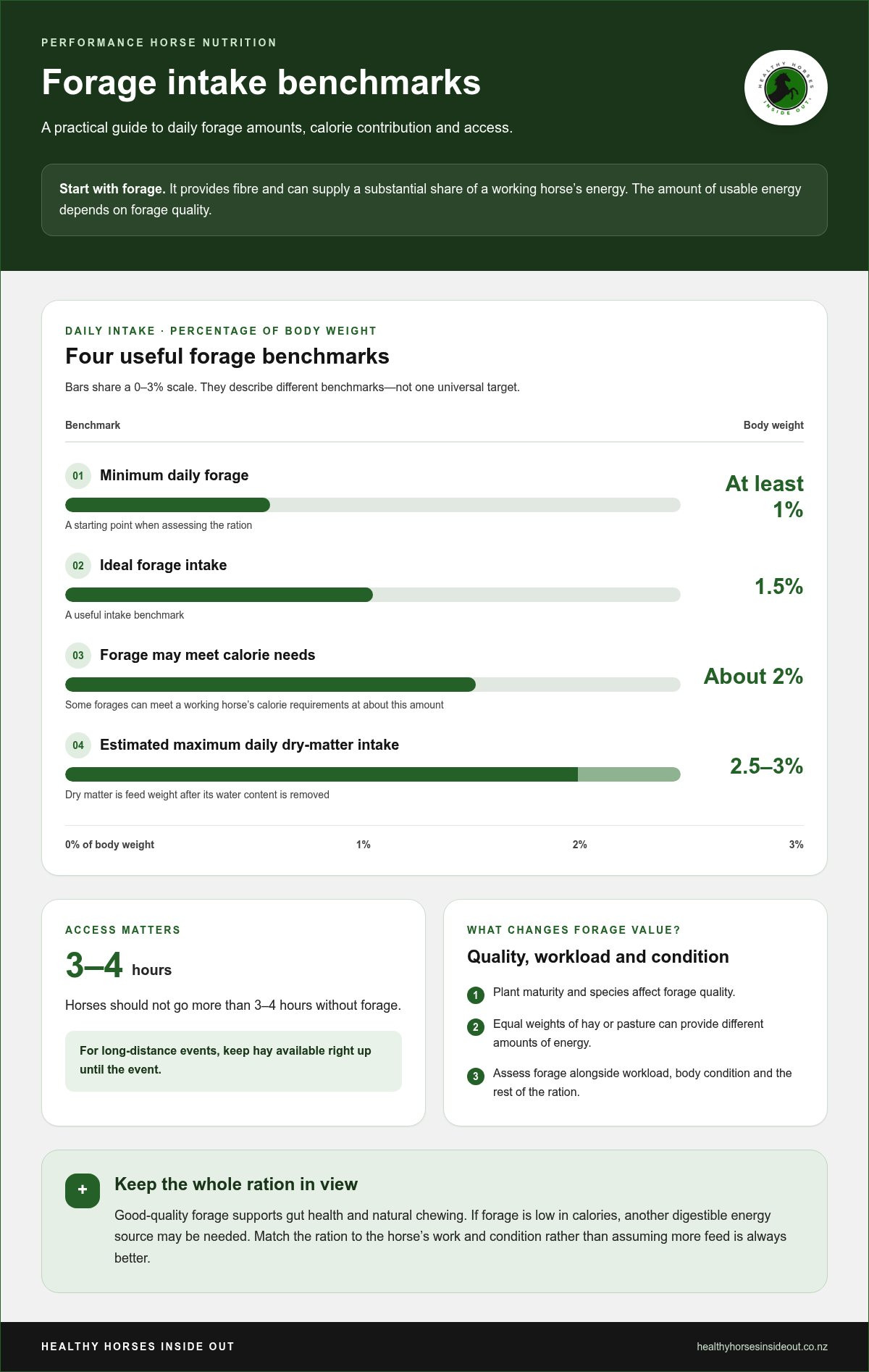
How much forage should a performance horse eat daily? Aim for at least 1% of body weight daily, with 1.5% described as the ideal forage intake. The dietary needs of a performance horse also depend on forage quality, condition and workload, so use these figures as a starting point when assessing the ration.
Forage as the main diet component
Forage, usually hay or pasture, provides fibre and can supply a substantial share of an equine athlete’s energy. Good-quality forage supports gut health and natural chewing, making it a sound foundation for the diet. Consider forage intake alongside concentrates when assessing the dietary needs of a performance horse.
Access matters too. Horses should not go more than 3-4 hours without forage, and horses in long-distance events should have hay available right up until the event. Regular access helps maintain ongoing intake during training and competition.
Forage intake and calorie needs
Forage contributes calories, but the amount of energy supplied depends on its quality. Some forages can meet a working horse’s calorie requirements when fed at about 2% of body weight daily. If hay or pasture is low in calories, the ration may need another digestible energy source to meet the horse’s demands.
Dry-matter intake describes feed weight after its water content is removed. A horse’s estimated maximum daily dry-matter intake is 2.5-3% of body weight. Comparing this with the total ration helps put forage and other feed amounts into context.
Forage quality and daily intake
Forage quality varies with plant maturity and species, so equal weights of hay or pasture can provide different amounts of energy. Moderately fibrous, soft, leafy forage can help a horse extract usable energy and may support greater voluntary intake. Assess forage quality alongside workload and body condition when considering the dietary needs of a performance horse.
For a practical check, weigh the forage offered and consider what remains. At least 1% of body weight daily is the minimum forage intake, while 1.5% is the stated ideal. Long-distance horses should retain hay access through the event.
Performance horse feed and supplement combinations
Start with hay or pasture, then match concentrates and supplements to workload, body weight and condition. Consider the ration as a whole: different feeds may supply the same nutrients, while a targeted addition can address a specific gap.
What are typical feed and supplement costs for performance horses in New Zealand? Costs depend on forage type and quality, daily feed amounts, workload and the supplements included. A horse relying on pasture will have a different ration from one needing hay, a commercial concentrate and targeted nutrient support.
New Zealand forage options include pasture and hay. Commercial performance feeds can complement them when their energy or nutrient profile suits the horse. Concentrated balancers provide protein, vitamins, macrominerals and trace minerals in a low-energy package. Compare a feed’s label with the forage and supplements already in the ration, rather than choosing by product category alone.
What are the risks of overfeeding grain or using supplements in performance horses? Feeding more than 5 pounds (2.2 kg) of grain at a time is not recommended, and excess starch can be reduced by replacing some grain with oil. Supplements can also duplicate nutrients: additional selenium may be unnecessary when fortified concentrate already supplies it, while vitamin A or D above 10 times requirements may be detrimental.
Build combinations around a clear purpose. For example, a horse getting adequate amino acids and energy from forage and concentrate may not need extra protein, while a low-energy ration calls for a different adjustment. Match feeding amounts to moderate or heavier work, and reassess body condition when workload changes. This helps avoid adding calories or nutrients without considering the complete diet.
Before adding a supplement, compare its nutrients with those in hay or pasture and every concentrate. Then adjust one part of the ration at a time, so the effect on intake and condition is easier to assess. For help choosing support for a defined dietary gap, explore horse supplement options.
Healthy Horses Inside Out: Everyday Horse Supplements
Healthy Horses Inside Out offers Everyday Horse Supplements and Specific Horse Supplements for owners considering targeted nutritional support. Start with the horse’s full ration: compare existing feed and forage with the nutrients you aim to supplement, and avoid unnecessary duplication.
Horse Supplement Bundles and HHIO Pellets offer further options. They can fit into a considered feeding plan when the aim is to support everyday nutrition or address a particular dietary focus. These products complement, rather than replace, an assessment of forage, feed and workload.
For a performance horse, review the ration whenever exercise or body condition changes, then consider whether a supplement has a clear role. Visit healthyhorsesinsideout.co.nz to explore horse supplement options.
Make the Next Feed Decision Deliberate
A horse’s workload and condition can change over time, so review its feeding plan regularly rather than setting and forgetting it. Keep a clear record of changes to exercise, feed and supplements, then assess how the whole ration fits together. This makes it easier to spot when an adjustment may be needed and helps avoid changing several parts of the diet at once.
The dietary needs of a performance horse are individual, and a measured approach supports informed decisions. Before adding nutritional support, consider its intended benefit alongside the horse’s existing diet. Healthy Horses Inside Out’s supplements and bundles offer options to explore in line with your horse’s needs and feeding priorities.
Contact Healthy Horses Inside Out to discuss your horse’s nutritional support. A thoughtful next step can bring greater clarity to your feeding plan.
Frequently Asked Questions
What nutrients and daily feed requirements does a performance horse need?
A performance horse needs forage, water, energy, quality protein with essential amino acids, fibre, vitamins and minerals, with quantities matched to workload and body condition. Build the ration by accounting for hay or pasture first, then concentrates and supplements. Include everything the horse consumes, not just bucket feed. Compare feed-label nutrients with forage and other fortified products to avoid unnecessary overlap, and keep clean water available around exercise.
How many calories and how much protein does a performance horse need per day?
For a 500 kg mature horse, estimated daily digestible energy is 23.3 Mcal in moderate exercise. Protein needs also vary with workload: the daily estimate is 862 g in heavy exercise and 1,004 g in very heavy exercise. These examples aren’t one target for every horse. A ration assessment should account for body weight, forage contribution, condition and training demands before concentrate amounts are set.
What vitamins and minerals should be included in a performance horse’s diet?
Include vitamins and minerals to meet the horse’s overall nutrient requirements, rather than adding each nutrient separately. For a 500 kg mature horse, the minimum vitamin E requirement is 500 IU daily at maintenance and 1,000 IU in heavy exercise. Avoid vitamin A or D levels greater than 10 times requirements, which may be detrimental. Check fortified feed labels before adding minerals such as selenium, to prevent unnecessary duplication.
How can a horse’s body condition and workload guide feeding amounts?
Use body condition alongside workload to decide whether total feed needs adjustment. Most performance horses should have a body condition score of 5 to 7 on the 1-to-9 scale. A workload change can shift energy use even if the feeding routine stays the same. Keep a record of work, feed amounts and condition, then adjust the ration and monitor the trend rather than reacting to one day’s performance.


