

Timing matters, but it works alongside workload, turnout and body condition. A diet for a sport horse in NZ should be built around suitable forage, with high-quality forage offered once the horse has cooled and is comfortable eating. If intense work creates a need to replenish glycogen, a concentrate can be offered within one hour, once the horse has cooled, rehydrated and settled.
It’s easy to focus on what a horse eats before or after a ride. But pasture, weekly workload and body condition also shape its energy and nutrient needs. Considering these together can help maintain steady energy without overlooking weight or overall condition.
This guide explains how to match feeding to workload, account for turnout, and consider protein, minerals and vitamins in a practical ration. It also covers what to watch in your horse’s body condition, so you can make thoughtful adjustments as training and grazing conditions change.
Key Takeaways
- Assess protein quality as well as crude protein, and consider how amino acids support muscle repair and development.
- Match energy intake to the horse’s actual workload and temperament, then review it as training demands change.
- Use body condition and weight trends to spot when the ration may be supplying more energy than the horse needs.
- Include pasture access and forage intake in the overall feed plan, as turnout can meaningfully shape daily nutrient intake.
Crude protein, minerals and vitamins
Crude protein indicates the protein content of a feed, but not its full amino acid profile. Amino acids are the building blocks the horse uses to maintain and repair body tissues. Lysine is the first limiting amino acid in most equine diets, so an inadequate supply can limit how effectively dietary protein supports muscle development and repair. When choosing feed for a sport horse, consider protein quality as well as the crude protein figure on the label.
Start by assessing the whole ration. Forage and pasture provide nutrients, while supplementary feeds can contribute protein and amino acids. The amount needed depends on workload, available forage and the rest of the ration. Rather than adding protein automatically, compare existing feed contributions and identify any specific gap. A horse in regular strenuous work has different repair demands from one doing lighter work.
Timing can support recovery. Providing high-quality protein within the first 30-60 minutes after strenuous work may help support muscle repair. This early recovery period is a useful point to consider the quality of the feed offered, rather than focusing on crude protein alone. Pair that decision with the horse’s normal forage and feeding routine, so the post-work feed fits the full ration.
Pasture access generally provides most horses with enough vitamins A and E without additional supplementation, so include turnout and grazing when reviewing vitamin intake. Consider minerals across the complete ration too, including pasture, forage and supplementary feed. Before adding a mineral or vitamin product, review what the horse already receives to avoid overlapping nutrient sources. A practical review should:
- Check the feed label for crude protein and listed amino acids, including lysine.
- Account for pasture and forage before adding further nutrients.
- Match any adjustment to the horse’s work and recovery needs.
Energy requirements for working horses
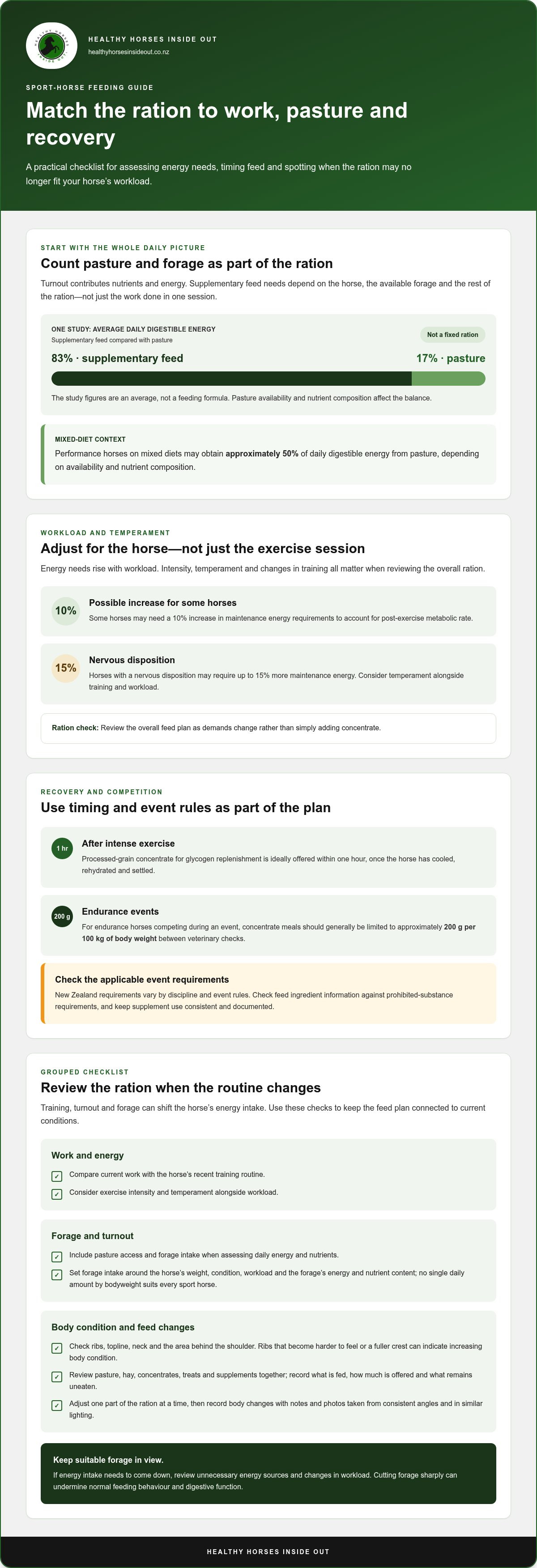
Energy needs rise with workload, but the horse’s full daily routine matters. In one study, supplementary feed supplied an average of 83% of daily digestible energy requirements, while pasture supplied approximately 17%. These figures show why grazing alone may not meet the demands of every working horse. They aren’t a fixed ration: pasture availability and nutrient composition affect the balance.
Work intensity changes the calculation. During moderate- to high-intensity exercise, horses rely heavily on muscle glycogen for fuel. Some may need a 10% increase in maintenance energy requirements to account for post-exercise metabolic rate. Horses with a nervous disposition may require up to 15% more maintenance energy. Consider temperament and training alongside the work itself, then adjust the overall ration rather than simply adding concentrate.
There’s no single daily forage amount by bodyweight that suits every sport horse. Set intake around the horse’s weight, condition, workload and the energy and nutrient content of available forage. Include pasture in the calculation; performance horses on mixed diets may obtain approximately 50% of daily digestible energy from pasture, depending on availability and nutrient composition.
For competition, New Zealand event requirements vary according to the discipline and event rules. Include prohibited-substance requirements in feed planning: check ingredient information against the applicable rules, and keep supplement use consistent and documented.
Timing also matters. After intense exercise, processed-grain concentrate for glycogen replenishment is ideally offered within one hour, once the horse has cooled, rehydrated and settled. For endurance horses competing during an event, concentrate meals should generally be limited to approximately 200 g per 100 kg of body weight between veterinary checks. Match any supplement to a defined dietary need; Everyday Horse Supplements can form part of that considered approach.
Feed oversupply and body condition
Extra feed can provide more energy than a horse uses, particularly when training eases but the ration stays the same. For example, a show jumper moving from frequent schooling to lighter work may continue to receive the same concentrate and pasture access. That mismatch can increase body condition over time. Review the ration when workload, turnout or forage changes, rather than waiting for a visible shift.
Use your horse’s body as a practical guide. Check the ribs, topline, neck and area behind the shoulder, and compare what you observe over time. Ribs that become harder to feel or a fuller crest can indicate increasing body condition. Take notes and photos from consistent angles and in similar lighting to create a useful record, rather than relying on memory weeks later.
Before reducing feed, list every part of the ration, including pasture, hay, concentrates, treats and supplements. A small extra feed may seem insignificant on its own, but several daily additions can contribute to the total. Record what is fed, how much is offered and what remains uneaten. This can help show whether excess intake comes from one feed or several combined.
- Compare current work with the horse’s recent training routine.
- Review pasture access and forage alongside bucket feeds.
- Adjust one part of the ration at a time, then record body changes.
A sport horse still needs a balanced ration when energy intake is reduced. Cutting forage sharply can undermine normal feeding behaviour and digestive function, so first review unnecessary energy sources and changes in workload. Keep access to suitable forage in view as you assess concentrates and extras. If body condition continues to increase despite a careful feed review, reassess the full management plan. The aim is not simply a lighter horse, but a ration that reflects current work and supports sound condition.
Sport-horse turnout and diet
Turnout is part of the ration, not just a break from stable time. New Zealand ryegrass pasture contains 10-12 MJDE/kg, so grazing contributes digestible energy as well as nutrients. The amount a horse eats depends on pasture availability and its nutrient composition. Include grazing when assessing the whole diet, rather than calculating bucket feed in isolation.
Reported paddock sizes vary considerably. The median paddock size for New Zealand sport horses was 0.44 hectares, compared with 0.81 hectares for pony club horses. Reported sizes for endurance horses ranged from 0.4 to 1.2 hectares. These figures describe different groups, not a target size for every horse. Consider actual grazing access, pasture growth and the horse’s workload when judging how turnout affects intake.
Forage remains central to daily management. In a survey, 90.3% of horses were fed hay and 92.5% received other roughage. Forage supplies fibre for hindgut microbes, supports digestive stability, encourages saliva that buffers stomach acid, and contributes water intake. For example, a horse with limited grazing may rely more heavily on supplied forage than one with ample pasture access.
The best feed and supplements depend on the horse’s workload, forage and any identified dietary gap. Compare options by their intended nutritional role, ingredient information and the amount required for the daily ration; compare prices using the cost per daily serving, not just the pack price. A concentrate may suit an energy need, while a supplement should address a specific requirement rather than duplicate existing feed. Use supplement options for horses as a starting point for matching support to the ration.
Healthy Horses Inside Out: Everyday Horse Supplements
Healthy Horses Inside Out offers Everyday Horse Supplements to complement a considered feeding plan when a nutritional gap has been identified. Its range also includes Specific Horse Supplements, Horse Supplement Bundles and HHIO Pellets, which horse owners can consider alongside forage, pasture and bucket feed.
Start by identifying the need, such as a nutrient not adequately supplied by the current ration or a practical way to include a suitable supplement in daily feeding. Review ingredients and feeding directions, and account for existing feeds to avoid unnecessary overlap. Supplements support the overall diet; they do not replace suitable forage or a balanced ration.
For a more focused next step, explore Healthy Horses Inside Out’s supplement range and consider which offering fits your horse’s feeding plan. Contact Healthy Horses Inside Out to learn more.
Keep the feeding plan responsive
Build a diet for a sport horse in NZ around its current routine, not last season’s workload or grazing pattern. Keep a simple record of training, turnout, feed changes and body condition. Reviewing these details together can help you spot patterns and make considered adjustments, rather than reacting to a single day’s energy or appetite.
Review the record whenever your horse’s work or management changes. If you identify a nutritional gap, consider Healthy Horses Inside Out’s Everyday Horse Supplements, Specific Horse Supplements and Horse Supplement Bundles as part of the broader feeding plan. Supplements should complement the ration, not replace a thoughtful assessment of your horse’s needs.
For a considered next step, contact Healthy Horses Inside Out and explore support for your horse’s feeding plan. Small, purposeful adjustments can help you make daily decisions with greater confidence.
Frequently Asked Questions
Does Timing Matter?
Yes, timing can help make post-exercise feeding more purposeful. After strenuous work, offer high-quality protein within 30-60 minutes to support muscle repair. If intense exercise creates a need for glycogen replenishment, processed-grain concentrate is ideally offered within one hour, once the horse has cooled, rehydrated and settled. The horse’s recovery and comfort should guide the sequence, not the clock alone.
What should a sport horse in New Zealand eat for a balanced daily diet?
A balanced daily diet for a sport horse in New Zealand centres on suitable forage, with other feeds matched to workload, pasture and body condition. For example, consider what a horse grazing ryegrass also receives in hay and bucket feed, rather than assessing each feed in isolation. Check the full ration for nutrient overlap, and choose supplements only for a clear dietary purpose.
What energy and protein requirements do sport horses have at different workloads?
Energy needs rise with work, while protein quality should support tissue maintenance and recovery. Some horses may need a 10% increase in maintenance energy after exercise, and nervous horses may require up to 15% more maintenance energy. Protein needs also depend on workload and the rest of the ration. Assess forage, concentrate and protein sources together, then review the balance when training changes.
Which vitamins, minerals and electrolytes are important for horses competing in New Zealand?
Vitamins A and E, minerals suited to the overall ration, and electrolytes when replacement is needed all matter. Pasture access generally provides most horses with enough vitamins A and E without additional supplementation. When planning for competition, consider the horse’s forage and existing feeds before adding nutrients. If replacing electrolytes, ensure the horse has unrestricted access to fresh drinking water.
How should feed be adjusted before, during and after competition or strenuous exercise?
Before competition, keep the established ration consistent and account for the day’s work. During an endurance event, concentrate meals should generally be limited to approximately 200 g per 100 kg of body weight between veterinary checks. After exercise, offer forage once the horse is cool and comfortable eating. Provide fresh, clean water after the horse has cooled and its breathing has returned towards normal.
What are the risks of feeding too much grain or high-starch concentrates to horses?
Too much grain can provide more energy than a horse uses, potentially increasing body condition when workload doesn’t justify the extra intake. Concentrates can also make the ration harder to assess if pasture, hay and other feeds are not counted. Compare total feed with current workload, and avoid adding concentrate simply because training or competition has increased temporarily.


