
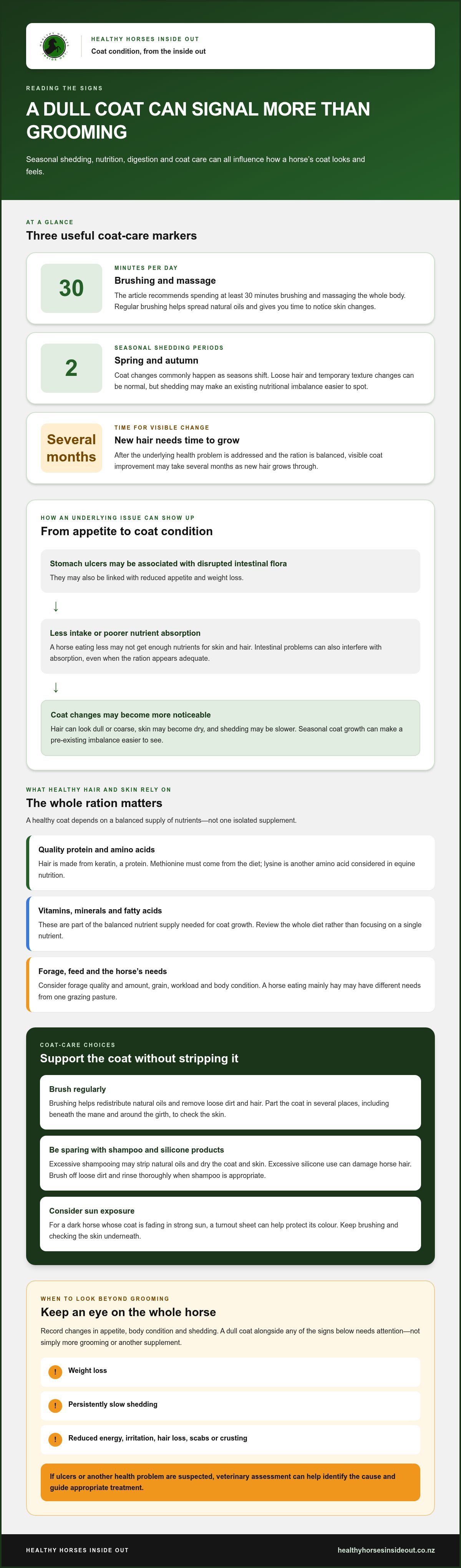
A dull coat is often more than a grooming issue. Common causes of dull coat in horses include poor nutrition, digestive problems such as ulcers, parasites, illness and over-bathing. Ulcers may affect a horse’s appetite and nutrient uptake, and seasonal coat changes can make coat-condition concerns more apparent.
It’s natural to focus on shine when a horse’s coat looks dry or lacklustre, but coat condition can reflect what’s happening beneath the surface as well as the care it receives. Looking at the whole picture helps distinguish a grooming concern from a possible dietary or health issue.
This article explains how ulcers may affect coat condition, why amino acids matter for hair and skin, and how vitamin or mineral deficiencies can contribute to dullness and dryness. It also covers grooming habits, seasonal shedding and other health factors, helping you identify what may be affecting your horse.
Key Takeaways
- A dull coat can be associated with changes in nutrition or digestion, so consider the horse’s overall health and appetite.
- Seasonal shedding increases nutritional demands, so an existing imbalance may become more noticeable during a coat change.
- Regular brushing helps redistribute natural oils and reveal skin changes, while frequent shampooing can dry the coat and skin.
- Quality protein and essential amino acids, including methionine, support the hair and skin; the whole diet matters more than one isolated nutrient.
- Vitamin and mineral imbalances can affect coat quality, so review the horse’s overall diet and seek veterinary assessment when coat changes come with other signs of illness.
Why do horses suffering from peptic ulcers have dull coat and problems changing coat?
In New Zealand, horses commonly shed as the seasons change, developing a sleek summer coat and a longer, rougher winter coat. Shedding often occurs in spring and autumn, so loose hair and temporary changes in coat texture can be normal during these transitions.
Ulcers can complicate seasonal coat changes. Stomach ulcers may be associated with disrupted intestinal flora, reduced appetite and weight loss. A horse that eats less may not get enough nutrients to maintain its skin and hair, while intestinal problems can interfere with nutrient absorption even when its ration appears adequate.
Healthy coat growth depends on a balanced supply of nutrients, not a single supplement. The diet needs enough quality protein, essential amino acids, vitamins, minerals and fatty acids. If one or more nutrients are lacking over time, the horse may not have what it needs to produce a healthy coat. Hair can look dull or coarse, and the skin may become dry.
Seasonal shedding can make an existing imbalance easier to spot. Nutrient needs rise during coat change, as the horse grows new hair while shedding the old. A horse with limited nutrient intake may shed more slowly, retain a dry coat, or seem tired and less willing to perform. Stress, chronic illness and inadequate exercise can also affect coat change, particularly alongside poor nutrition.
Review the whole ration before adding a supplement. Consider the quality and amount of forage, any grain, the horse’s workload and body condition, and whether its diet provides a balanced supply of vitamins and minerals. A horse eating mainly hay, for example, may have different needs from one grazing pasture, so the same feeding plan may not suit both.
If ulcers are suspected, restoring normal appetite and intestinal function starts with addressing the underlying health problem. Veterinary assessment can help identify the cause and guide appropriate treatment. Once the horse can eat and use nutrients more effectively, a balanced ration can support coat regrowth. Visible improvement may take several months as new hair grows through.
Keep a clear record of changes in appetite, body condition and shedding. A dull coat alongside weight loss, persistently slow shedding or reduced energy needs prompt attention, not simply more grooming or another supplement. These signs can help distinguish seasonal change from a nutritional or medical concern.
Grooming and overbathing
Grooming, bathing and rugging can all influence coat shine. Regular brushing helps spread natural oils, while excessive shampooing can dry the coat and skin. For a dark horse whose coat is fading in strong sun, a turnout sheet can help protect its colour. Choose coat care to suit the horse’s skin, the season and its daily conditions.
Brushing does more than remove dust and loose hair. Regular grooming stimulates circulation and redistributes the oils that condition individual hairs. The research recommends spending at least 30 minutes per day brushing and massaging the entire body. Work over the neck, barrel and hindquarters, using strokes that suit the coat and checking how the skin responds. This routine also gives you time to notice early changes.
Bathing requires care. Shampoo removes dirt, but excessive washing may strip natural oils and leave the skin dry, making the coat look dull. Brush off loose dirt before deciding whether a bath is needed. If shampoo is appropriate, rinse thoroughly and avoid repeated washing just to make the coat look glossy. Frequent bathing won’t correct a protein shortfall or coat changes linked to ulcers.
Grooming products can also affect hair texture. Excessive use of silicone products can damage horse hair, so don’t rely on repeated applications for temporary shine. If the coat feels coated or looks lifeless after grooming, pause the product and brush away surface dust. Use separate brushes for muddy legs and the cleaner body to avoid spreading dirt across the coat.
Inadequate grooming can allow flaky dandruff to collect on the skin. Part the hair in several places, including beneath the mane and around the girth, where dirt and flakes can be harder to see. Look for irritation, hair loss, scabs or crusting as well as dullness. Regular handling makes changes easier to spot, and a sudden or spreading skin problem needs more attention than a shine-focused grooming routine.
Rugging should address exposure, not replace grooming. A turnout sheet can reduce sun bleaching, particularly on dark coats, but brushing remains useful for removing dirt and checking the skin underneath. Avoid judging coat health by shine alone: lingering dullness may relate to diet, illness or another cause beyond surface care. Pair consistent coat care with a review of the horse’s ration and horse nutrition support, especially when grooming changes have not addressed the underlying concern.
Amino acids and hair, skin, and pigment
Hair is made from keratin, a protein, so dietary protein quality matters for coat condition. The epidermis, the skin’s outer layer, contains cells that produce keratin and give the coat its colour. If a horse’s ration lacks quality protein, its coat may become dull and its skin dry. Grooming alone can’t create a glossy coat if the diet doesn’t supply what hair growth needs.
Amino acids are the building blocks of protein, and some are particularly relevant to hair growth. Horses can’t make methionine, so it must come from their diet. Lysine is another amino acid considered in equine nutrition. Reviewing forage and other feed together can help show whether the ration provides suitable protein quality, rather than focusing only on the total amount of feed.
Hair and skin also rely on essential fatty acids. Horses can’t synthesise omega-3 and omega-6 fatty acids in their bodies, so they must obtain them from food. These fats support skin-cell structure and function. If the horse’s diet is based mainly on hay, consider how its overall fatty-acid supply compares with a horse grazing fresh pasture. Adding a supplement without assessing the whole ration can leave the underlying imbalance unaddressed.
Not every change in coat texture is nutritional. Rain rot, a bacterial infection, can cause hair to mat or clump in affected areas, while ringworm can produce patchy hair loss. Lice, allergies, fungal disease and mud fever can also affect the skin or coat. These conditions may initially resemble ordinary dullness, but localised changes, irritation or hair loss point to a skin problem that needs more than a dietary adjustment.
During grooming, part the coat and look for specific changes: scaling, crusting, lumps, bumps, itching or areas of missing hair. Note whether the problem is confined to one patch or spread across the body, and whether it appeared suddenly. These details help distinguish general coat quality from visible skin disease. A sudden change with itching or hair loss warrants veterinary assessment, which may involve a physical examination, skin testing or other investigation.
Bathing can affect the skin too. Shampooing too often may weaken its natural defences and contribute to dryness, so frequent washing won’t treat an infection or correct poor protein quality. Bathe to remove dirt when needed, then observe whether dryness or irritation persists. If skin signs continue, focus on identifying the cause rather than masking them with products.
Common causes of dull coats and dry skin
Common causes include poor nutrition, parasites, ulcers, dental disease, seasonal change and skin infections. The pattern of coat change and any other symptoms can help distinguish routine shedding from a health concern.
Medical causes of dull coats
Medical causes are health conditions that alter hair growth or skin condition, or affect a horse’s ability to use nutrients. They matter because coat changes can be an early clue, particularly when other changes appear at the same time.
Parasites, ulcers and dental disease can affect a horse’s condition by reducing nutrient intake, causing digestive problems or making eating difficult. A horse with dull hair and weight loss needs attention for possible gastrointestinal trouble. Dental issues can also make it harder to chew forage, reducing the benefit of an otherwise suitable ration.
Look for changes beyond shine. Slow shedding, lethargy, abdominal pain, a cresty neck or excessive thirst alongside a sudden coat change call for veterinary attention. In horses aged 15 years or more, a long coat that sheds slowly can be associated with PPID, also called Cushing’s disease. A blood test is required to diagnose PPID.
Skin conditions create different clues. Rain rot, a bacterial infection, can cause matting or clumping in affected areas; ringworm can cause patchy hair loss. Lice, allergies, fungal disease, rain scald and mud fever are other possible causes of visible skin or coat changes. Localised patches, itching or crusting suggest a skin problem rather than simple seasonal dullness.
Investigating a dull coat
Veterinary examination and tests can help identify the cause of coat changes. This matters because nutrition, parasites, hormonal conditions and skin disease each require a different response.
A physical examination helps assess the horse’s overall condition and the distribution of skin or hair changes. Bloodwork can investigate health concerns, while faecal analysis can check for parasites. A faecal egg count, considered alongside worming history and pasture, helps establish whether there is a heavy parasite load and what worming treatment is required.
When signs suggest a hormonal issue, hormone testing can investigate conditions such as PPID. A veterinarian can use a blood test to diagnose suspected PPID. Nutritional analysis helps assess the ration, including forage, protein, vitamins and minerals, against the horse’s needs and body condition.
A skin biopsy may be included when the appearance or persistence of a skin problem calls for closer investigation. The vet considers signs such as hair loss, scaling, crusts, lumps, itching and colour changes. Share when the coat change began, whether it is spreading, and any changes in appetite or weight. These observations help connect test results with the horse’s daily condition.
Vitamin and mineral deficiencies
Nutritional imbalances are among the causes of dull coat in horses, particularly when the base diet doesn’t provide what the skin and hair need. Coat condition depends on the whole ration, including forage, grain and supplements, rather than one nutrient alone. Needs also vary with body weight and workload, so a diet that suits one horse may not adequately support another.
Start with the foundation: assess what the horse eats each day and whether the ration meets its nutritional needs. Pasture quality, hay, workload and body condition all affect the balance. A horse fed on pasture alone may benefit from a vitamin and mineral balancer pellet if the pasture falls short. Extra products aren’t automatically helpful, as excesses can interfere with the absorption or use of other minerals.
Zinc and copper show why balance matters. Zinc deficiency can contribute to poor coat quality, flaky skin, poor hoof quality and skin infections. But higher dietary zinc can interfere with copper uptake, leading to a secondary copper deficiency. High molybdenum and sulphates in pasture can also interfere with copper intake, while high iron intake can disrupt zinc levels.
The mineral ratios in the diet deserve attention alongside individual amounts. An ideal iron-to-zinc-to-copper ratio is given as 4:3:1, equivalent to a copper-to-zinc ratio of 1:3. These ratios are a prompt to assess the overall ration, not a reason to add minerals without considering existing feed. Don’t add iron unless a veterinarian has confirmed an iron deficiency.
Vitamin E is another consideration. Deficiency can contribute to dry skin, allergic reactions and infections, and a horse in work may need vitamin E supplementation. That doesn’t mean every horse needs the same intake: forage, workload and the existing ration all affect the decision. Review what the horse already receives before adding a supplement.
Other nutrients, including manganese, selenium, folic acid and biotin, may be added when a horse is deficient. The key is to identify a shortfall rather than treat coat appearance with a broad list of extras. When considering the causes of dull coat in horses, compare forage and other feed with the horse’s body weight, workload and signs such as flaky skin or poor hoof quality. This helps avoid overlapping products and mineral excesses that may reduce the use of other nutrients.
For a more considered feeding plan, review equine nutrition support alongside the horse’s current ration and workload.
Healthy Horses Inside Out: Everyday Horse Supplements
Healthy Horses Inside Out offers Everyday Horse Supplements and Specific Horse Supplements for owners reviewing their horse’s nutritional needs. When assessing a dull coat, start with the full ration, including forage and existing supplements, rather than adding nutrients without a clear reason.
Horse Supplement Bundles and HHIO Pellets offer further options in the range. The right choice depends on the horse’s diet and the nutritional gaps you’re aiming to address. Supplements support a balanced feeding plan, but they don’t diagnose ulcers, parasites or skin disease. Persistent coat changes or signs of illness need veterinary assessment.
For a considered next step, visit Healthy Horses Inside Out to explore the horse supplement range.
Take the next step towards a healthier coat
A coat provides useful information, but it isn’t a diagnosis. Keep track of changes in condition and behaviour, then use those observations to review your horse’s overall care. Understanding the causes of dull coat in horses can help you decide whether to focus next on the ration, everyday coat care or veterinary assessment.
If a nutrition review points to a need for additional dietary support, Healthy Horses Inside Out offers Everyday Horse Supplements, Specific Horse Supplements and Horse Supplement Bundles. These can form part of a considered feeding plan, while persistent or concerning health signs call for veterinary attention.
Choose the next step that addresses the underlying need, rather than chasing shine alone. For support exploring supplement options, contact Healthy Horses Inside Out. A measured approach can help you care for your horse with greater confidence.
Frequently Asked Questions
What can be done about it?
First, identify whether the change is general, seasonal or limited to particular patches. Note when it began, where it appears and whether your horse’s appetite, weight or energy has changed. Review recent feed and grooming changes too. If the coat change is sudden, persistent or accompanied by signs of illness, arrange veterinary assessment rather than relying on extra shampoo or supplements to address an unknown cause.
What else do I need to know?
Sun exposure can fade coat colour, particularly in dark horses, so fading doesn’t always mean the coat is unhealthy. A turnout sheet can help protect against sun bleaching. Allow time for recovery too: after an underlying medical condition is treated, a better-quality coat may take several months to grow through. Track changes in colour, texture and shedding to distinguish gradual regrowth from a new problem.
Can poor nutrition or mineral deficiencies make a horse’s coat dull?
Yes. An unbalanced ration can leave a horse short of nutrients needed for healthy skin and hair, and mineral excesses can also interfere with nutrient use. For example, pasture conditions may affect copper intake, while a horse’s workload changes its nutritional needs. Assess the complete ration, including forage and other feed, before adding a single mineral. Don’t add iron unless a veterinarian has confirmed an iron deficiency.
How do parasites affect a horse’s coat condition?
Parasites can contribute to a dull, coarse coat, particularly when they affect a horse’s overall condition. A faecal egg count can help identify a heavy parasite load. Results are considered alongside the horse’s worming history and pasture to determine what treatment is required. This gives a more considered basis for parasite management than treating coat appearance alone, which may have nutritional, seasonal or other medical causes.
Can skin diseases or fungal infections cause a dull coat in horses?
Yes. Skin infections can change coat texture or cause hair loss, rather than simply reducing shine across the whole body. Rain rot may cause localised matting or clumping, while ringworm can produce patchy hair loss. Look for changes in specific areas, including crusts, scaling or itching. These clues help distinguish a skin problem from general dullness, and persistent or spreading lesions need veterinary investigation.
What health problems can cause a horse’s coat to look dull?
Parasites, stomach ulcers, dental disease, chronic illness and PPID can all be associated with coat changes. A horse aged 15 years or more with a long coat that sheds slowly may have PPID, also known as Cushing’s disease. Dental discomfort can also affect eating. Keep these possibilities in mind if coat changes occur alongside reduced appetite, weight loss or altered behaviour, rather than treating shine as an isolated issue.
What signs with a dull coat mean a horse should see a vet?
Seek veterinary attention if a dull coat comes with weight loss, lethargy, abdominal pain, excessive thirst or a cresty neck. Slow shedding, failure to sweat, hair loss, itching, scaling, crusting, lumps or bumps also warrant assessment. A sudden unexplained change deserves particular attention when other signs appear together. If your horse seems unwell, contact a veterinarian promptly rather than waiting for coat-care changes to work.
How can I improve a horse’s dull coat safely with diet and grooming?
Base changes on the horse’s whole ration and condition, not appearance alone. Make feed adjustments carefully, since adding overlapping minerals can disrupt nutrient balance. For grooming, favour regular brushing over repeated shampooing; excessive bathing can dry the skin and affect its natural defences. Never feed yellow sulphur sold by stockfeed suppliers, as it can be toxic to horses. If itching, hair loss or illness is present, seek veterinary assessment before treating the coat.


