

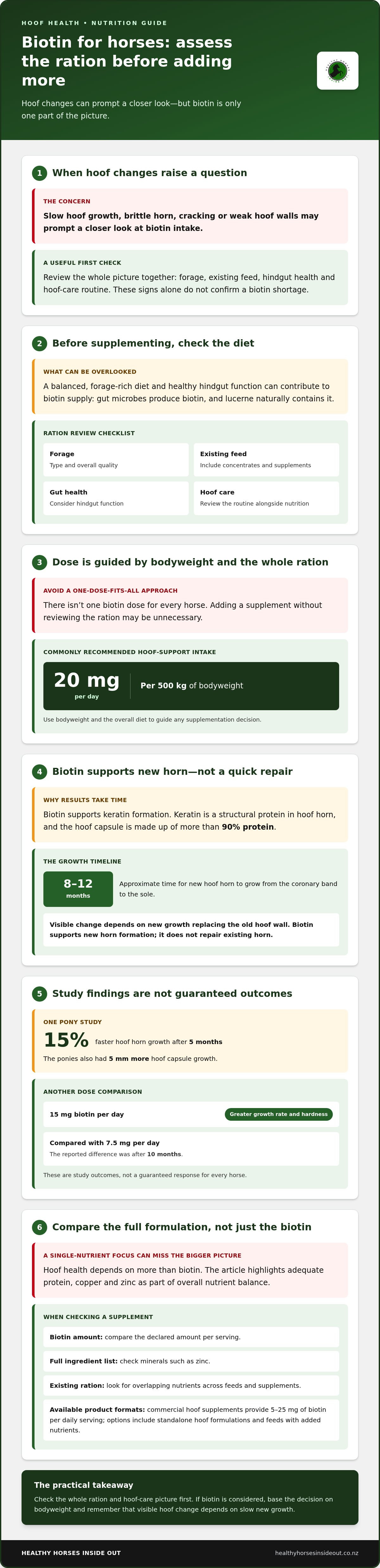
A hoof concern doesn’t automatically mean a horse needs biotin. Most horses eating a balanced, forage-based diet with healthy hindgut function don’t need extra biotin; when it’s considered for hoof support, a commonly recommended intake is 20 mg per day per 500 kg of bodyweight. The benefits of biotin for horses may take months to become visible because new hoof horn needs time to grow.
It’s understandable to look for nutritional support when hooves grow slowly, feel brittle or are prone to cracking. Biotin contributes to the metabolism of fats, carbohydrates and proteins, and helps form keratin, a key protein in hoof structure. This guide explains how to assess biotin in your horse’s diet, what hoof changes may prompt a closer look, and how to weigh supplementation alongside feed and hoof care.
You’ll also learn why a supplement is not a quick fix, what to expect as new hoof horn grows, and how to review the whole ration before adding anything. The goal is to make a more informed decision based on your horse’s needs.
Key Takeaways
- Use your horse’s bodyweight and the overall diet to guide biotin dosage; a commonly recommended intake for hoof support is 20 mg per day per 500 kg of bodyweight.
- Biotin supports the metabolism of fats, carbohydrates and proteins, as well as keratin formation, which is important to hoof structure.
- Slow-growing, brittle or easily damaged hooves may prompt a closer look at biotin, but assess diet, gut health and hoof care together.
- Expect hoof changes to take time: new horn must grow before improvements become visible.
- Consider the whole nutrient balance, including adequate protein, copper and zinc, rather than focusing on biotin alone.
1. How Much Biotin Do Horses Need?
There isn’t one biotin dose for every horse. Start by assessing the whole ration: horses with healthy hindgut function and a balanced, forage-rich diet typically produce biotin through gut microbes. Review the forage, existing feed, gut health and hoof-care routine together before considering a supplement. Forage type matters too, as lucerne naturally contains biotin.
Biotin supports keratin formation. Keratin is a structural protein in hoof horn, and the hoof capsule is made up of more than 90% protein. This helps explain why biotin is discussed in relation to hoof quality, growth and hardness. It supports new horn formation, not repairs to existing horn; visible change depends on new growth replacing the old hoof wall.
In one study, ponies receiving biotin daily had 15% faster hoof horn growth after five months, with 5 mm more hoof capsule growth. The study authors (not identified in the research facts) found horses receiving 15 mg of biotin per day had greater hoof growth rates and hardness after 10 months than horses receiving 7.5 mg. These findings describe study outcomes, not a guaranteed response for every horse.
Daily supplementation is considered a long-term nutritional approach, because hoof horn grows slowly. New horn takes approximately 8 to 12 months to grow from the coronary band to the sole. Skin and coat condition can also reflect overall nutrition, but biotin shouldn’t be treated as a stand-alone solution for every skin, coat or hoof concern. Diet quality and other nutrients matter.
To choose a quality biotin supplement, compare the declared biotin amount per serving and check the full ingredient list, including minerals such as zinc. For horse feed intended to support hoof regeneration, Európai Bizottság, EUR-Lex says labels must declare total zinc and methionine, plus biotin if added; recommended use is up to 8 weeks.
How much do biotin supplements for horses cost in New Zealand? Prices vary with serving size, formulation and how much biotin the daily ration provides, so compare cost per serving rather than container size alone. What options are available in New Zealand? Horse supplements include standalone hoof formulations and feeds with added nutrients; commercial hoof supplements provide 5 to 25 mg of biotin per daily serving.
What are the risks or side effects? Excess biotin is excreted in urine and is not described as toxic, but supplementation without reviewing the ration may be unnecessary. If hoof sensitivity, cracking or poor growth persists, consider the broader nutrition and hoof-care picture rather than relying on biotin alone.
2. Fat and energy metabolism
Biotin’s role extends beyond hoof structure. As a B vitamin, it acts as a coenzyme in the metabolism of carbohydrates, fats and proteins. These nutrients provide building blocks and fuel, while metabolic reactions make them available for the horse’s normal bodily functions.
Carbohydrates from feed are broken down and used in energy pathways. Biotin supports some of the enzyme reactions involved in this process. That doesn’t mean biotin supplies energy itself; it helps the horse’s metabolism use nutrients already present in the ration.
Fat metabolism also depends on coordinated enzyme activity. Biotin contributes to reactions that help process fats, which may be used for energy or incorporated into body tissues. This is metabolic support, not a direct change to a horse’s stamina, body condition or performance.
Protein supplies amino acids for tissue maintenance and other functions. Biotin’s coenzyme role links protein metabolism with the wider handling of dietary nutrients. A horse’s ration still needs suitable energy, protein and other nutrients; biotin cannot replace a balanced feed plan.
For example, a horse eating forage and concentrate receives nutrients that must be digested and metabolised. The feed’s ingredients, the amount eaten and the horse’s digestive function all influence how those nutrients are used. Biotin supports relevant metabolic processes, but it doesn’t correct poor-quality forage or inadequate overall nutrition.
Gut function is part of the picture. Microbes in the horse’s hindgut produce biotin during forage fermentation, so the digestive environment and forage-based diet contribute to biotin supply. Reviewing what the horse eats alongside gut health is a more useful starting point than assuming extra biotin will improve energy.
Metabolism is also connected to visible tissues. Hooves, skin and coat rely on nutrients being absorbed and used appropriately, but changes in appearance don’t identify a biotin shortage on their own. Coat condition, for instance, may reflect the broader ration and general health rather than a single nutrient level.
Review the complete feed routine before adding a supplement: list forage, concentrates and existing supplements, then check their nutrient declarations for overlap. This helps distinguish a genuine gap from duplicated ingredients and keeps the focus on overall intake, rather than treating biotin as a stand-alone energy product.
For readers researching “biotin for horses benefits”, metabolic support is one part of the picture, not a quick performance boost. A practical understanding of “biotin for horses benefits” starts with how the vitamin supports normal metabolic pathways. If you’re reviewing the daily ration, everyday horse supplements can be considered as part of a broader, balanced nutrition approach.
3. Signs a horse might benefit from biotin
Hoof changes are a clear reason to review biotin intake. Slow growth, brittle horn, cracking or weak hoof walls can prompt a closer look at the ration and hoof-care routine. Record where cracks occur and whether they return after trimming, rather than relying on a single visual impression.
Pay attention to horn quality as it grows from the coronary band. Biotin supports keratin formation, while protein, copper, zinc and methionine also contribute to hoof structure and development. If the horse receives limited protein or an unbalanced supply of minerals, review the wider diet rather than assuming one nutrient is responsible.
Time matters. New hoof horn takes approximately 8 to 12 months to grow from the coronary band to the sole, so a change in the hoof wall reflects conditions over an extended period. Compare consistent observations, such as photographs taken from the same angle, and note trimming dates alongside changes in growth or cracking.
Studies offer context for owners assessing slow growth. In an Austrian Lipizzaner stallion study, 26 of 42 horses received biotin and 16 received a placebo; hoof quality improved after nine months of supplementation. Visible hoof-quality effects may take 6–9 months after an increased daily dose, while results can take eight to 15 months as new horn grows out.
Skin or coat changes may also prompt a review of the ration, but they don’t identify a need for biotin by themselves. Biotin is involved in metabolism, while skin and coat condition depend on the broader supply of nutrients. Note changes alongside feed ingredients, forage and existing supplements so you can assess the pattern instead of treating one symptom in isolation.
Use a simple assessment sequence: inspect the hoof wall, record growth and damage, review the feed label, then consider gut health and daily hoof care. Cleaning hooves removes debris, manure and trapped moisture; regular trimming helps address overgrowth, imbalance and cracking. These management steps matter even when you’re considering a biotin supplement.
Consistency is essential when monitoring a nutrition change. Keep the feed routine and hoof-care schedule steady, and track the same features over time, such as wall integrity, growth from the coronary band and recurring cracks. Visible change takes months because old horn must grow out; short-term appearance alone cannot show how new horn is developing.
These signs are useful prompts to assess the whole diet, including protein, copper, methionine and other minerals. A balanced, forage-based ration and healthy hindgut function already support biotin supply. The most useful next step is to identify what the current diet and hoof-care routine provide.
4. Biotin dosage for horses
Equine biotin dosage depends on the horse’s bodyweight, diet and hoof-health goal. A commonly recommended intake is 20 mg per day per 500 kg of bodyweight. Other guidance describes 15–30 mg per day for horses, while 5–7.5 mg per day is also described as sufficient for most horses to support hoof health. These ranges reflect differing recommendations, so read the serving amount alongside the reason for supplementation.
Bodyweight provides a practical starting point, but the total ration matters too. Fortified feeds typically provide less than 1 mg of biotin per day when fed at recommended amounts, while commercial hoof supplements provide 5 to 25 mg per daily serving. Check each feed and supplement label, then add together the listed daily biotin amounts before introducing another source.
Research gives context for the range. Studies found statistically significant improvements in overall hoof condition with 15 to 25 mg per day. One study of Lipizzaner horses with previously poor hoof structure used 20 mg per day. For heavy horses, recommendations can reach 30 mg per day; most ponies and donkeys are described at 5–10 mg per day. These figures are different reference points, not a single dose for every equine.
Some sources express intake relative to feed, at 3 mg/kg of dry matter intake. This differs from a daily dose per animal, so the units shouldn’t be swapped. A ration calculation based on dry matter requires the horse’s dry matter intake; a bodyweight-based recommendation uses the animal’s weight instead.
Consistency in supplementation matters because hoof horn grows gradually. Maintain the chosen daily amount while assessing new growth, rather than judging the dose by the existing hoof wall. If supplementation stops, its positive effects may stop too. Record when supplementation begins and track hoof changes alongside trimming, feed changes and condition.
Some accounts describe doses as high as 50 mg per day for horses with severely compromised hooves. Higher intake isn’t automatically a better choice: the aim is to match the ration to the horse’s needs, not to keep escalating the amount. Excess biotin is excreted in urine and is not described as toxic, but reviewing existing feed avoids unnecessary duplication.
Use a simple dosage check: weigh the horse, identify the target recommendation, total biotin from all daily feeds, then compare that amount with the supplement serving. Biotin supports normal metabolic function and hoof growth, but a balanced ration remains the foundation. An ingredient description alone doesn’t establish how much biotin a product provides, so compare the declared amount per serving.
5. Which nutrients should be combined with biotin for equine hoof health?
Biotin works within a broader nutritional picture. Zinc and copper both contribute to hoof formation and quality, while adequate protein supports hoof development. A supplement can provide these nutrients, but its value depends on what the horse already receives from forage and feed. Review the complete ration before adding another source.
Zinc and copper are minerals, not substitutes for biotin. Both contribute to hoof formation, so a hoof-focused feed may include them alongside biotin. Check the label for each declared amount and compare it with the rest of the horse’s daily feed. This helps identify overlaps and keeps attention on the whole diet.
Protein matters too. Hoof horn is largely protein, and an adequate protein supply supports ongoing hoof development. Consider protein sources in the ration, including forage and concentrate, rather than assuming biotin alone can address weak or slow-growing horn. Overall balance is the foundation.
Some hoof formulations contain methionine, an amino acid, alongside biotin and minerals. For horse feed intended to support hoof regeneration, Európai Bizottság, EUR-Lex states labels must declare total zinc and methionine, plus biotin if added; the recommended use is up to 8 weeks. Read those declarations as part of assessing the product’s role in the ration.
A practical review has three steps: list all forage, feeds and supplements; note the declared biotin, zinc, copper, methionine and protein sources; then identify duplicated ingredients. For example, a horse receiving fortified feed may also get zinc from a hoof supplement. Comparing labels makes the combined intake easier to understand.
Choose a formula for its full nutrient profile, not the largest biotin figure alone. A well-balanced hoof supplement containing 20 mg of biotin per serving, along with other nutrients, is one recommended approach. The serving amount still needs to be considered alongside the horse’s bodyweight, existing ration and intended use.
Daily care remains important even with a nutrient-focused ration. Keep hoof cleaning and trimming consistent, and record changes to the wall alongside feed adjustments. Since new horn grows gradually, the existing hoof surface may not reflect the nutrients currently being fed. Tracking the same features over time gives a more useful picture.
For a considered next step, explore horse supplement options and compare how each could fit alongside your horse’s existing sources of protein, copper, zinc and biotin.
Healthy Horses Inside Out: Everyday Horse Supplements
Healthy Horses Inside Out offers Everyday Horse Supplements and Specific Horse Supplements to support considered nutritional choices. If you’re reviewing the ration after noticing hoof concerns, compare existing feed labels first, then look for supplements that match your horse’s nutritional needs without unnecessary overlap.
Horse Supplement Bundles bring relevant nutritional support together, while HHIO Pellets offer another format in the range. The right option depends on your horse’s current diet and nutritional goal, not simply whether a formula contains biotin. Understanding the whole ration helps you make a more informed choice.
For a thoughtful next step, explore the horse supplement range or contact Healthy Horses Inside Out with your questions.
Make your next nutrition decision with confidence
Turn your observations into a clear picture of your horse’s routine. Keep feed labels together, note ration changes, and record hoof-care observations in one place. This creates a practical reference for reviewing nutritional choices, rather than relying on memory or a single change in appearance.
If you’re researching “biotin for horses benefits”, consider how a supplement fits your horse’s existing diet. Healthy Horses Inside Out offers Everyday Horse Supplements, Specific Horse Supplements and Horse Supplement Bundles. Compare the options with your horse’s nutritional needs to put the question of biotin for horses benefits in context, rather than treating one ingredient as the whole solution.
If you’re ready to take the next step, contact Healthy Horses Inside Out to explore suitable supplement options. A considered approach can help you feel more confident about supporting your horse’s ongoing wellbeing.
Frequently Asked Questions
How Much Biotin Do Horses Need?
A commonly recommended intake for hoof support is 20 mg daily per 500 kg of bodyweight. The amount already supplied by forage, fortified feed and other supplements affects how much additional biotin is needed. For example, total the declared amounts on each feed label before adding another product. Horses with balanced, forage-based diets and healthy hindgut function generally don’t need extra biotin.
What are the benefits of biotin for horses?
Biotin supports keratin formation in hoof horn and acts as a coenzyme in the metabolism of fats, carbohydrates and proteins. These roles explain why owners consider it for hoof quality and normal metabolic function, rather than as a direct source of energy. The potential benefits of biotin for horses are most relevant when supplementation addresses a dietary need as part of an otherwise balanced ration.
Does biotin improve horse hoof strength and growth?
Biotin may support new hoof horn growth and hardness, but it doesn’t strengthen horn that has already formed. That distinction matters when a crack is visible: the damaged section must grow out as new horn develops from the coronary band. For a practical assessment, photograph the hoof wall after trimming and compare later images for changes in new growth and recurring damage.
How long does biotin take to improve a horse’s hooves?
Visible changes may take months because new horn needs time to replace the existing hoof wall. Reported timelines include 6–9 months for visible hoof-quality effects after increasing a daily dose, and eight to 15 months for results as new horn grows out. Keep trimming and feed routines consistent while tracking changes, so a new crack or improvement can be considered against the horse’s recent management.
What is the recommended daily biotin dose for horses?
A commonly recommended hoof-support intake is 20 mg per day per 500 kg of bodyweight. Other dosage guidance gives 15–30 mg per day for horses, and 5–10 mg per day for most ponies and donkeys. These are different reference ranges, so first calculate the horse’s total intake from feed and supplements. Compare labels by biotin per daily serving, not just container size.
Which horses are most likely to benefit from biotin supplementation?
Horses with slow-growing, brittle or repeatedly damaged hooves may benefit from a closer nutrition review, particularly if their ration or gut function could limit biotin supply. Those signs alone don’t establish a need: also consider forage, protein, minerals and routine hoof care. A horse eating a balanced, forage-based diet with healthy hindgut function may already receive sufficient biotin, so assess the whole ration before supplementing.


